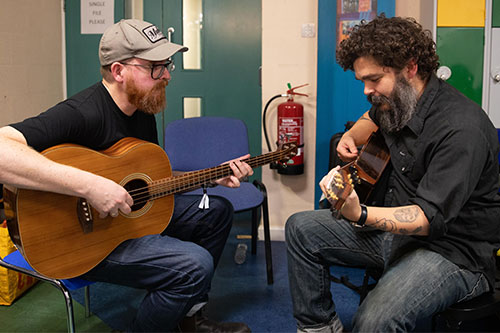
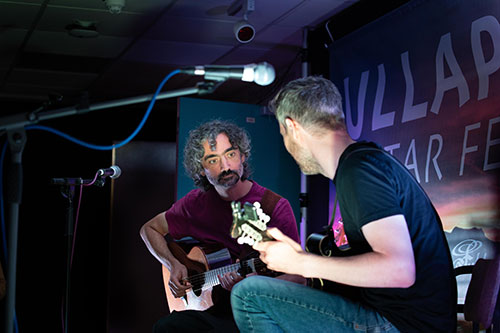
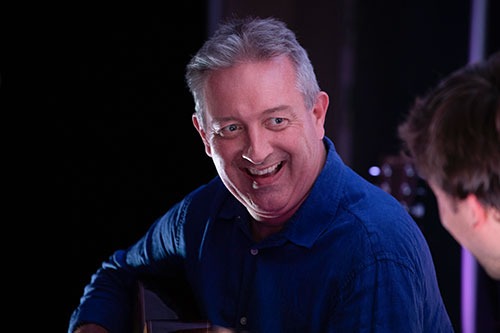
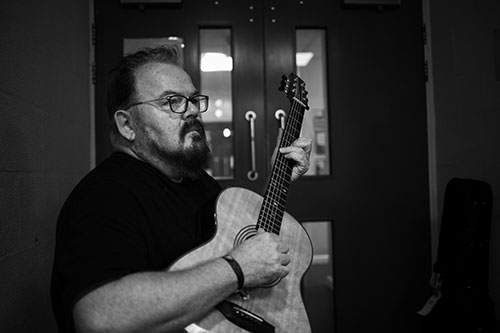
I do like to listen to a soundcheck. It’s not a public event and most people never see it. Steve is showing how it works.
Eric Bibb and John Smith come to mind for being able to identify a particular frequency that is causing trouble and asking the engineer to tweak it. Martin Simpson knows exactly how he wants the guitar to sound and won’t settle for anything less – he is world renowned for his acoustic sound. It’s a set of skills quite apart from the singing and playing, but absolutely essential for the best performance.
I don’t think I’m breaking any confidence to explain that there is a hierarchy in soundchecks – top of the bill gets the most time! If they overrun, well, they’ve earned it and are getting their own back.
Engineers can now have “presets” for the characteristics of a particular theatre so they can concentrate on the artists’ half of the equation. It’s getting better and better all the time.
Piano technicians “Voice” the instrument to suit the theatre. Opera Singers “tune” their voices to the room to get best projection. A lot of work happens before the audience is allowed in, and the best performers have skills that you might not know about. Until now.
Steve and Phil Beer used to perform their soundcheck as part of their stage show, having the sound engineer at the back of the hall almost as part of the band . They quite rightly regarded the details of their sound to be rather important and found a way of involving the audience, great fun.
Technology is changing the way all that is handled. A lot can now be done from an iPad, even moving round the auditorium to change the sound in different places.
Steve, as ever is bang up to date and has added it to his show. It’s very impressive.
Steve’s website