
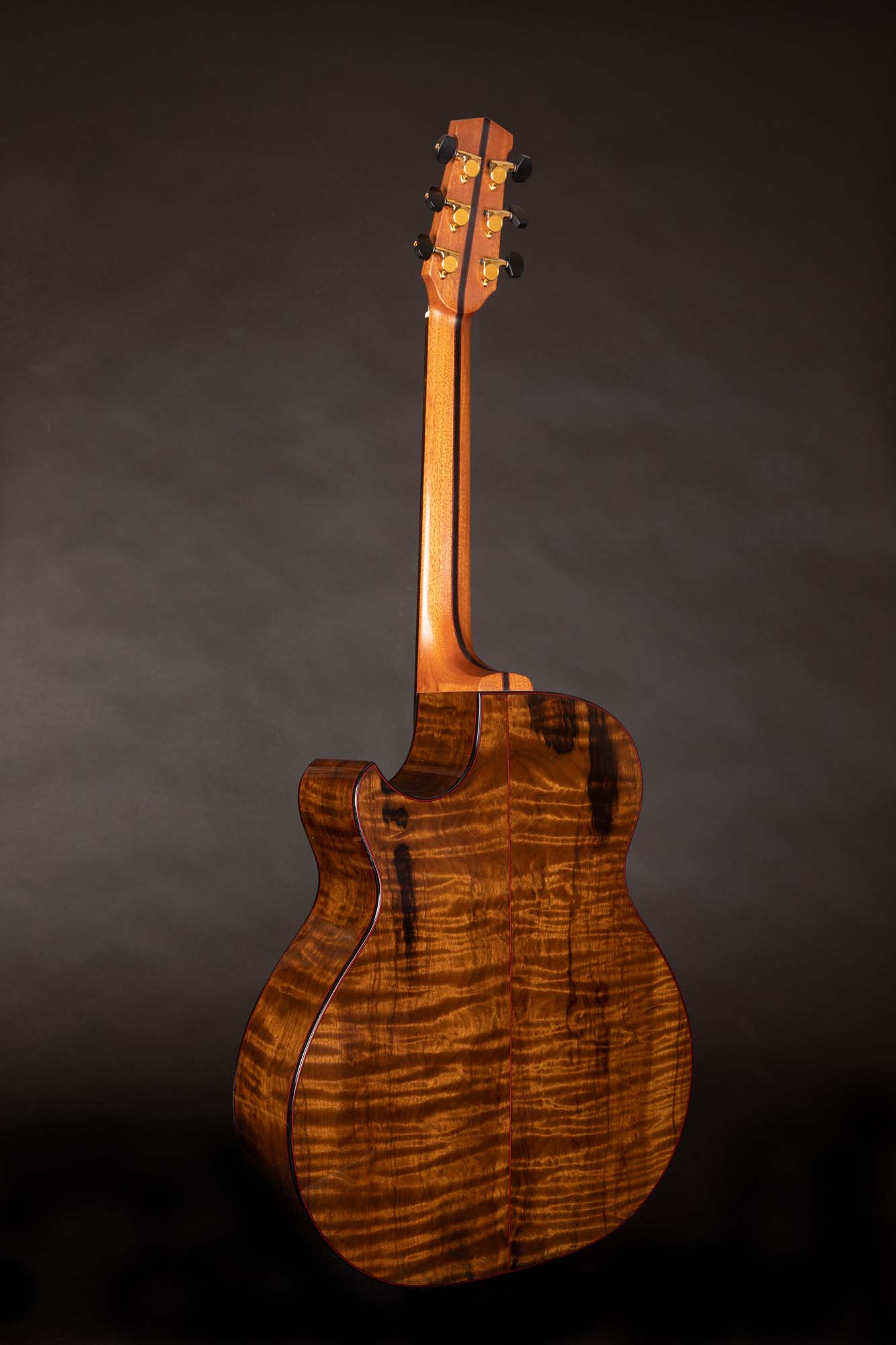
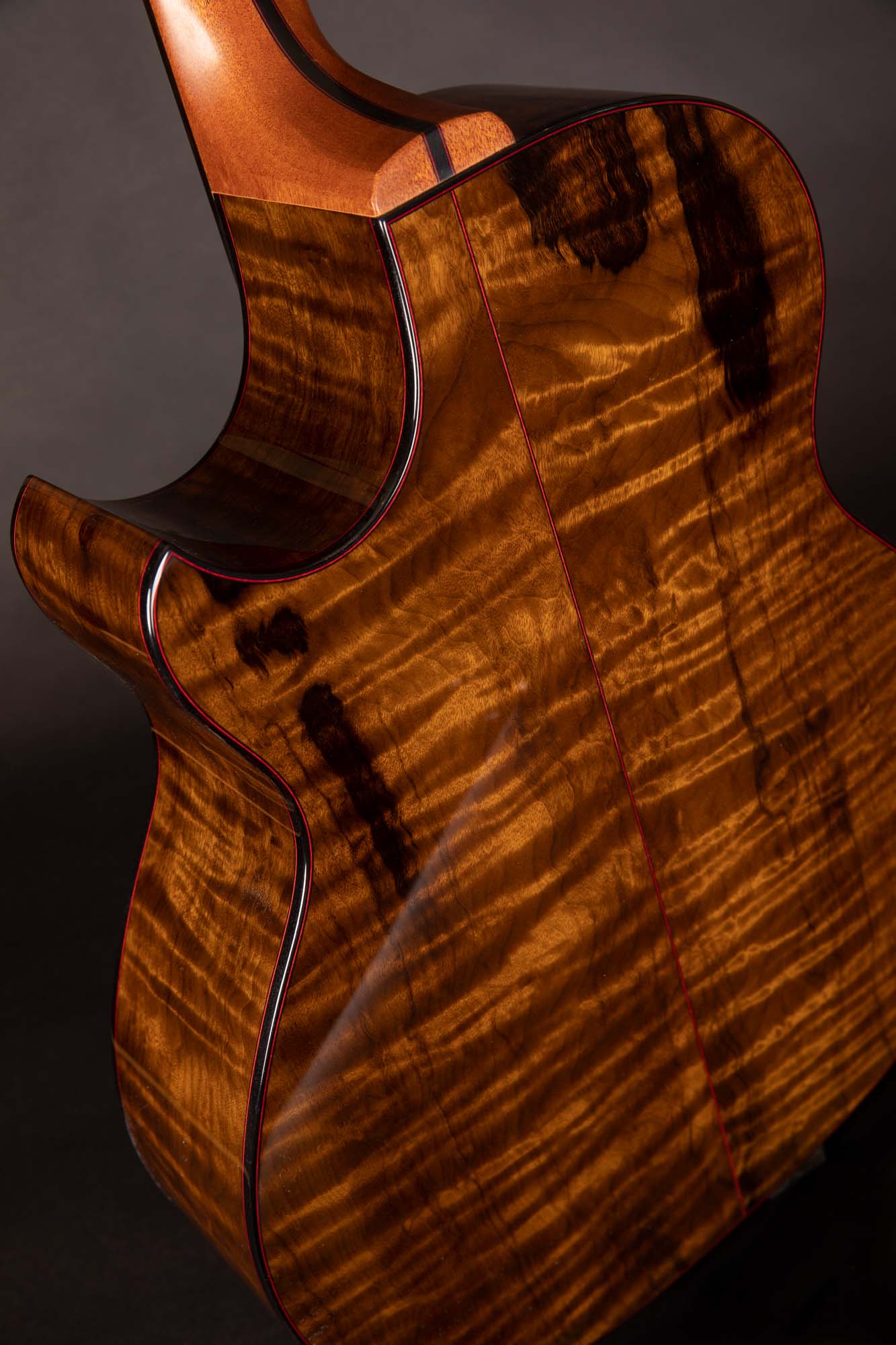
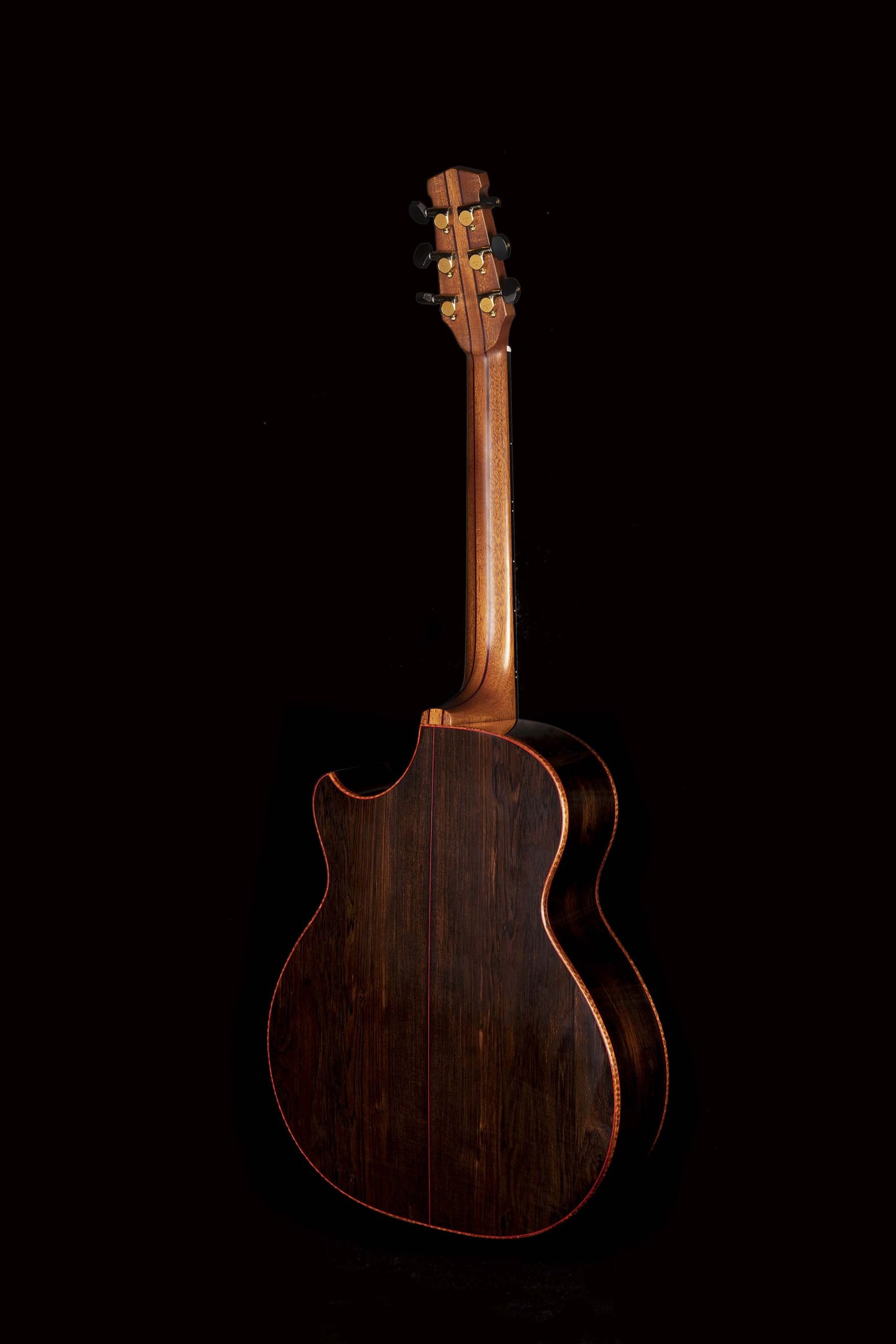
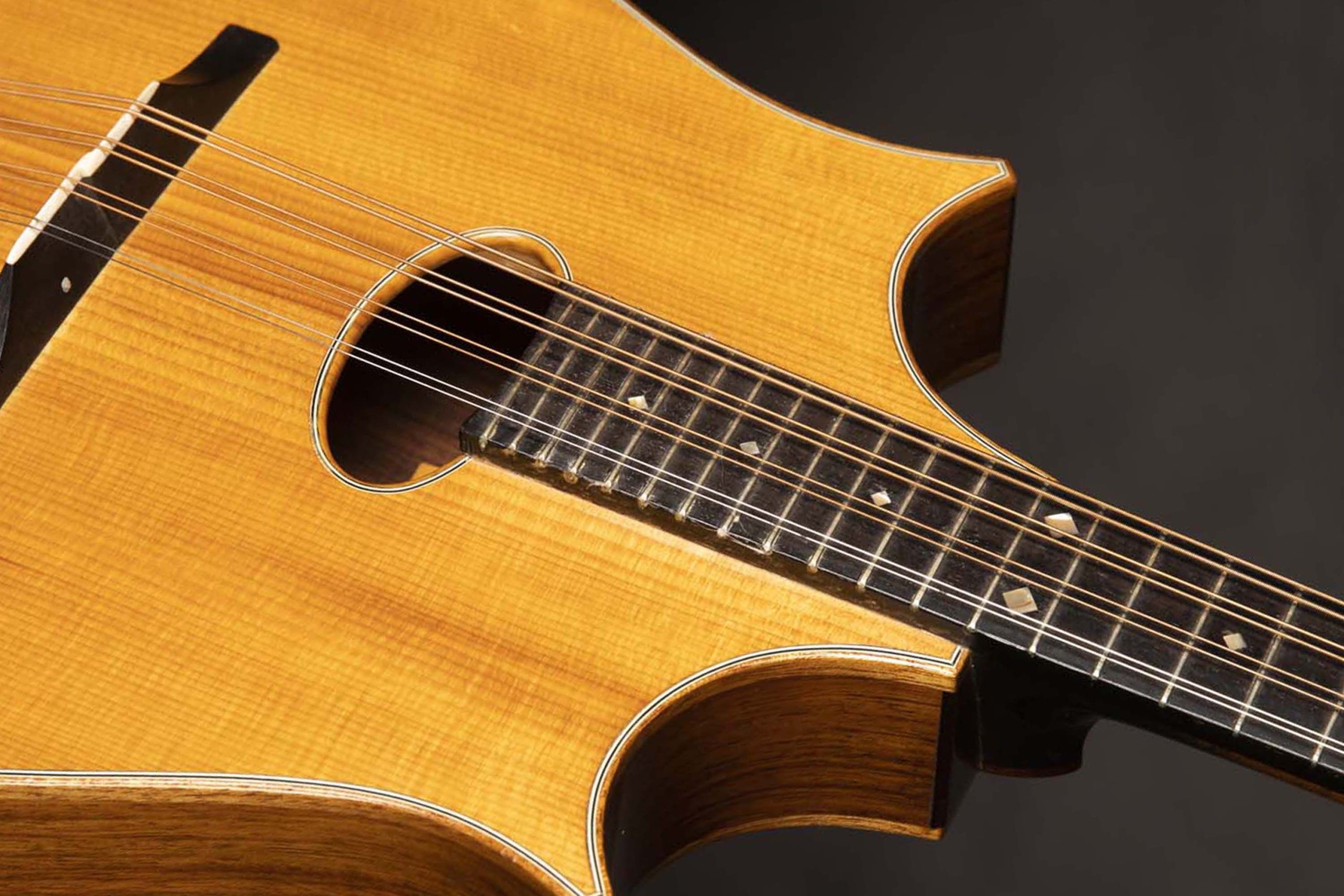
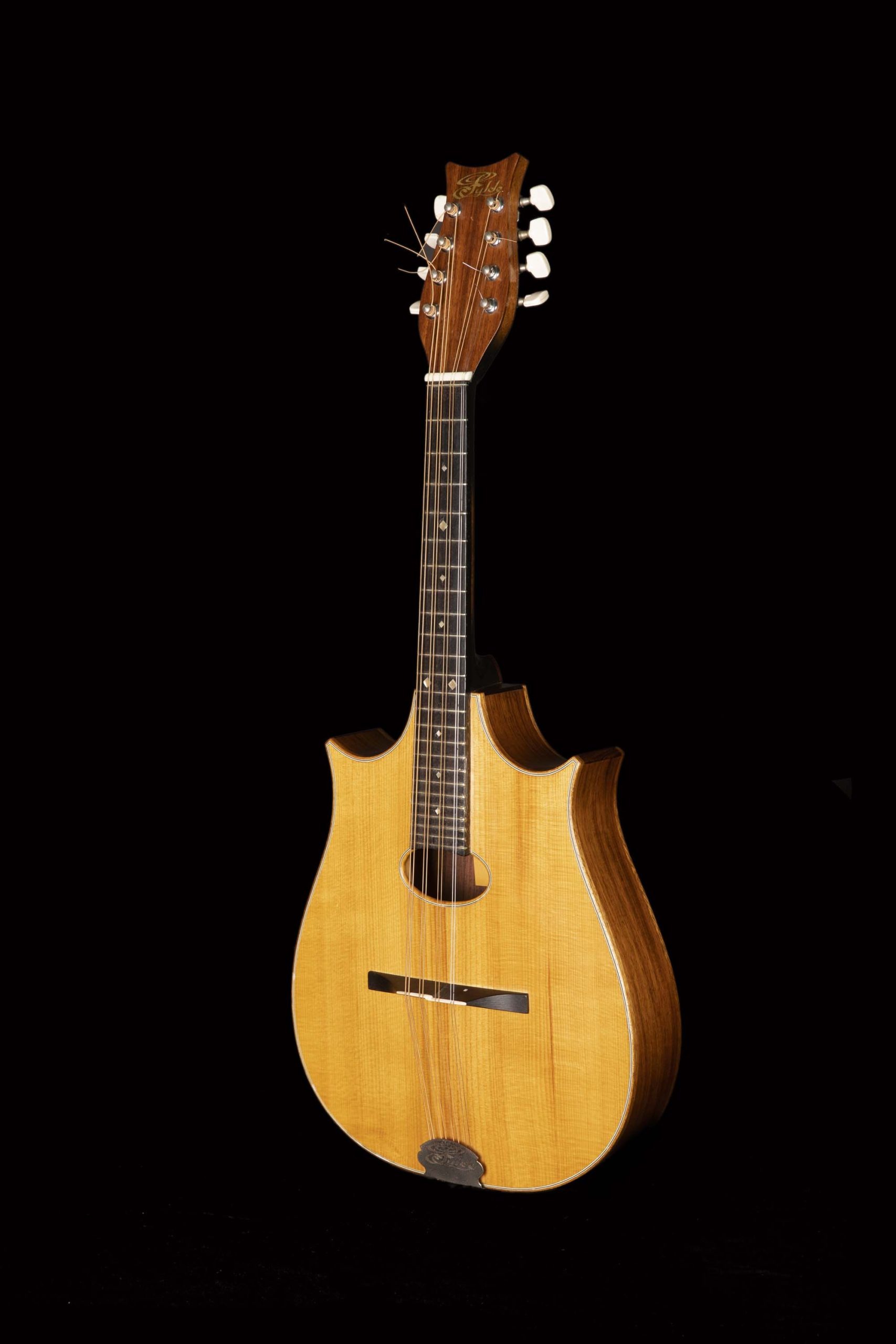
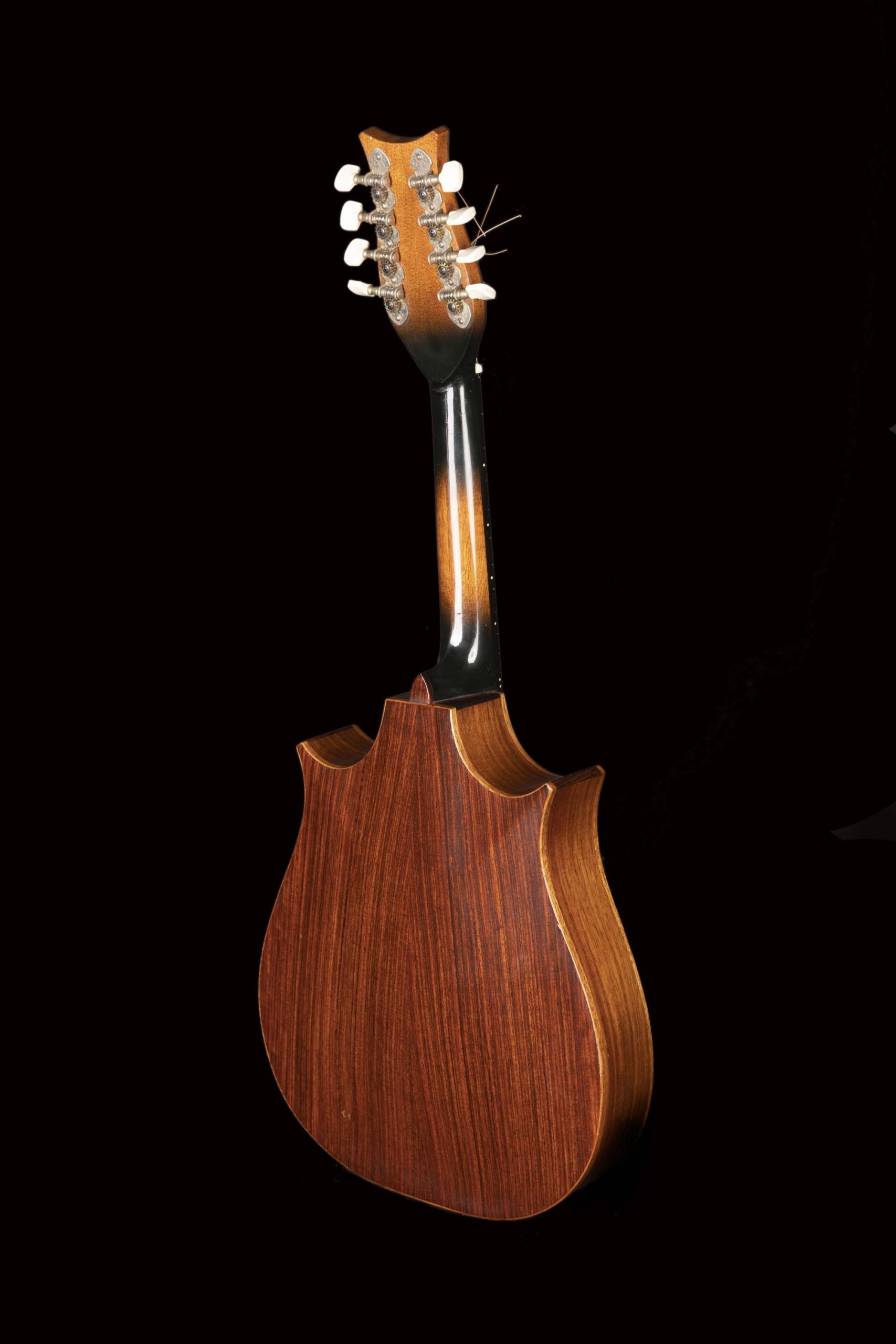
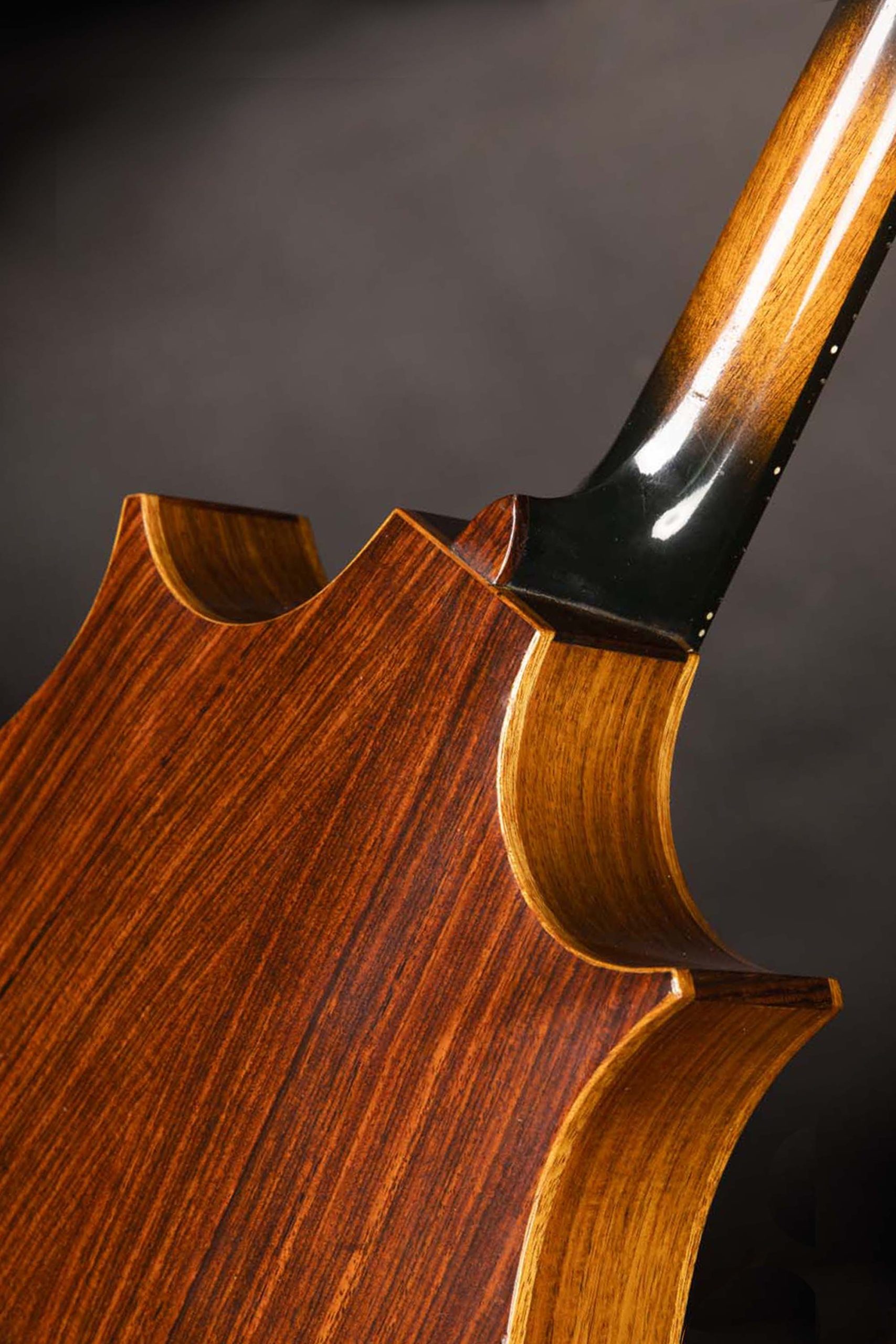
January: Imbuya and Redwood 12 fret
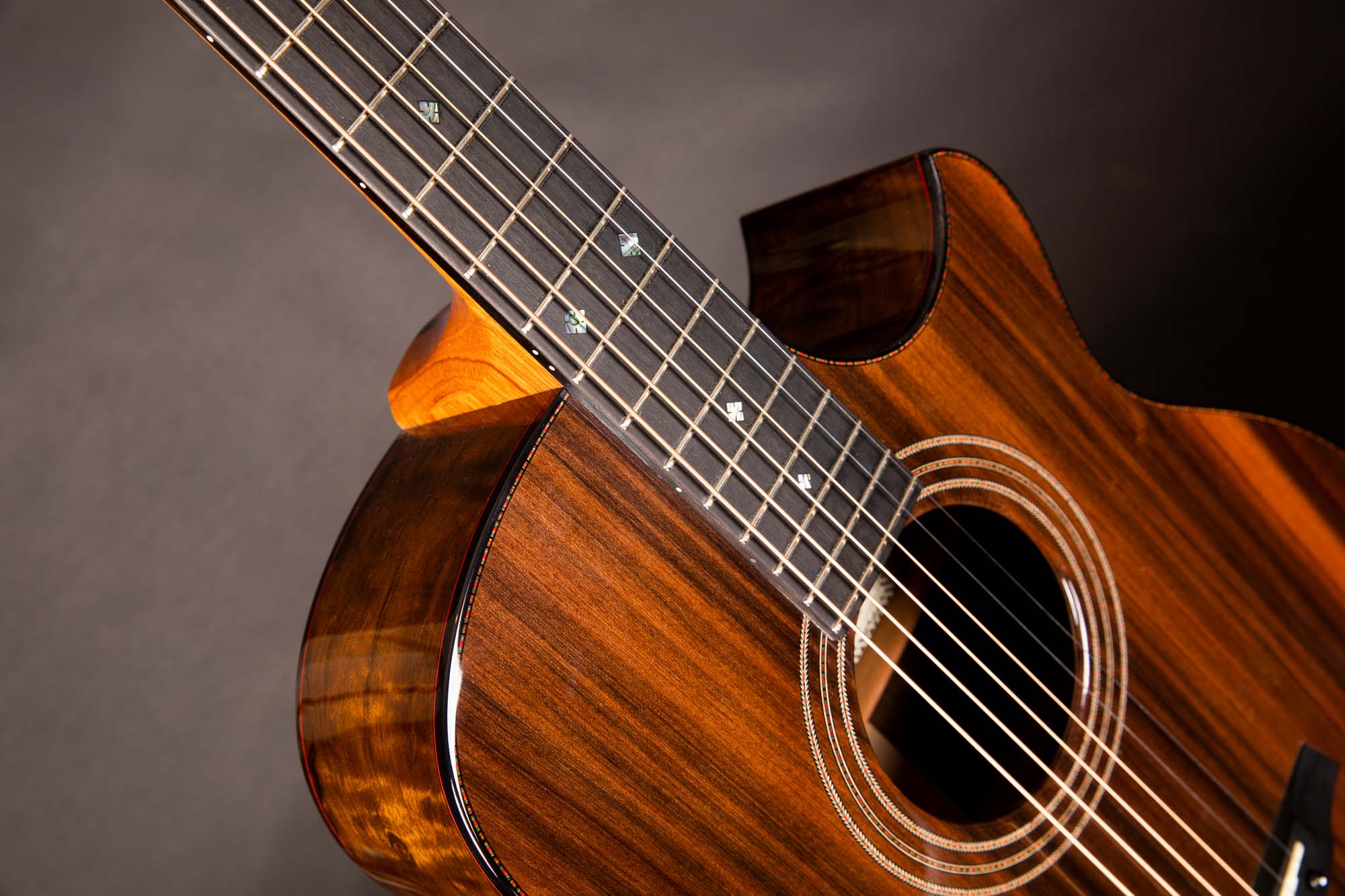
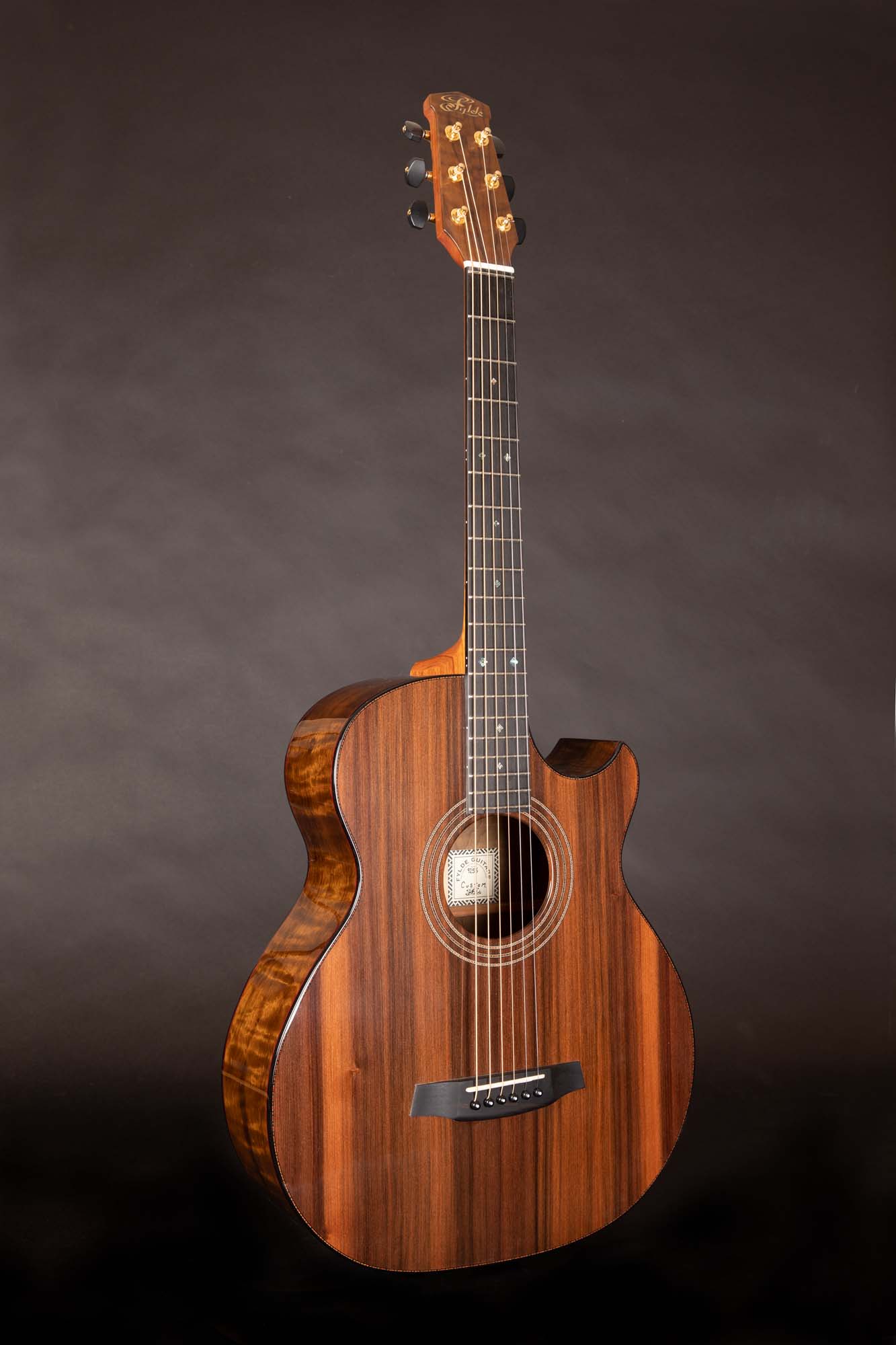
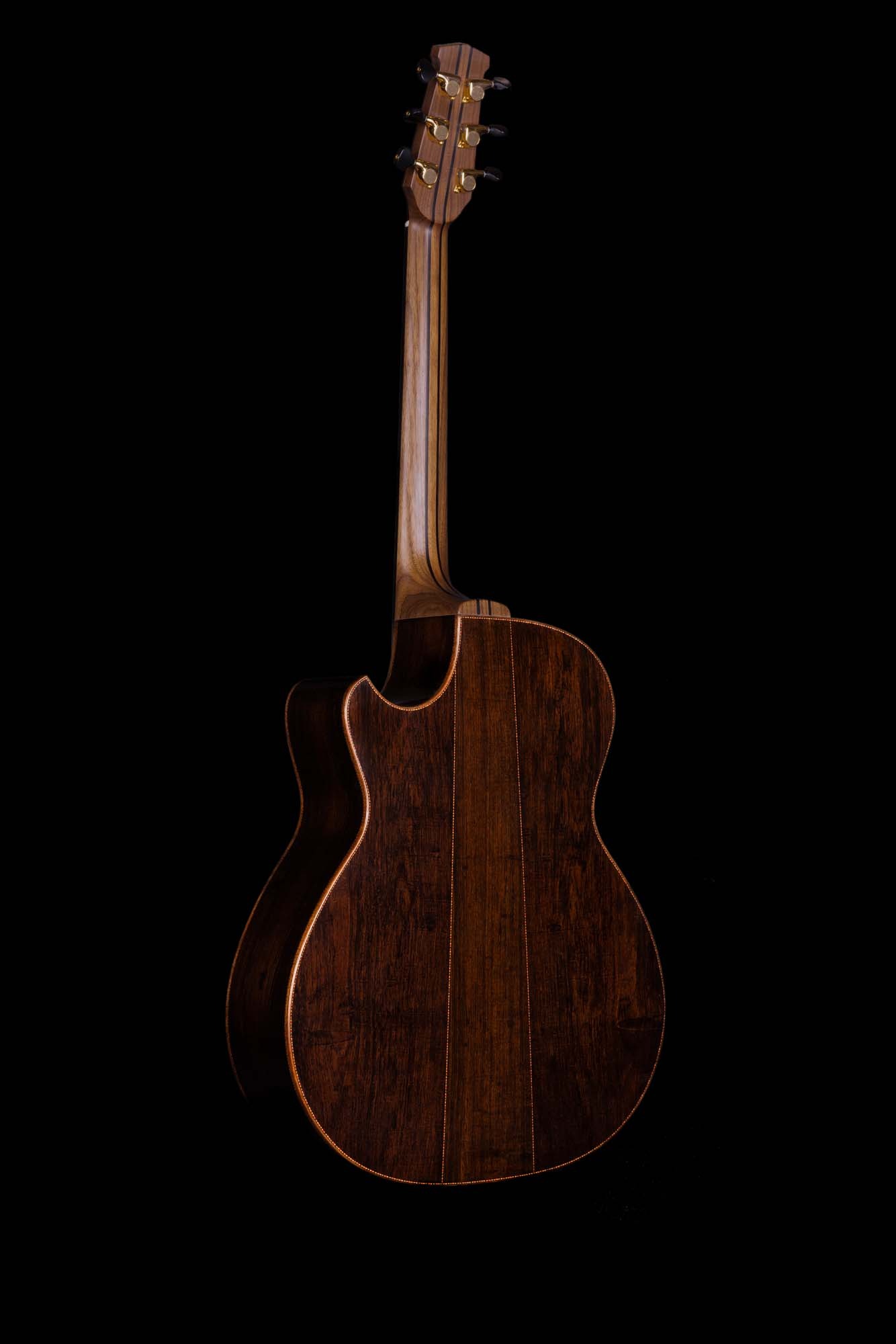
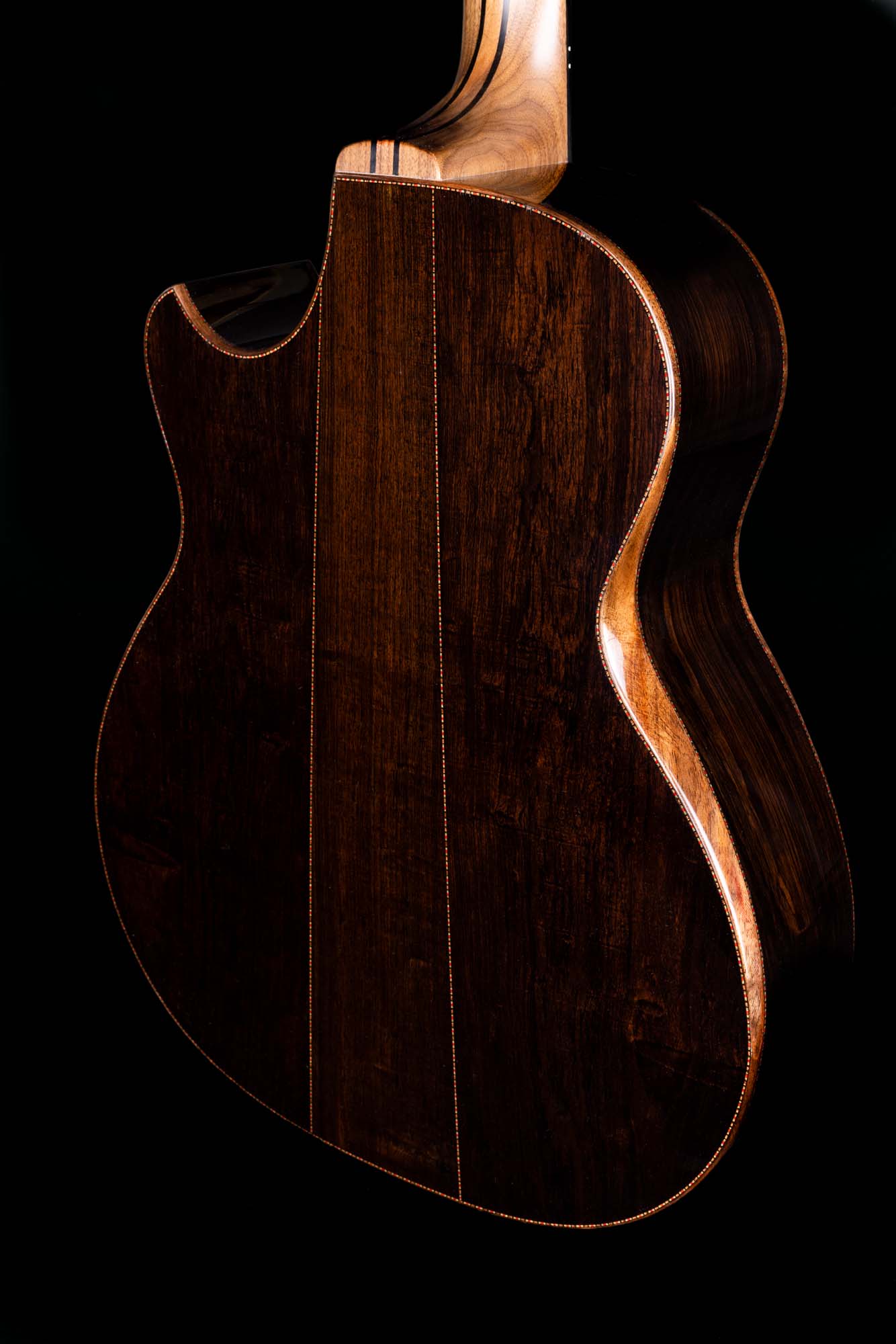
A special order for a regular customer.
The design is a mixture of new and old features, a “Modern Interpretation” if you like.
It’s based around a 12-fret neck join, with the lower bridge position giving the soundboard maximum freedom to move. The cutaway restores the lost fretboard access, and the long scale length encourages maximum energy input. It is also very well balanced, compact, and a joy to play.
We’ve been making this style for perhaps ten years and it’s destined to become a Classic design. I’m trying to think of a Shakespearean name, someone beautiful and well bred? Is there a Moira in Shakespeare?
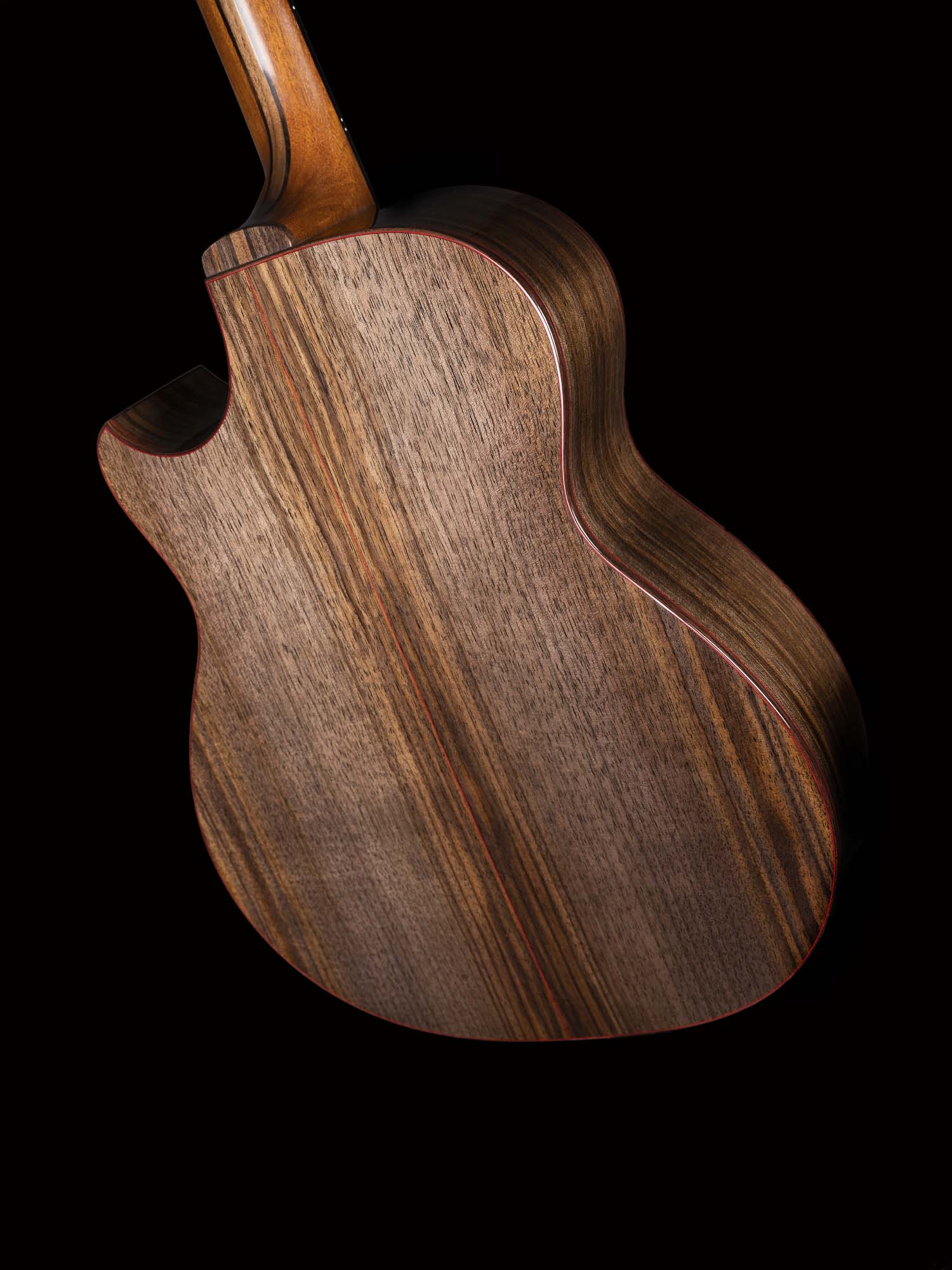
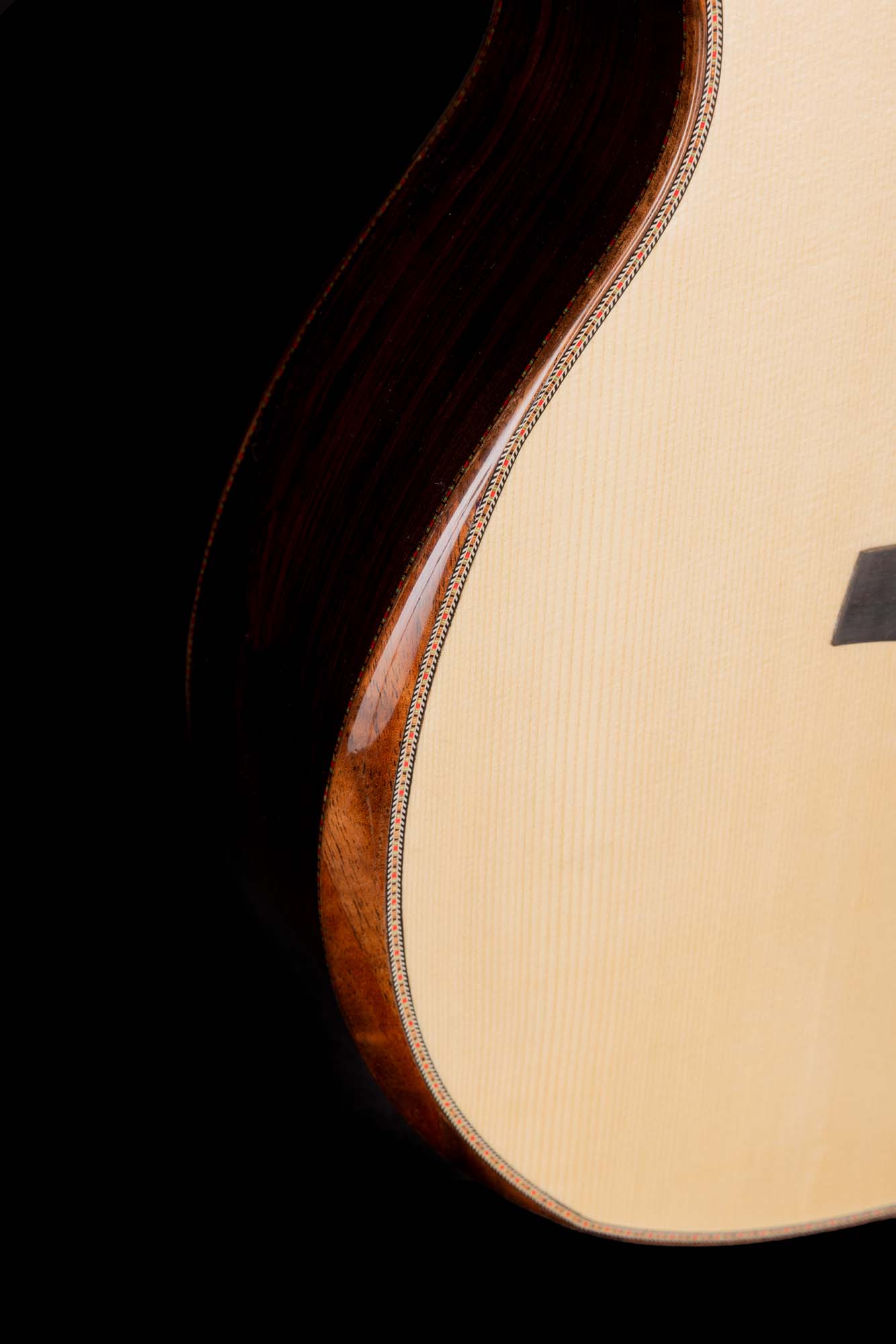
Imbuya is sometimes known as Brazilian Walnut, it is similar in properties to most Walnuts, and is a dream to work with. These pieces are unusually well figured, and the Sinker Redwood top keeps the appearance warm and dark, which is much the same as the tone.
We are all very pleased.
January: Bill Neale
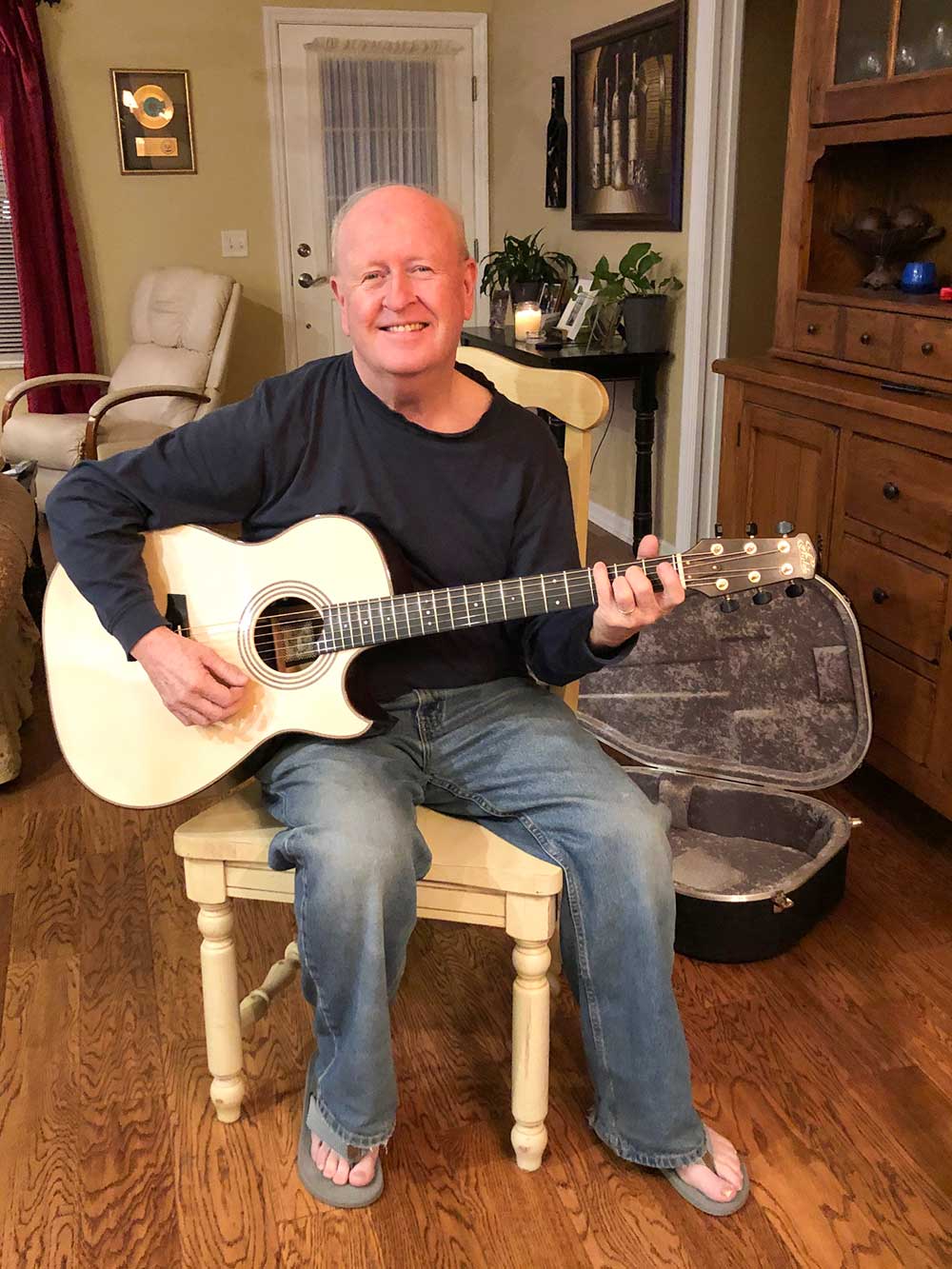
Bill was the long-term guitarist for the Temptations. The gold disc on the wall behind him is for his guitar solo on “Sad Eyes” by Robert John, a number one hit in 1979. Bill is also a friend and business colleague of Bob Benedetto, the highly renowned Arch Top guitar builder, I have his book!
This guitar has been evolving for nearly a year, during which time Bill has come to admire the playing of Clive Carroll and Adam Palma. We’ve gone to a lot of trouble finding the right piece of Spruce for the soundboard and discussing details and dimensions. It’s a shallow Falstaff, with a cutaway, rather similar to Adam’s and Bill says “The guitar is magnificent! It’s stunning to look at. I’m in awe of your work! Gorgeous…. It’s the best sounding acoustic guitar that I have ever played. It truly is…”
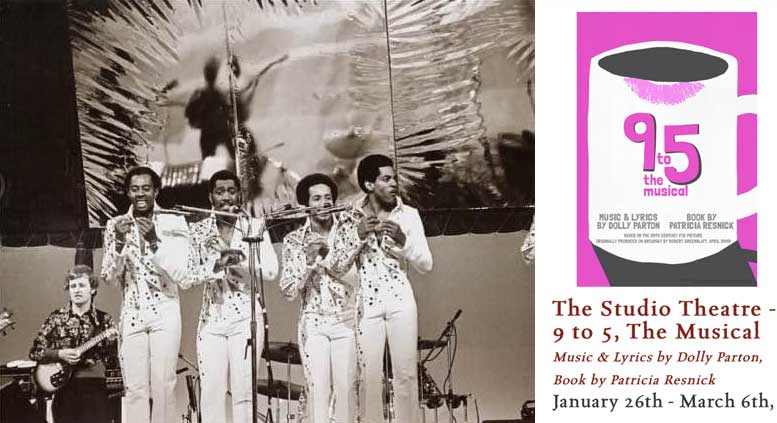
Below is Bill with the Temptations and beginning on 26th January, Bill will be playing guitar for “9 to 5, The Musical”, a live, socially distanced show in Florida – there is music despite Covid. Hooray.
More about Bill on Benedetto’s website
January: Aircraft Grade Sitka Spruce
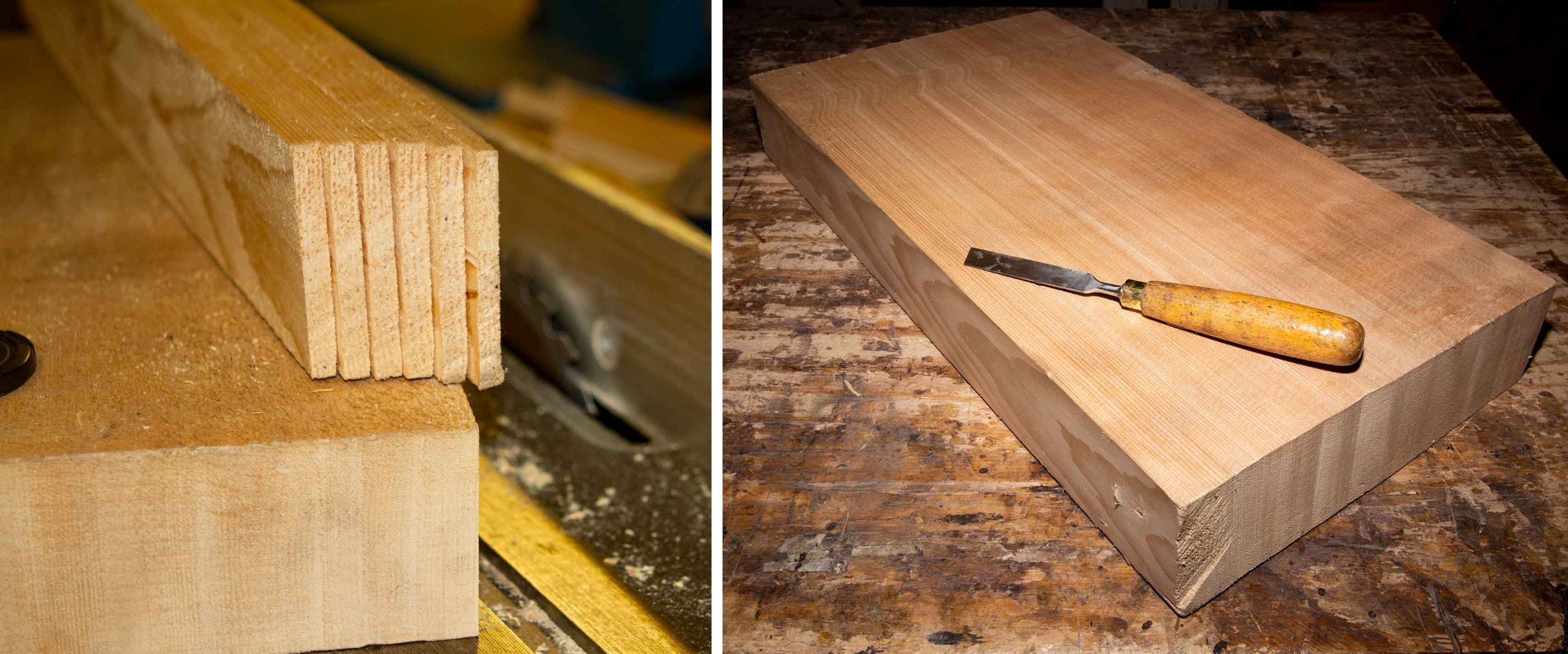
I have some history of using Spruce in aircraft repair, (no jokes about Biggles and Sopwith Camels please, it wasn’t that long ago. I have my own joke about Biggles, but Moira won’t let me tell it). Sitka is one of the biggest softwood trees, so is very useful for obtaining long timber for aircraft spars and ship’s masts. The age of the timber usually means slow growth and close, straight grain, which also implies stiffness and strength.
All those properties are also essential in guitar soundboards and bracing, although perhaps the physical appearance is rather more important in guitar soundboards.
Have a close look at the grain in this piece of wood, and at the “arrows” on the side of the block. If the arrows are biased to one edge, the grain isn’t vertical, and if the arrows are pointed, the grain isn’t running quite true along the length. The side you can see isn’t parallel, but the side I am sawing from is perfect, it will correct as we move across.
Each slice shown is enough for the bracing on one soundboard, so this block will make perhaps twenty sets of bracing. I do hope to get more from my new aviation friends, and I hope to have more “aircraft” pictures to show you soon.
January: New Guitar for Louis Campbell
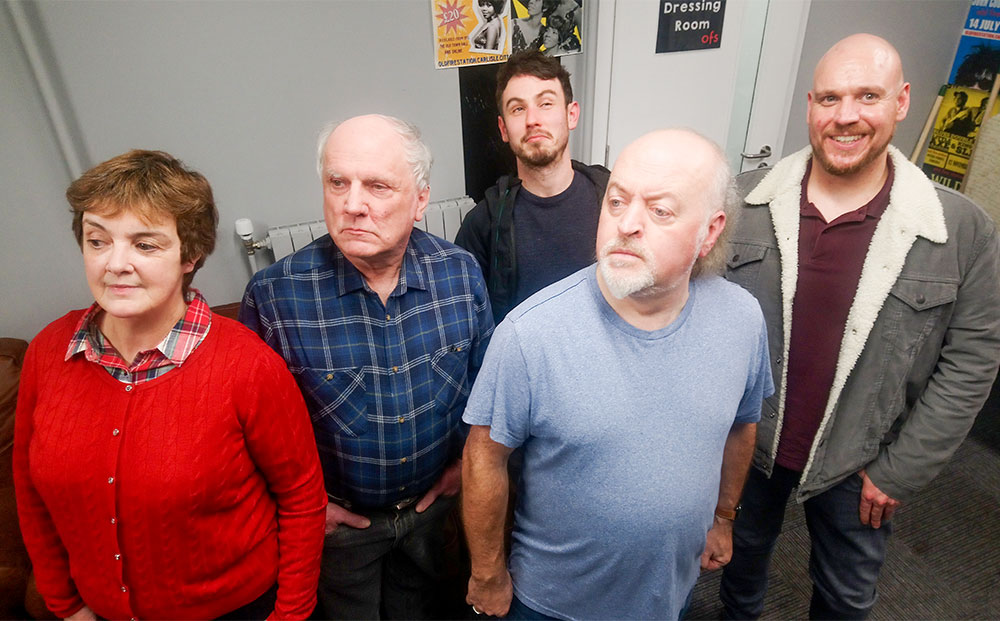
Bill’s video with his Fylde Mandola on the Graham Norton Show has now reached 1.2 million views and as we know, he went on to win “Strictly Come Dancing” – see what happens when you play Fylde?
Well done Bill. Bill’s Website.
January: Mike Waterson
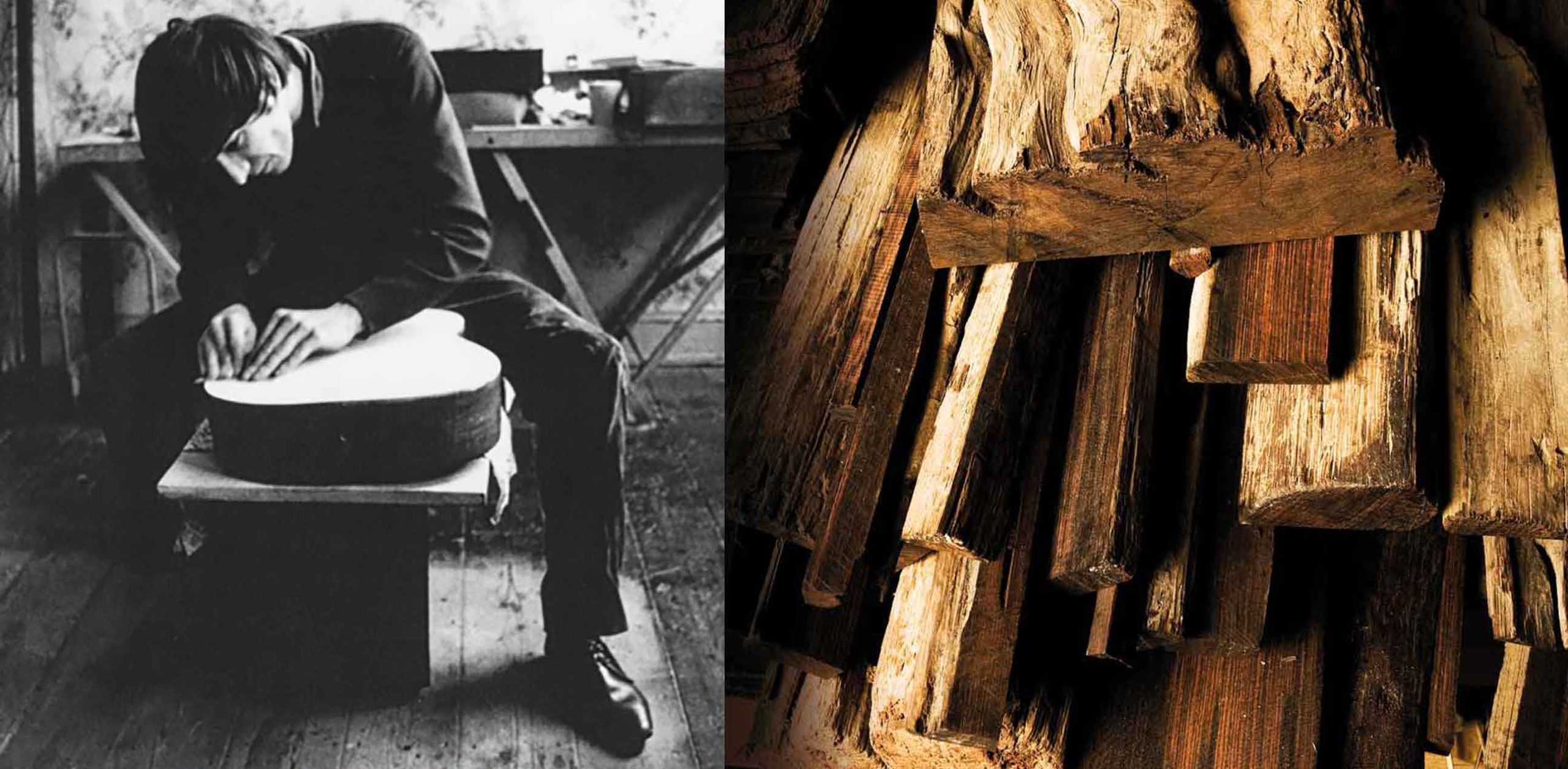
Mike’s daughter sent me this picture a little while ago. It would have been his 80th birthday this week.
Mike and I would talk about guitars and wood for ever. The picture on the back of the “Fylde Book” is of the astonishing Brazilian Rosewood that I bought from him and used to make guitars for Anne Waterson, Richard Hawley, John Smith and Martin Simpson. A lovely, long and still continuing story.
March: Here's One I Made Earlier
I don’t have a new finished guitar to show at the moment. Hopefully next month. But instead, here’s one I made earlier, 1982 to be exact. It was just an experiment, to see if it would work and what happens when a guitar doesn’t have a back. It’s a long time ago, so my memory doesn’t help, but I’m told it sounds good, I’ll get to see and hear it again soon, I hope. The two necks are connected together at the head by a screw adjuster, so that one neck supports the other and there will never be any neck rotation. The tuners are recessed and angled to get better access.
After I’d had my fun, the guitar went to live with Chris Ellis, who played bass in the heavy metal band “Demon”. He was married to a BBC producer on children’s TV, and Mike Reed played the guitar on “Swap Shop” I think. He pushed a hard-boiled egg through the strings and made slices!! I’m trying to find the video recording of that.
There are a few other Fylde oddities from those days when I was young and daft, as opposed to now, when I’m old and even dafter. I’m trying to track some of them down, watch this space.
March: Guitars in various stages
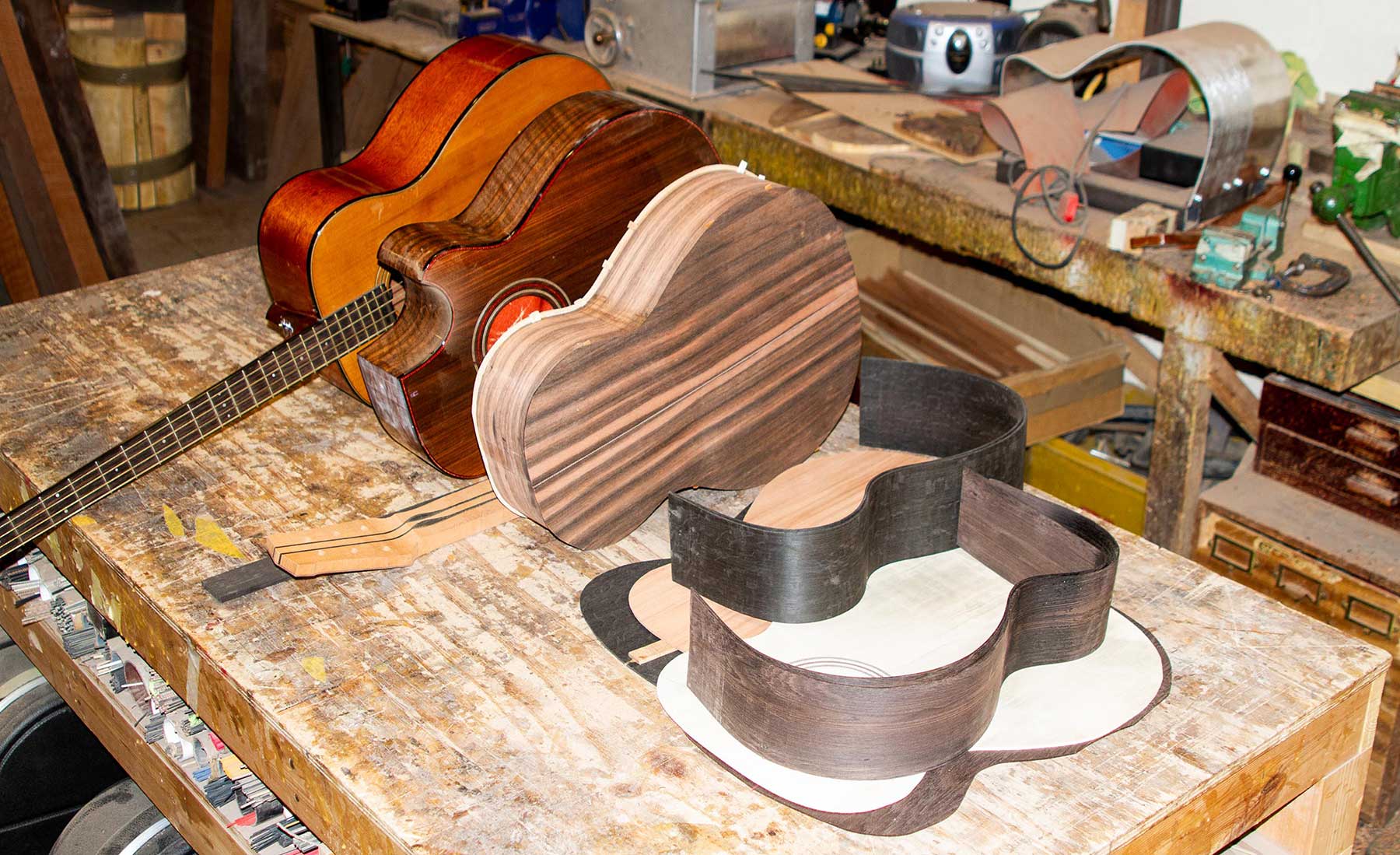
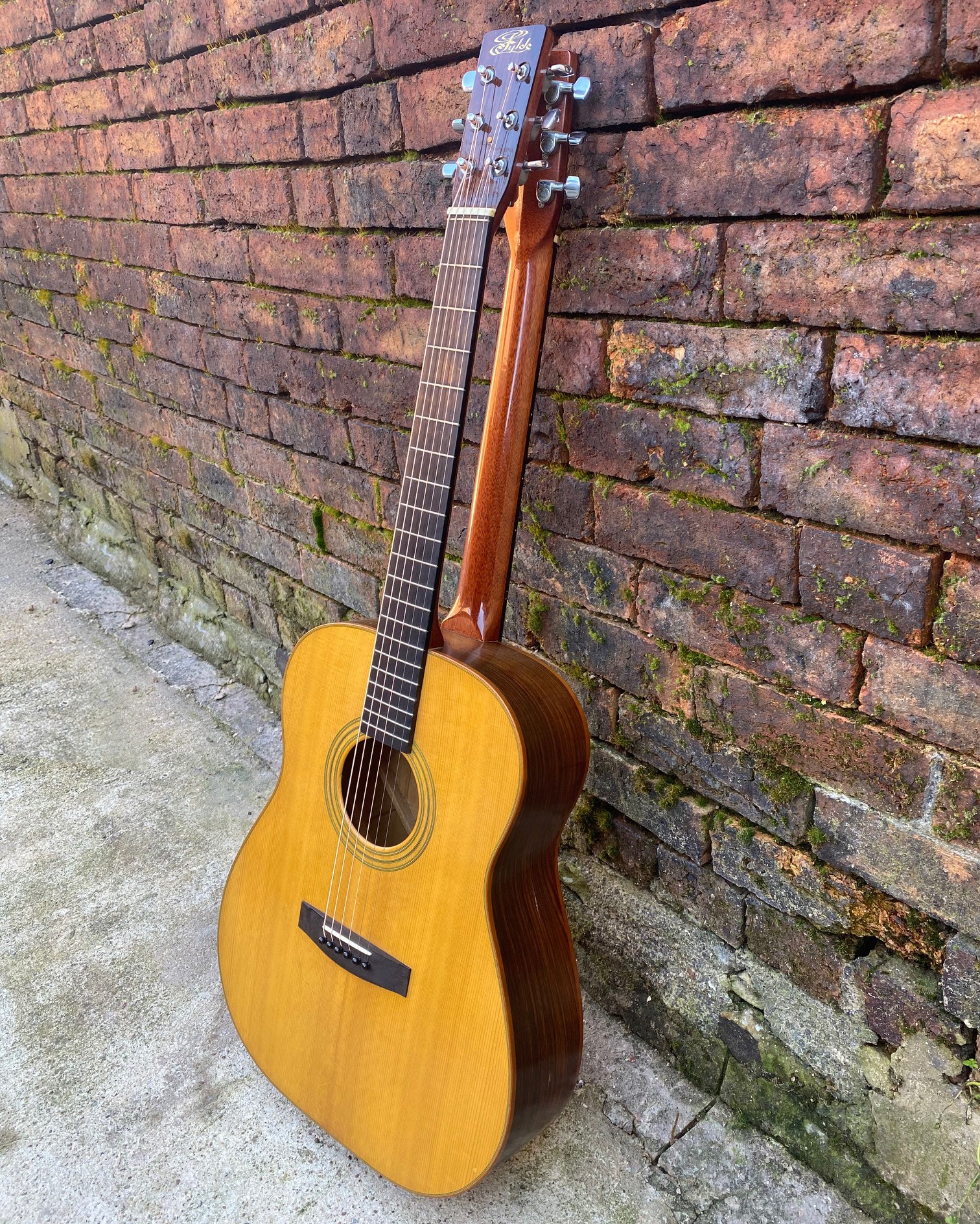
A few guitars in various stages of manufacture, including instruments for Arlen Roth, Roy Harper, Ben Walker and Toby Hay. There will be more photographs and news as soon as possible. The bass on the end belongs to Kathryn Tickell, in for a long overdue set up. Don’t you just hate name droppers?
March: International Day of Forests
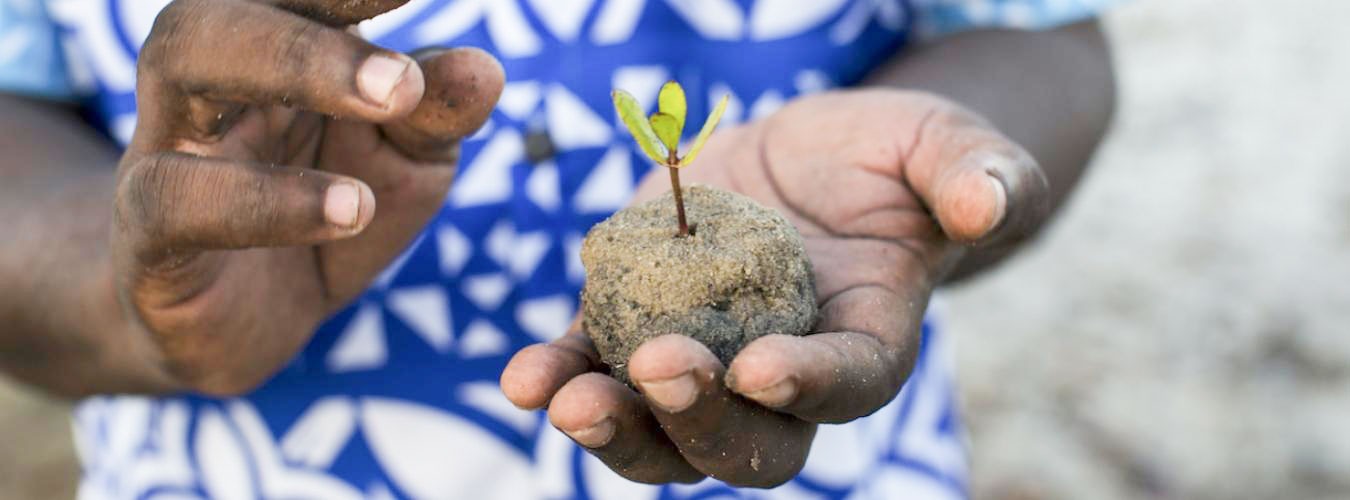
I’m writing this on Sunday, 21st March, which is the UN “International Forest day”
This link will take you to stories from Peru, Bosnia and Bangladesh, and one about the conservation of Rosewood in Madagascar. Despite Covid, all is not lost.
March: And closer to home
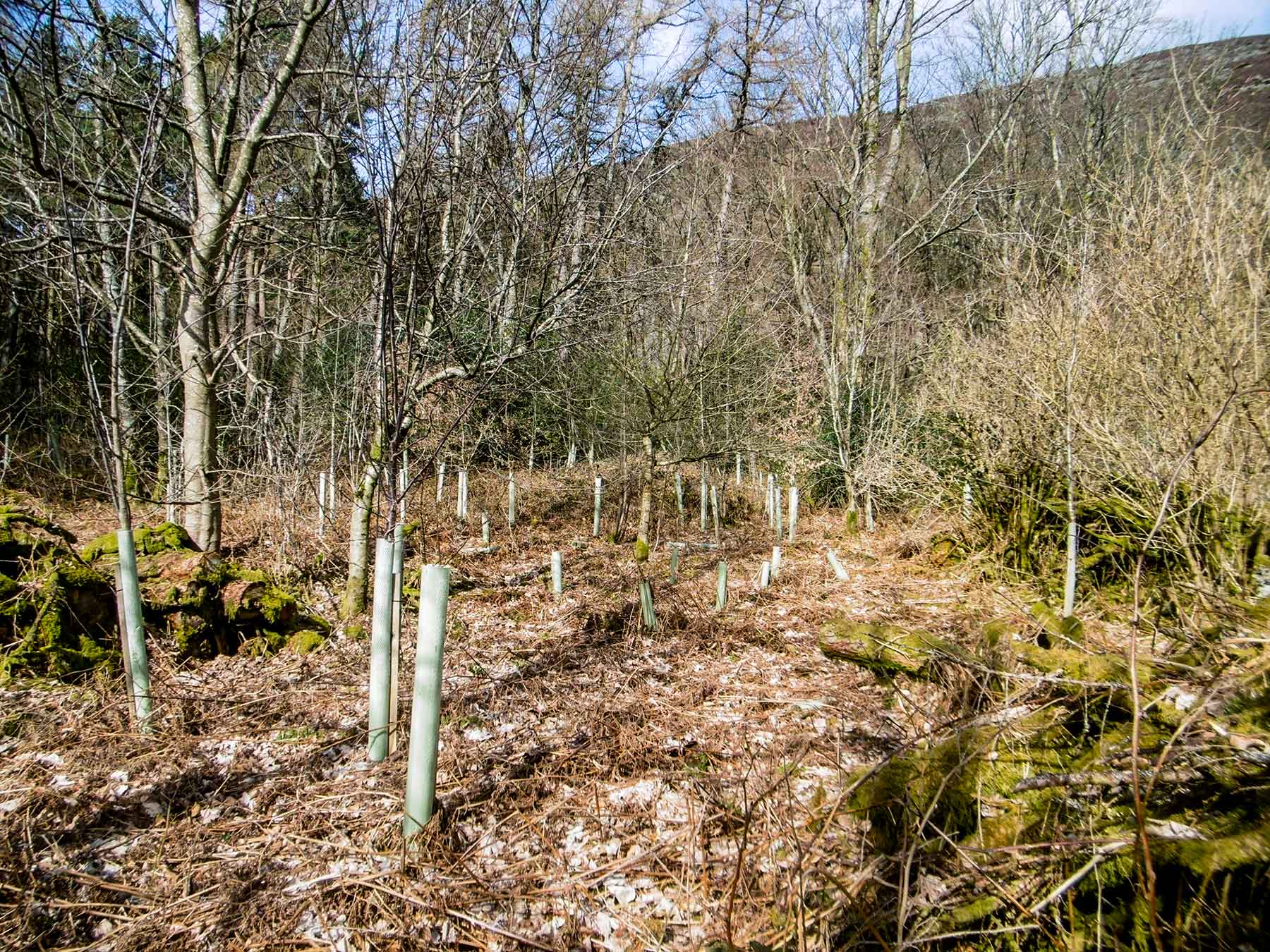
Ten years ago, we had lots of native hardwoods planted in our little woodland at home. Some are now about twenty feet tall and the protective tubes are starting to fall away. We are hoping to plant a lot more when these are properly established, which might not be long now.
I’ll be able to go “A wassailing among the leaves so green”.
May: Ben Walker’s 12-fret Roll Over Leonardo
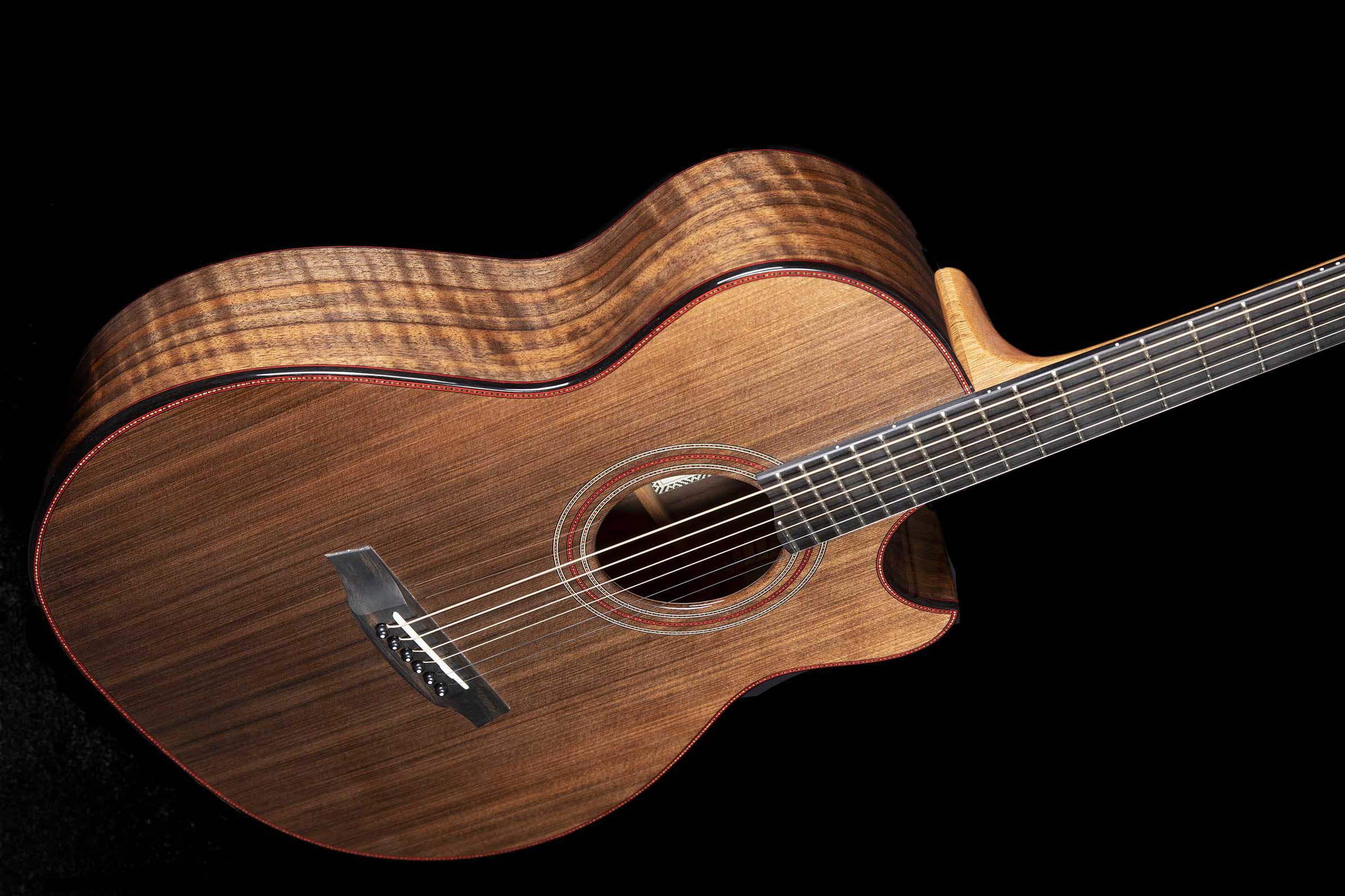
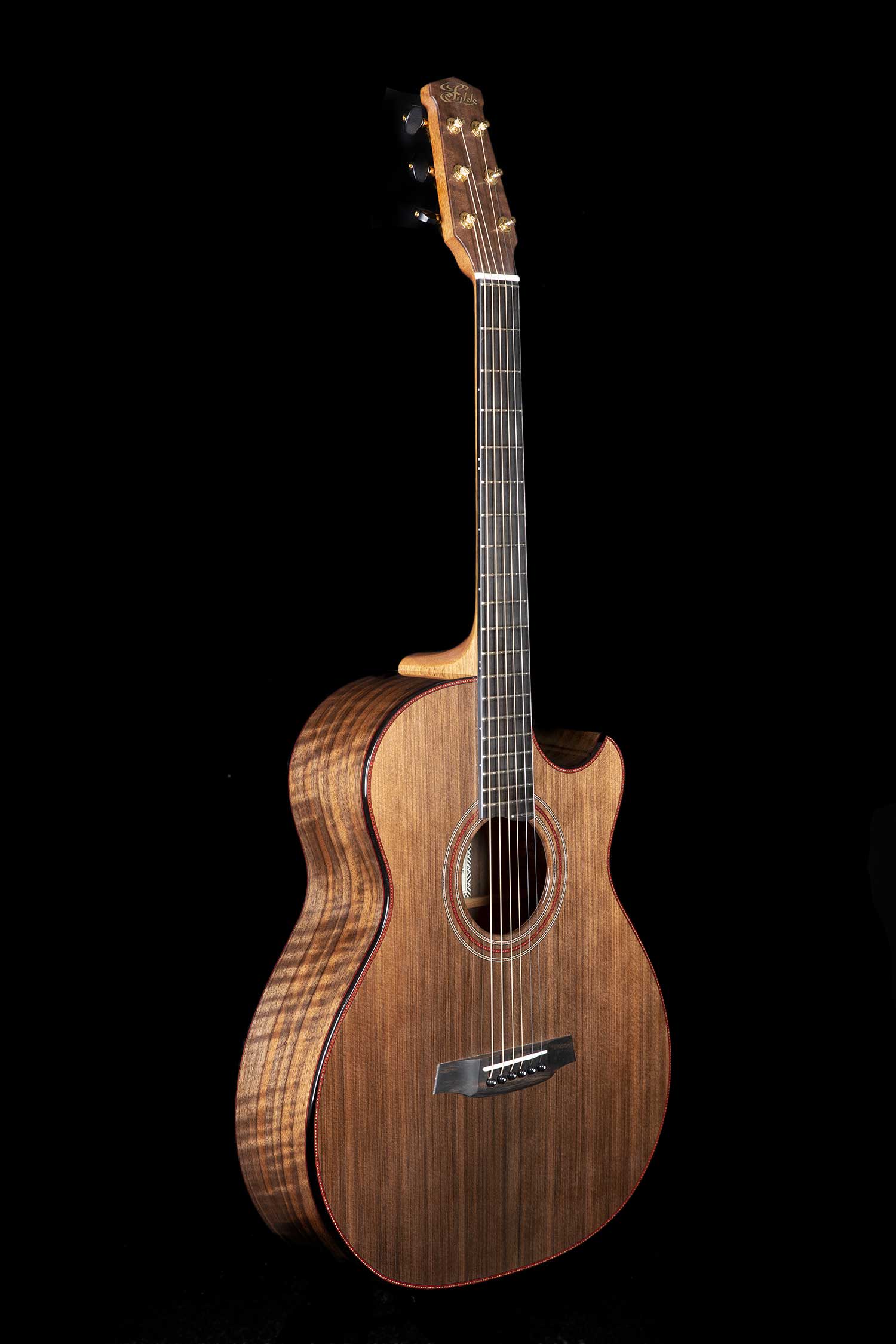
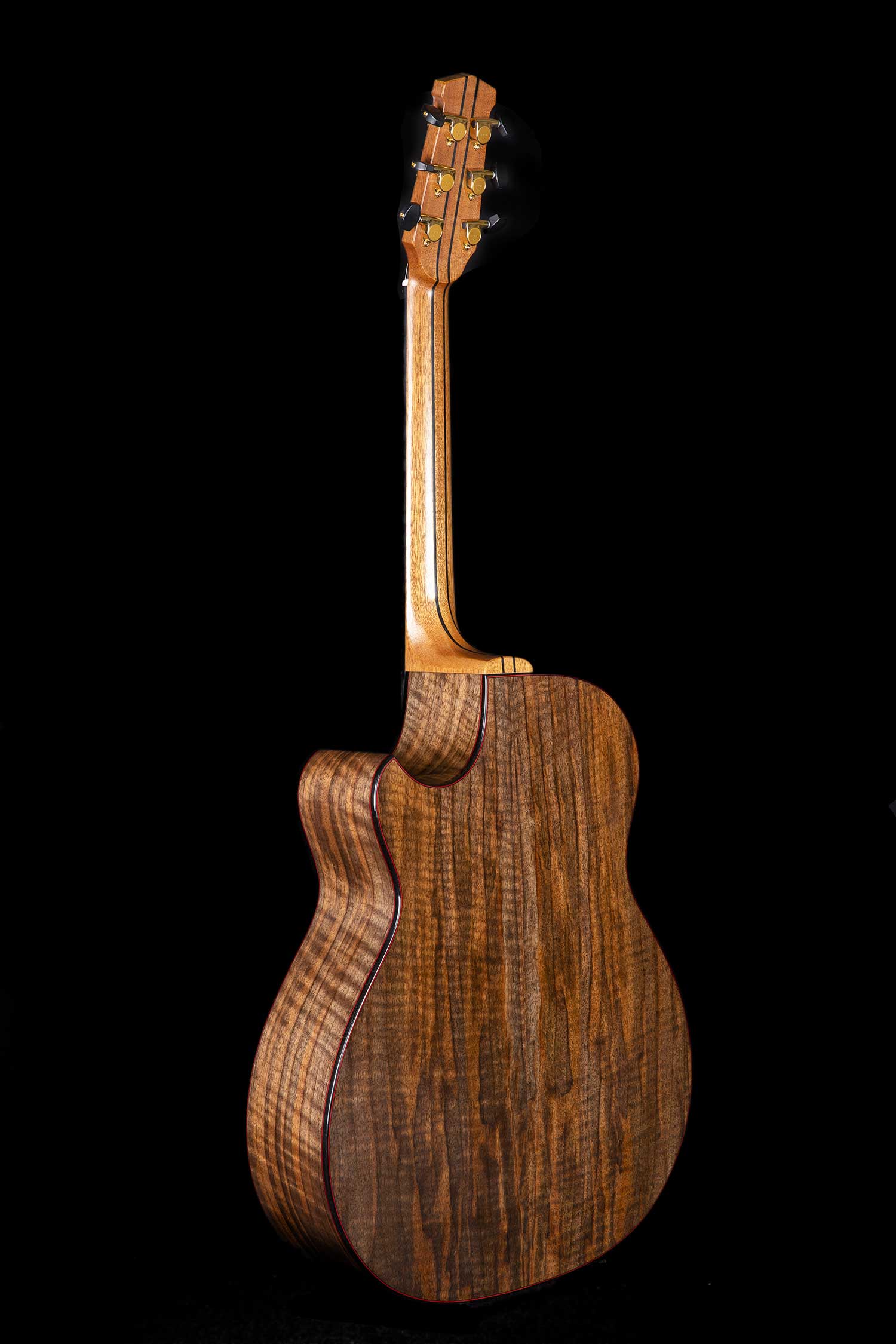
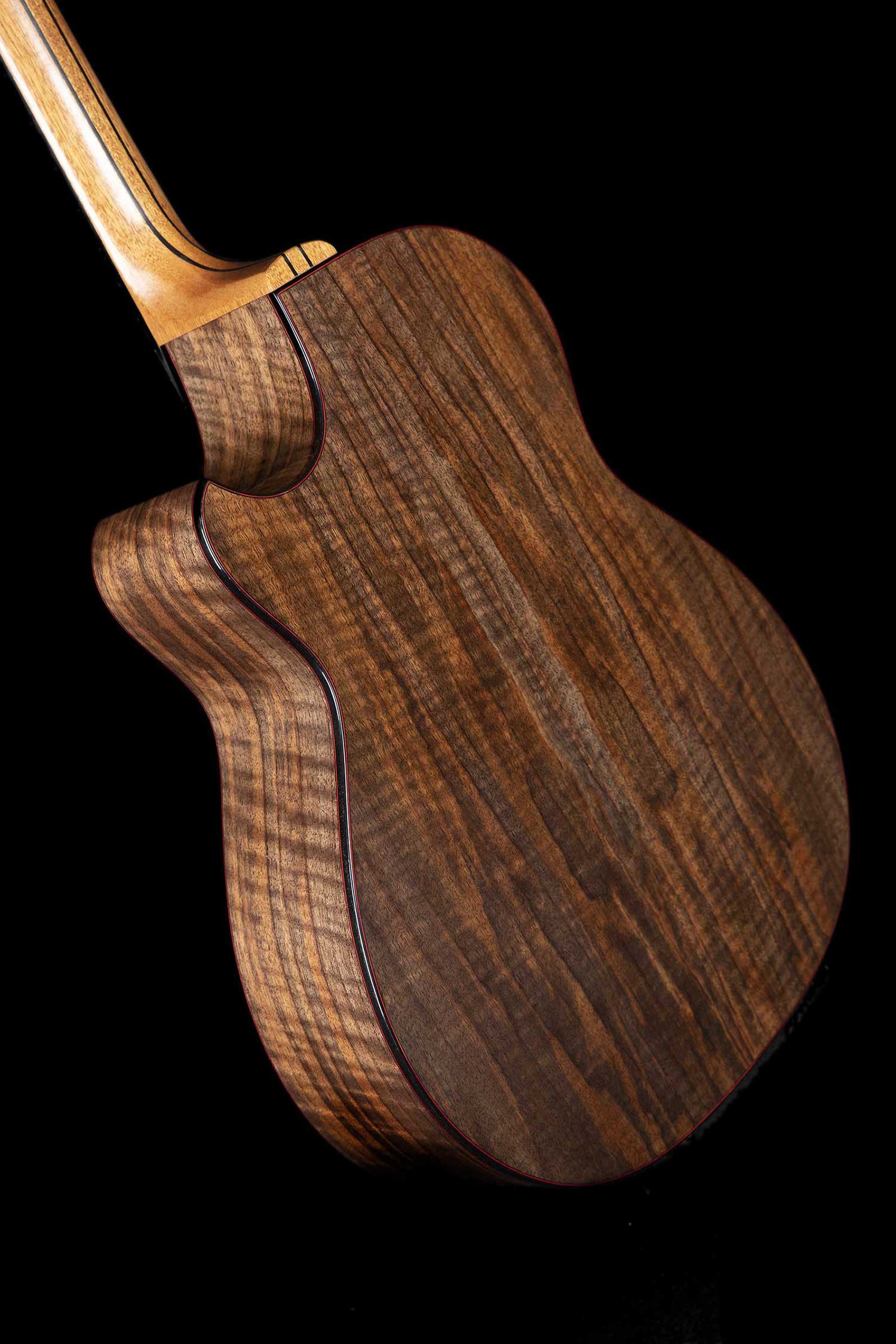
This is a beauty, even if I do say so myself. There was a lot of discussion to get everything decided and sometimes such things can go round in circles, but with someone like Ben, it’s easier to explain the consequences of particular features and have reasonable confidence that you’ve both got it right. Body size and style first, then scale length and soundboard, followed by body materials and decorations. The neck dimensions are always critical, but don’t have much effect on other things so that can be dealt with as a separate issue.
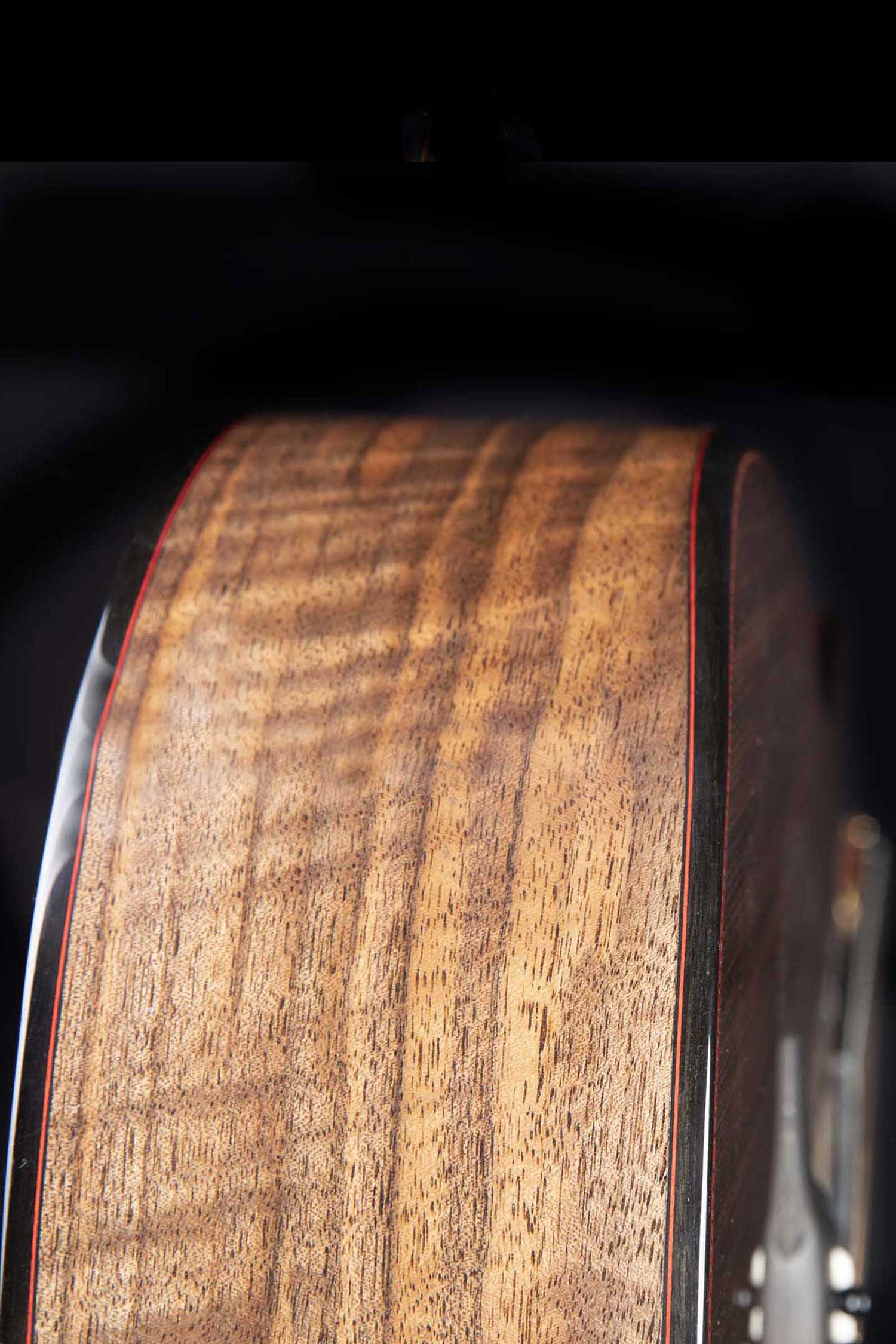
Ben wanted a “bevel” on the top edge, I persuaded him to let me make it a “rolled edge”, it isn’t at all obvious, but is actually much more significant than it looks, and very comfortable. I’ve not seen it on other acoustic guitars and it’s tricky to do. The downside is that nobody will notice, and it is hard to photograph. If you meet Ben, ask him if you can have a play. Don’t be surprised if he says no.
Back and sides are curly Claro Walnut, the top is Sinker Redwood. The bindings are made from ancient Bog Oak and are much thicker at the “rolled edge”, and rounded over, with no significant sharp corner. The neck is made from three pieces of very old Mahogany, and two thin slices of Ebony. Everything bordered with delicate red lines, and the red lines are bordered by delicate black lines. There is a basic principle in a lot of this – if it’s easy to do, I don’t want to do it. Story of my life.
Ben says “Absolutely incredible sound, I’m over the moon with it!” and he has promised videos!
May: New Banjo Neck for Martin Simpson
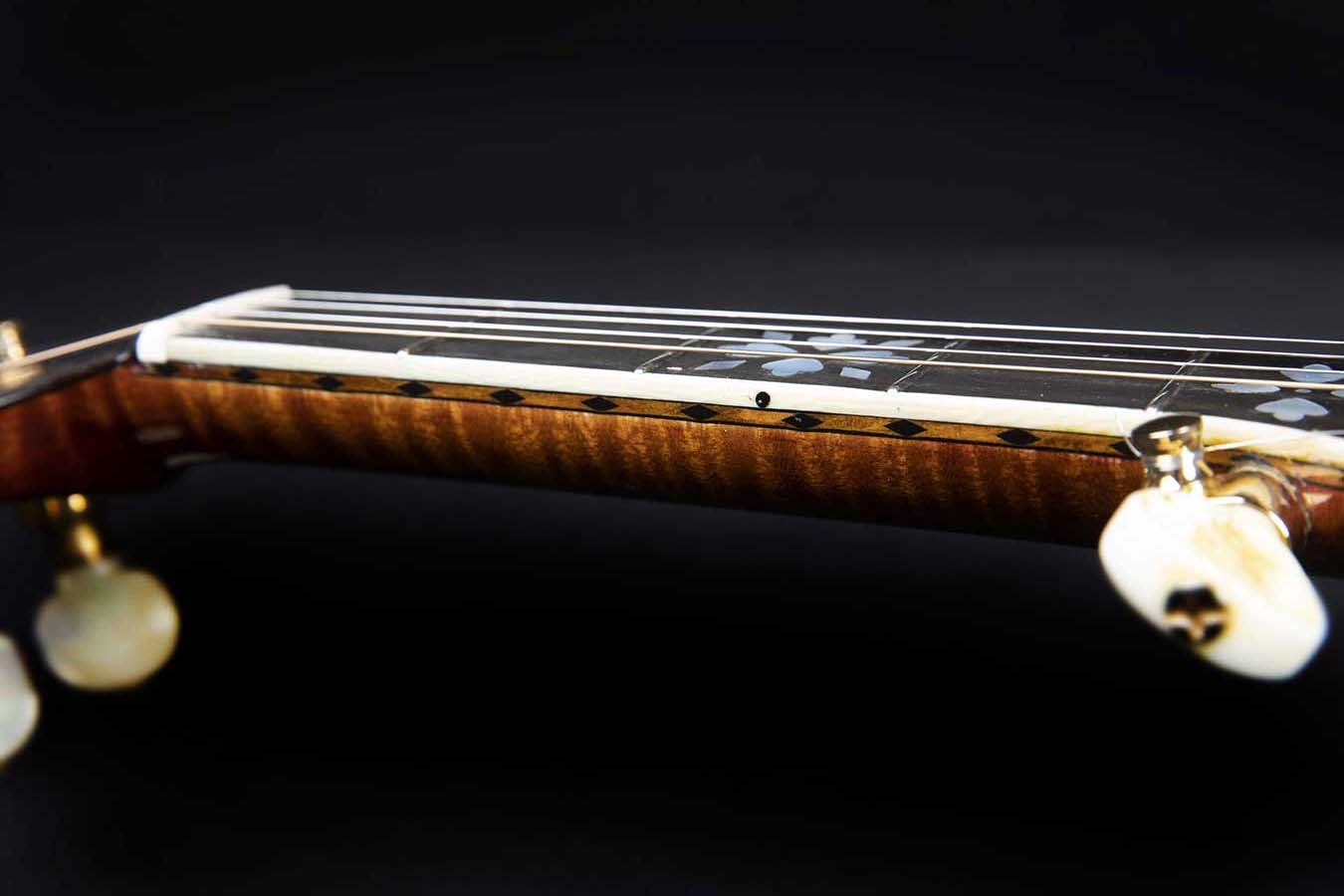
I really couldn’t decide if I should publicise this. A banjo. Well, a banjo neck. Martin Simpson had discovered a 1923 Gibson Mastertone 4 string and was desperate to turn it into a 5 string. I volunteered, when will I learn? It’s taken me nearly a year, largely due to both my hands needing surgery during that time. I’m not blaming Martin for that; I’m just hoping to gain a bit of sympathy. I actually enjoyed doing it, but don’t ask me again.
The wooden diamond side inlays were tricky, but I managed eventually, using Ebony and Jelutong. All the Pearl inlays were imported from specialist suppliers and inlaid by hand. The neck is made from a Curly Maple Cello back, it was lovely watching the figure “develop” as I rubbed two stages of stain in over a couple of days, and the final polish really works well. An unusual feature of old banjos is that the sides of the headstock are “vertical”, square to the surface of the fingerboard rather than square to the surface of the head, that would normally be done on a “bobbin sander”, but of course I did it the hard way.
Martin hasn’t been able to see it yet, I’ve been teasing him with photographs as I went along.
May: What we did on our holidays
The dog, the lead, and the legs.
Imagine this: Sitting outside a pub, having a drink and something to eat, along with half a dozen other couples, with light aluminium tables arranged to leave a narrow space for pedestrians, and in particular, dog walkers.
Then imagine this: a lady with a dog on a lead. A very small dog, possibly a doggette or even a doggling, wearing a doggy coat bigger than itself, in fact, resembling a tiny kennel with a head, a tail and four paws sticking out. The lady owner has the doggy on one of those extendable leads, a bit like a fishing line and reel that can be released or wound back in as required. Or not, in this case.
The lead was extended to about eight meters, and the lady was walking in front, completely oblivious to what was happening eight meters behind her.
As she came to the end of the line of tables, she turned sharp right. This was not going to end well.
I think she had forgotten about the dog. The lead was now pulled at right angles around the last table in line, actually against one man’s leg, who stepped over it so that the lead was resting on his other leg. He stepped over that, so the lead was now against his chair leg, I bet you know where this is going don’t you?
The dog lead was now forming two sides of a triangle. The dog was small in stature but obviously large in intelligence, maybe even a mathematician. He/she could see that the shortest route to catch up with Momsie was not to follow the line of the lead, but to cut across the third side of the triangle, and even better, an even shorter route, was under a second table, through the legs of another chair, and between the feet of the lady sitting in the chair who was taking a first mouthful from a very full glass.
This is all completely true, but It was one of those “Honestly, Officer, it all happened so quickly ” things. I jumped up, the two customers and their partners jumped up and we all shouted ” STOP” in unison. Or was it octaves? Of course, the act of standing up took the weight off the tables and chairs and everything began to go very wrong very quickly. The dog lead was being pulled into a noose from both ends, tables were sliding, chairs were tipping over, everybody was holding their drinks and grabbing their food, hopping over the dog and the dog lead while a total of thirty six assorted legs, belonging to tables, chairs, humans and one dog were untangled.
The lady “culprit” hardly paused, not a word was said, Momsie carried on walking, with little doggy tagging along, still eight meters between them, still oblivious.
We were lucky, the next dog that came along was a Great Dane.
June: Toby Hay's Ariel
Here it is, not the usual Mike English pictures I’m afraid, just me struggling with a digital camera that has more functions than I have brain cells. (Careful!)
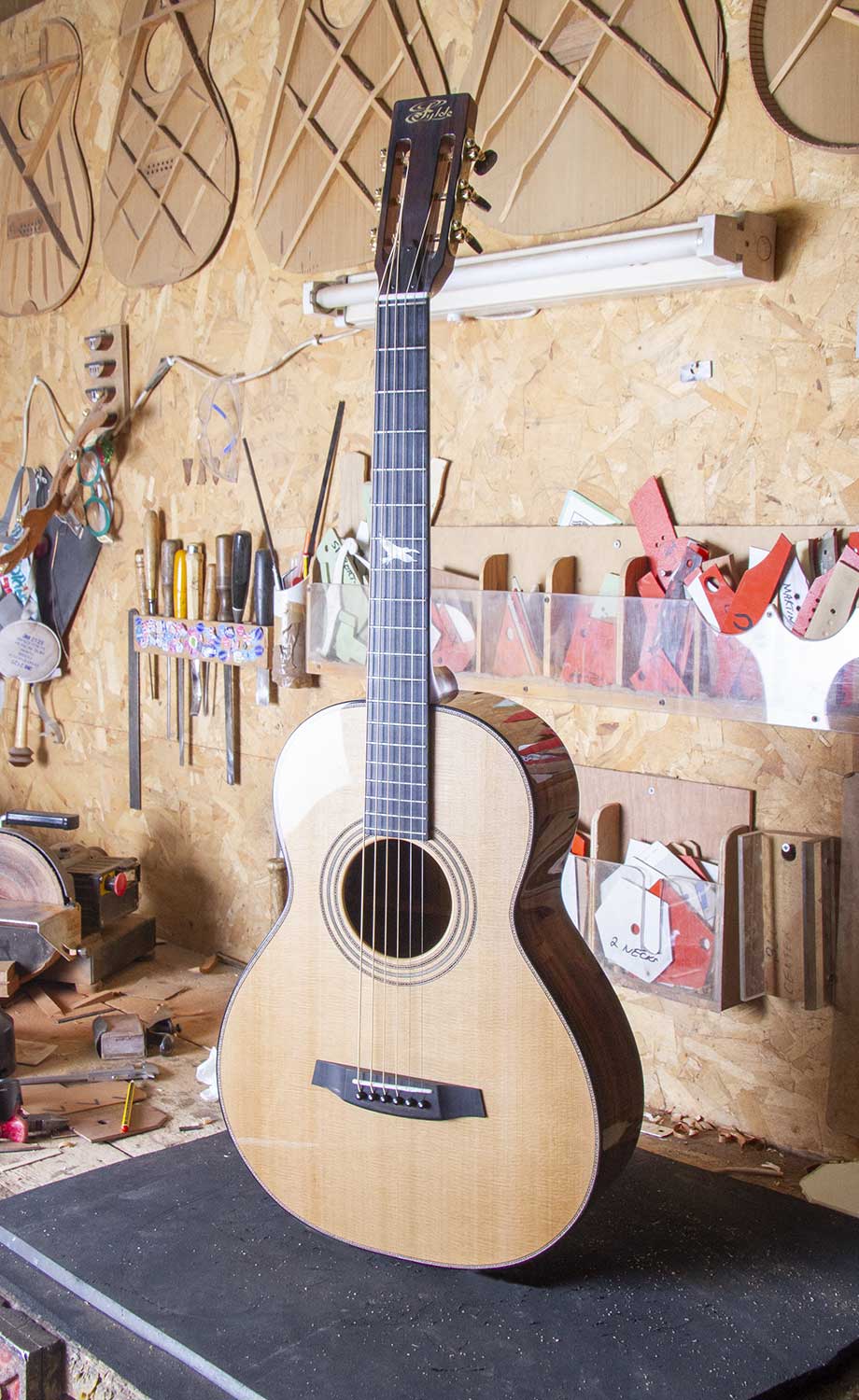
The back and sides are powerfully striped Macassar Ebony, which compares nicely with his 12 string and the top is very light-coloured Cedar. Toby would have liked to use Spruce, but I persuaded him that the guitar would be rather bright, Cedar gives a lovely mellow tone on a small guitar. Toby’s 12 string has a red kite inlaid in the fingerboard. This one has a curlew.
June: Bob Benedetto and Bill Neale
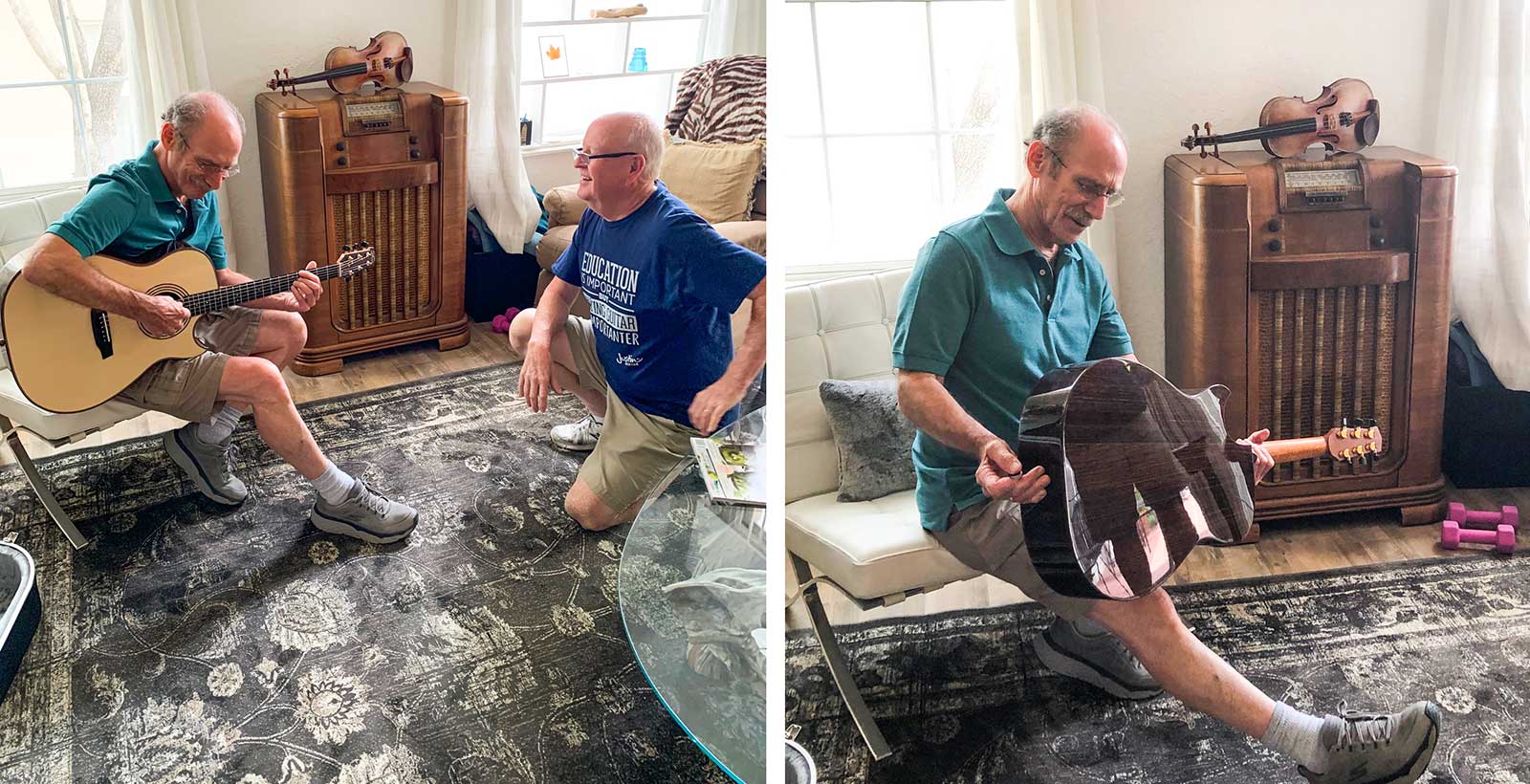
A lovely set of pictures sent to me by Bill Neale, taken at Bob Benedetto’s house. Bob was very complimentary about the guitar, which is very nice of him. Don’t you just love that Radio and violin?
I have Bob’s book on making archtop guitars. It’s “the” reference for anybody venturing into that world.
Bob’s site, lots to look at here
and Bill’s section in particular
June: Benefits of learning an instrument

Felicity Bell from Evergreen Violins in Virginia contacted me, she had seen the “Gigs at Home” pages that Mike and I were running last year to keep everyone happy during lockdown. We’ve stopped now as lots of other people have started doing similar things.
I wonder if there has ever been a study of human behaviour or character plotted against which instrument they play? Are violin players always a little bit mad? Is there really a connection between Saxophone playing and heroin use? Do any guitar players have any money?
June: Fiddler on the Roof.
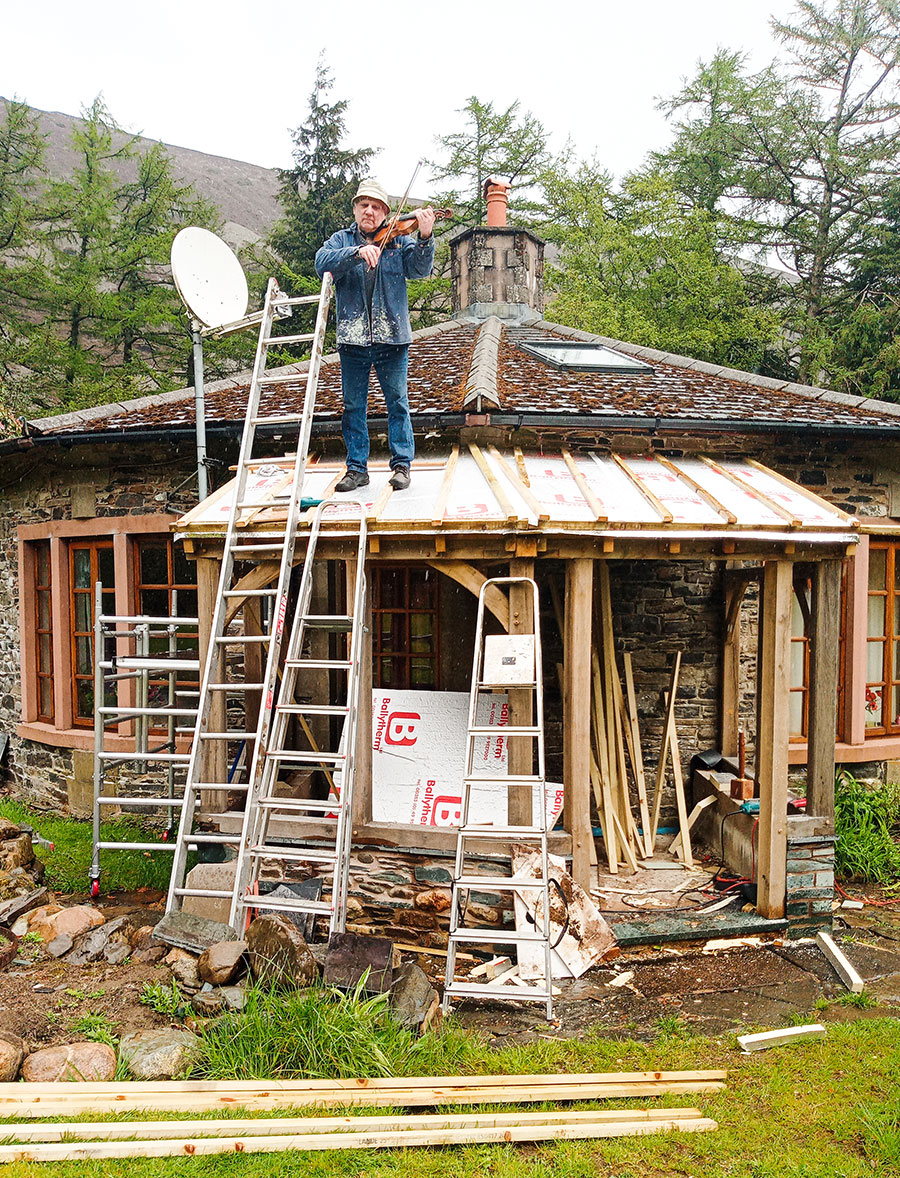
Or, as Moira puts it “Idiot on the roof”. My conservatory is making progress. I think my Violin playing “stance” looks quite professional, and I don’t think Yehudi Menuhin ever played on a sloping slate roof in the rain, so I’m one up on him.
I’ve just noticed that I’m right at the focal point of our broadband satellite dish. If I’d realised that a few days ago, I could have put myself on Eurovision.
And several friends have told me to be careful that I don’t Topol off, I do have some strange friends.
July: New Guitar for Arlen Roth
Surely you have heard of Arlen? “Master of the Telecaster”. “One of the most influential guitarists of all time” etc. etc.
Arlen was one of my first endorsees in the USA around 1979, when he described his Falstaff as “The best new acoustic I have played – by far”. Recently, he saw a video where Clive Carroll was talking about his own Fylde, (“he’s so incredible … I’m a new fan!”) which prompted him to drop me a line. Arlen attended NYC Music and Art College at the same time as Eric Bibb, so we had a lot to talk about.
Arlen wanted a new Fylde guitar, but lots has changed in music and guitars in the intervening years. There are body shapes and styles that weren’t thought of, timbers that had never been used and pickups that hadn’t been invented.
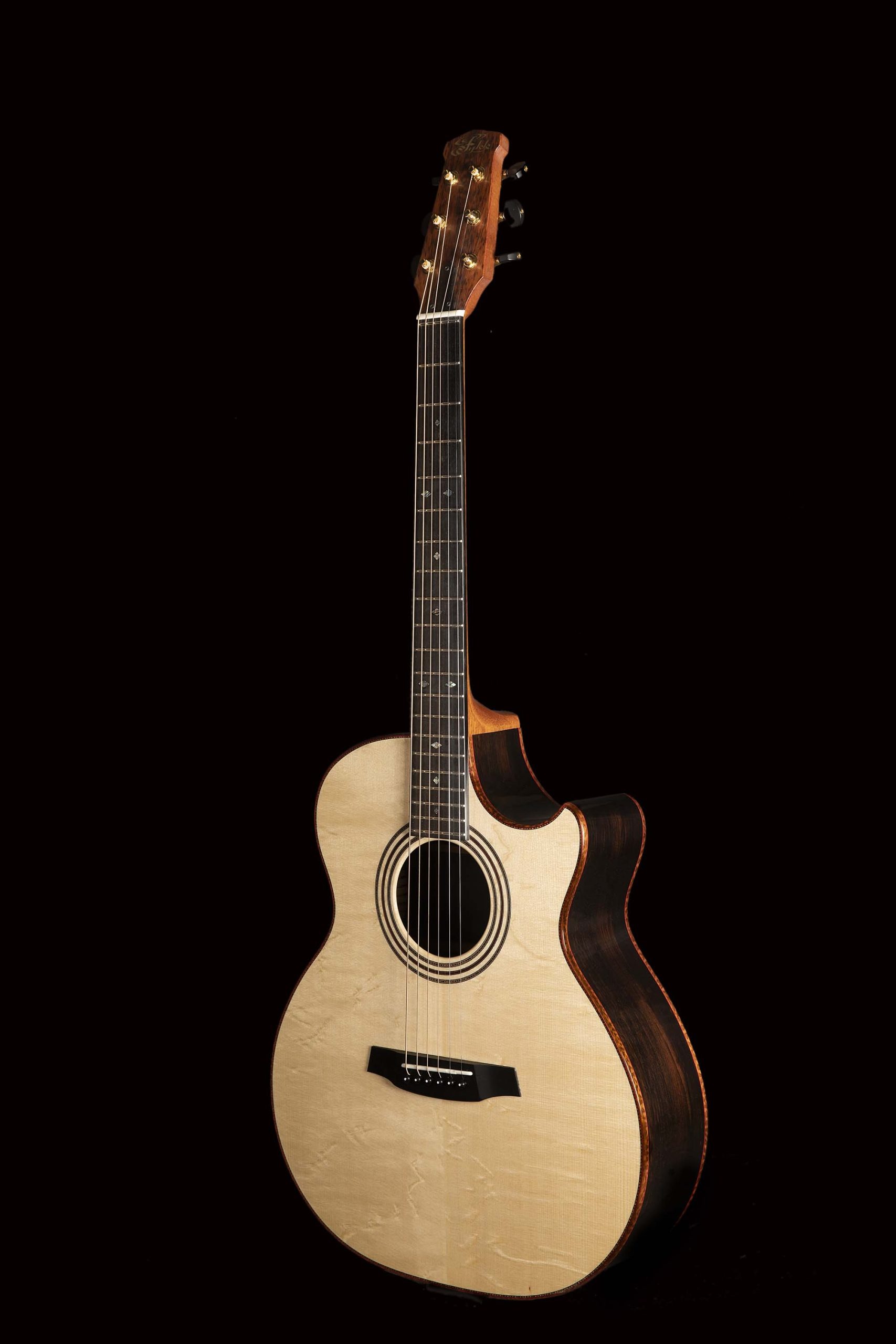
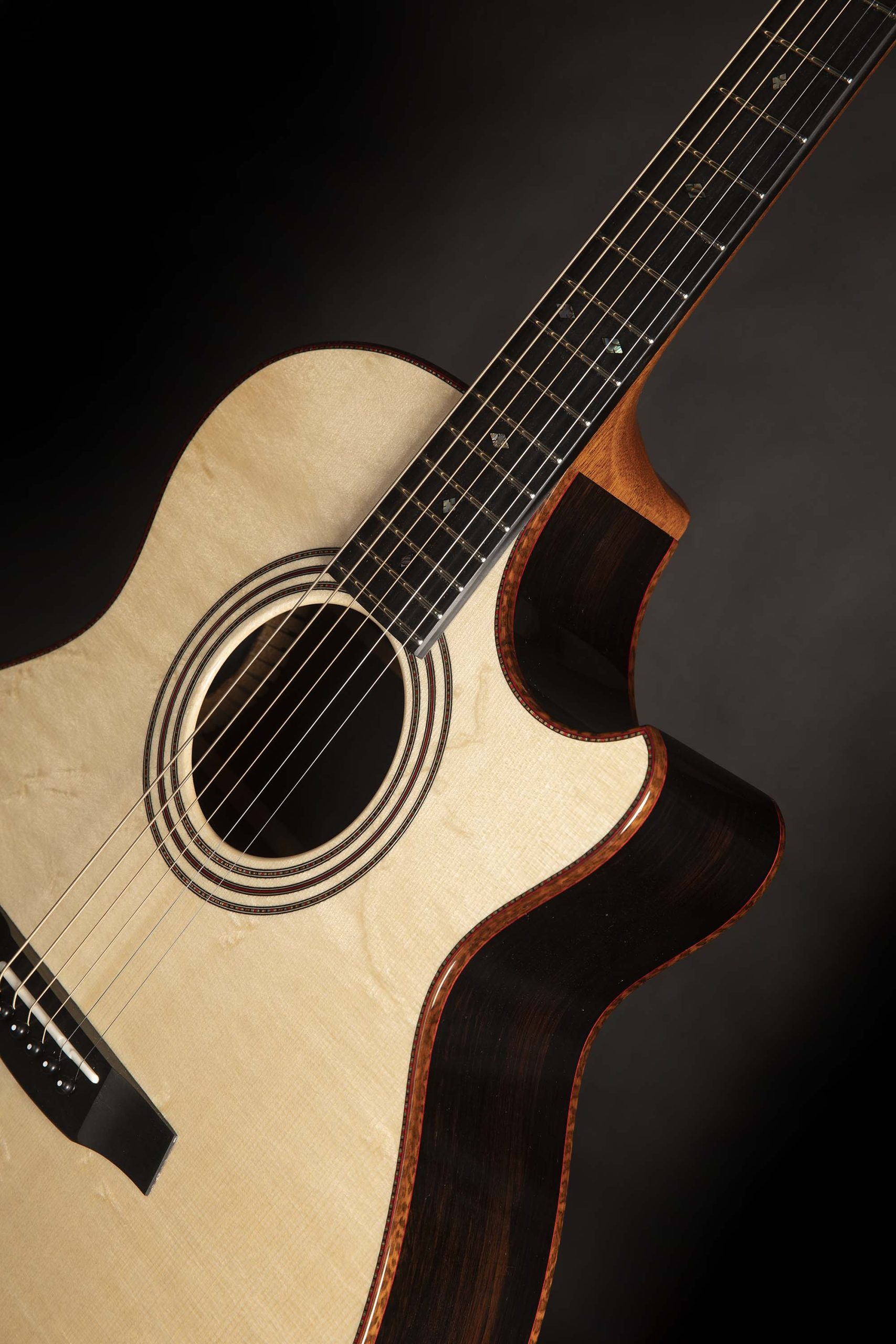
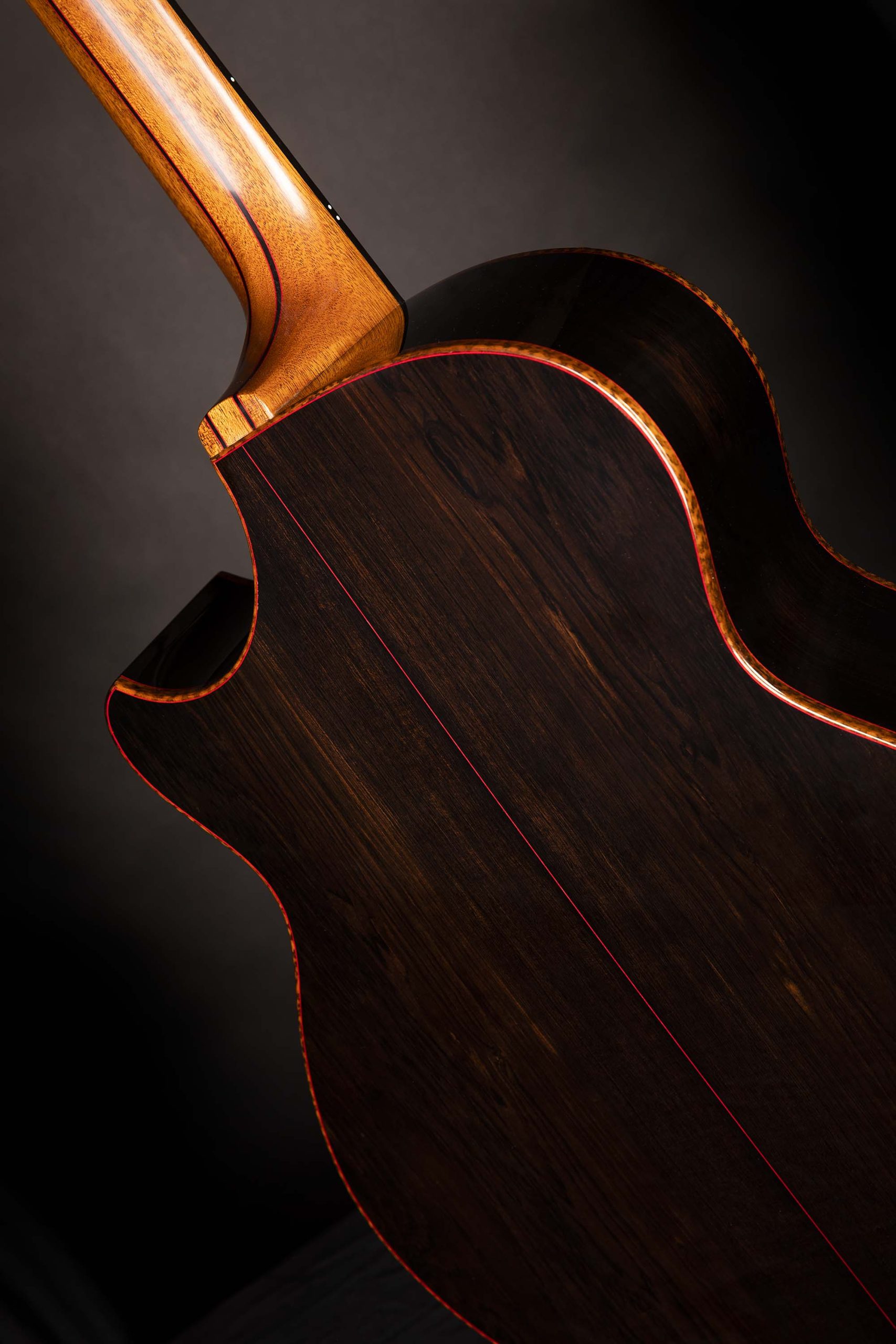
The discussion was the usual back and forth, suggestions, questions, comparisons, essential features, I sent him video clips of lots of Fylde players, and the final decision was a guitar very much like John Smith’s and Antonio Forcione’s – a cutaway Alexander, with a short scale to keep the string tension low and facilitate bending. African Blackwood back and sides and a Bear Claw Italian Spruce sound board, all excellent choices. At one point we had a near disaster, a tiny resin pocket ambushed me, it jumped out of the Spruce and said. “Here I am, what are you going to do about me huh?” It happens, no matter how careful we are, but I knew the wood was wonderful, and it’s not right to scrap so much of an excellent guitar just because of a tiny visual flaw, and it really was tiny. So, I sent a picture and got an instant reply. “If it doesn’t bother you, it doesn’t bother me”. You might not be able to see it in the photographs. It’s a beauty spot.
I thought the guitar and the materials deserved some celebration, so I used Snakewood bindings, and my fun little “Twisty cutaway” Isn’t it lovely?
July: Old Lucetta Mandola
I can’t quite remember, but this might possibly be one of a kind. I certainly made no more than two, somewhere around 1977. The back was hand carved from a solid block of Indian Rosewood, the top from Spruce. I wouldn’t attempt it now.
Apart from the neck being cracked and repaired it’s survived very well. It’s basically a scaled-up version of the Lucetta mandolin. I wish I had made the top section a little less wide, and I wish there were better tuners available to me. If wishes were fishes …
I don’t know who it was made for, but more recently it has been living with Robbie Cwik, who for a time was back stage for some of the early Jethro Tull tours.
“I was the boffin and chief balloon inflator. It was a bizarre tour. I didn’t have time to take pictures as we had numerous animated antics to perform on stage during the show, it was great fun. Here is a picture of the tour badge. I still have my tour jacket”.
July: Bouzouki for Andy Irvine
Many years ago, one of Andy’s main instruments was a Fylde Octavius Bouzouki, in fact, he had two. At the time, it was the only bouzouki style we made and in recent years we have more or less stopped making it, the Arch Top instruments have taken over. But- Andy was hankering to revisit such things and, in for a penny etc, decided to upgrade to the Signature version. He hasn’t seen it yet, don’t tell him.
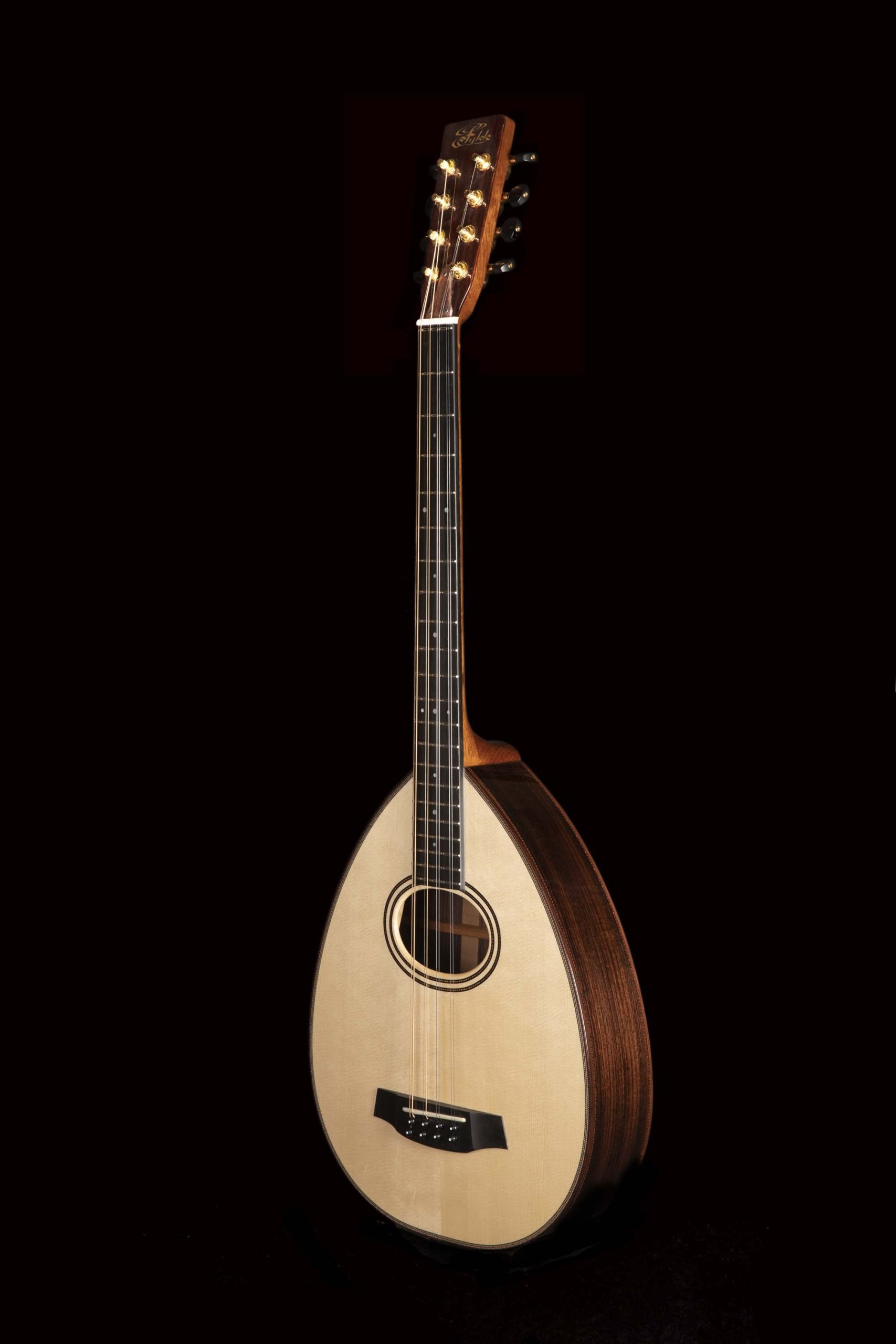
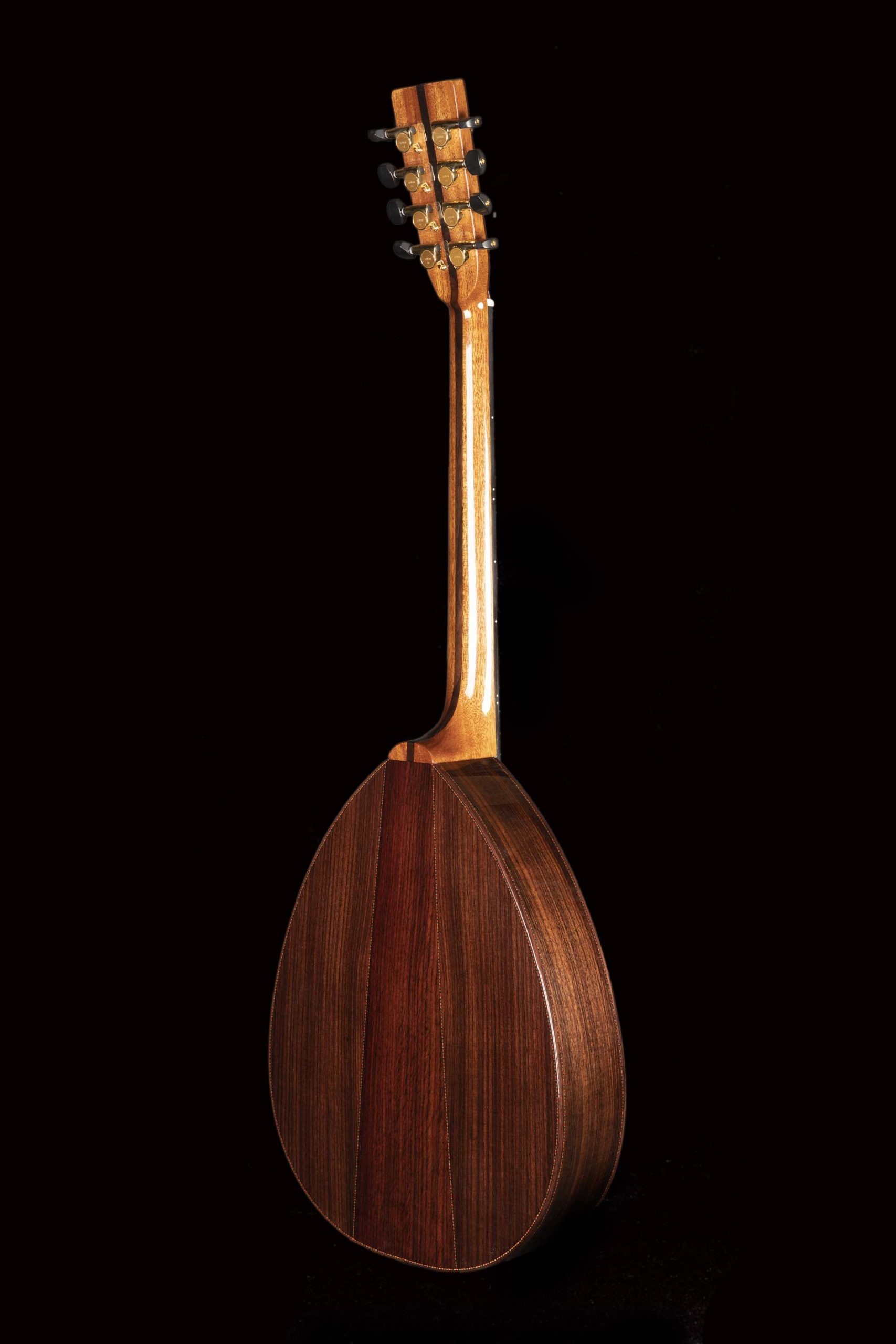
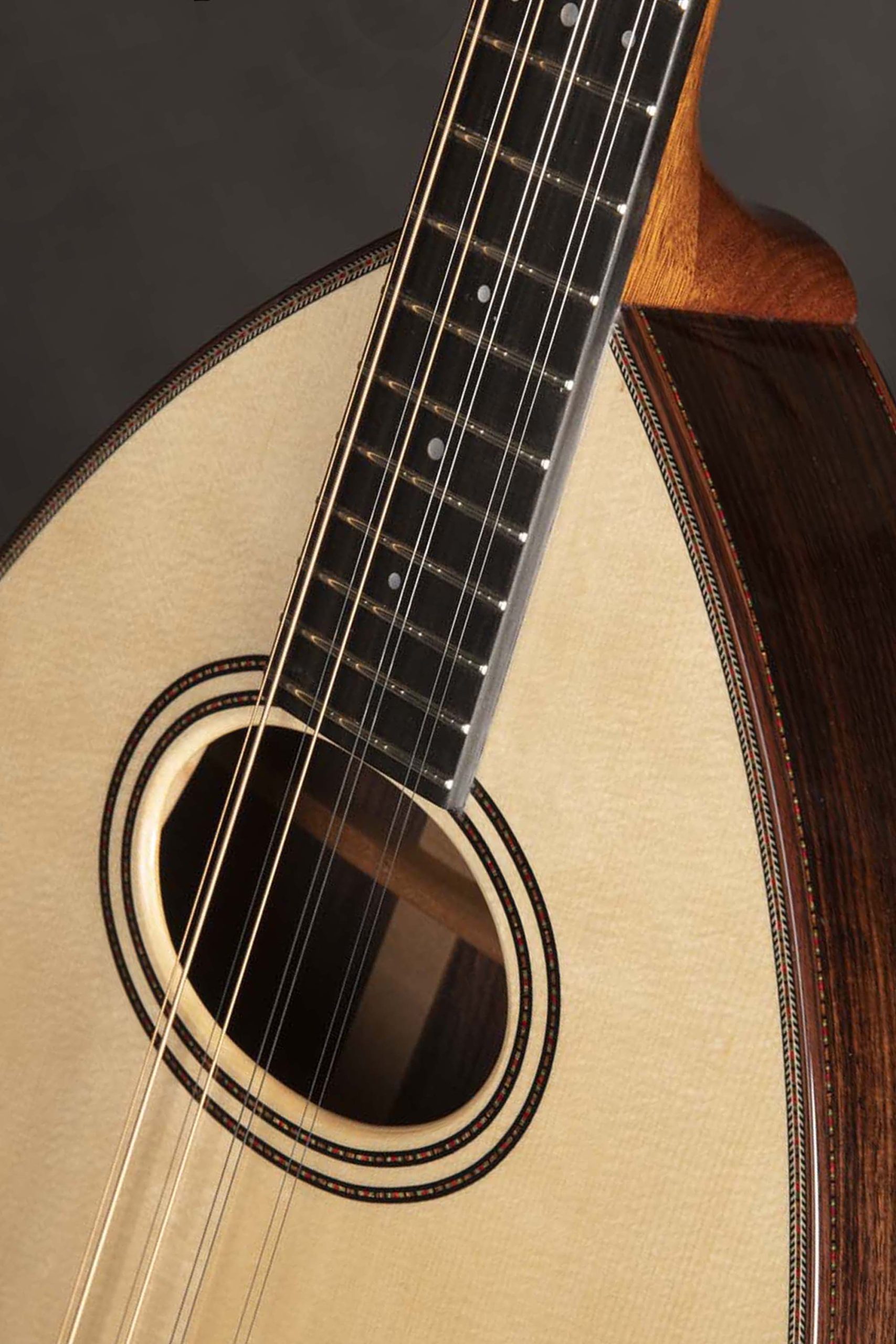
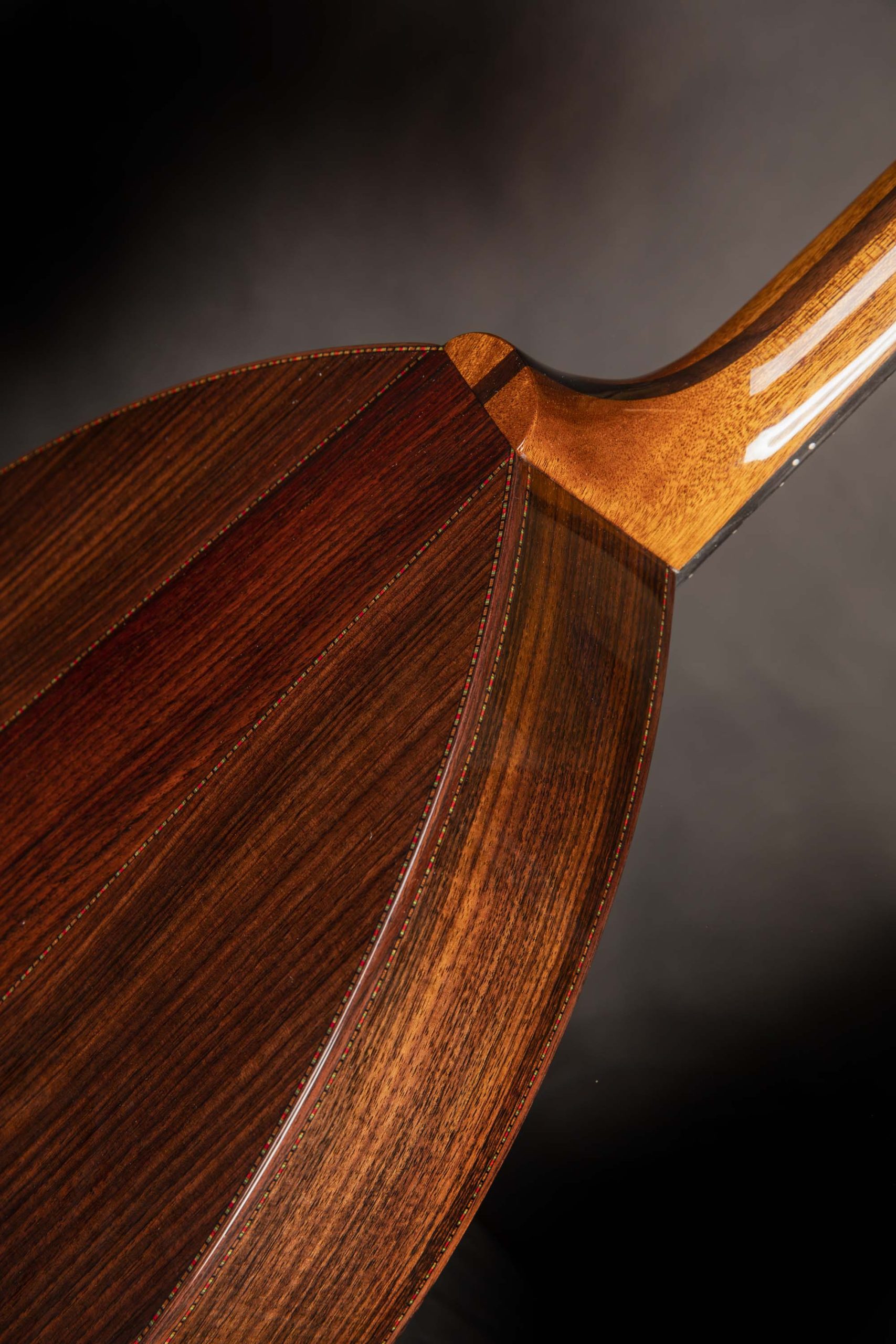
July: Two Become One
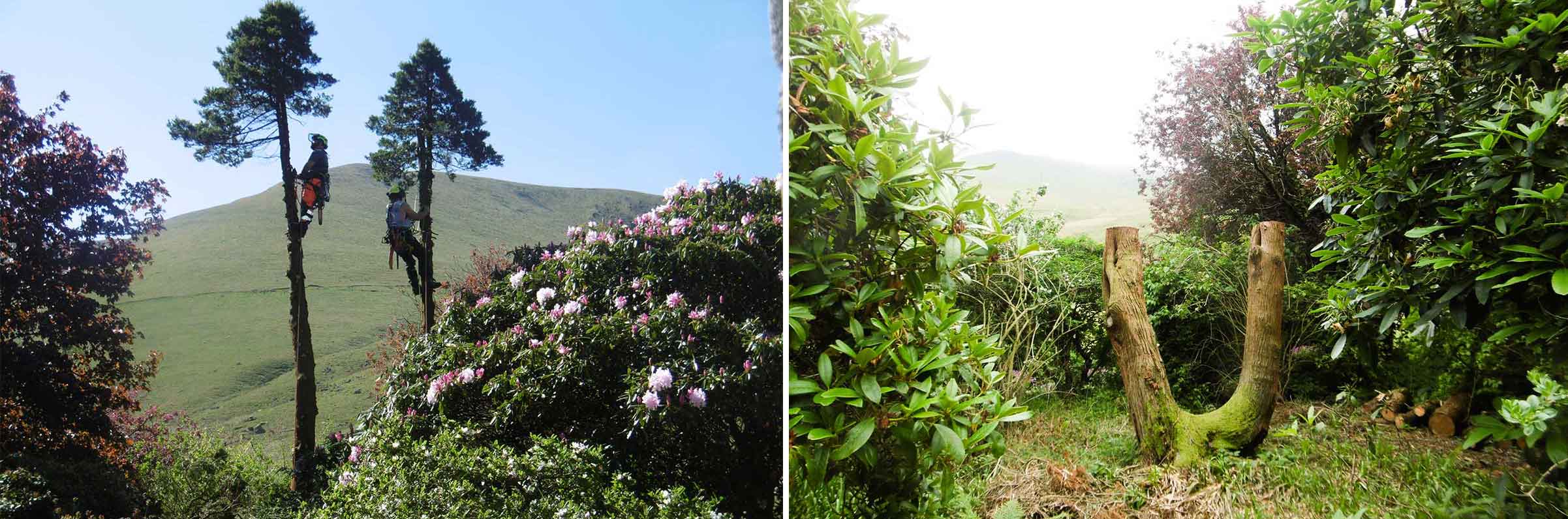
Two “Thuja”. trees in our garden being brought down to a sensible height. Every tree is a wonder of nature, but some of them are greedy and steal all the light from others.
These two trees had a surprise – they are actually one. It’s a massive catapult.
I’ve been wondering if I could find a huge piece of elastic and a parachute, there is a pub just the other side of that hill and everything seems to point in the right direction. I’d have to walk back though, so it’s not the best Idea I’ve ever had. Also, there is a better pub in the other direction.
The aboriculturist is Jake English. Jake’s website.
August: Surprise surprise: The disappearing hole.
It happens, and it’s very annoying. A lovely piece of expensive wood can often have hidden, expensive surprises.
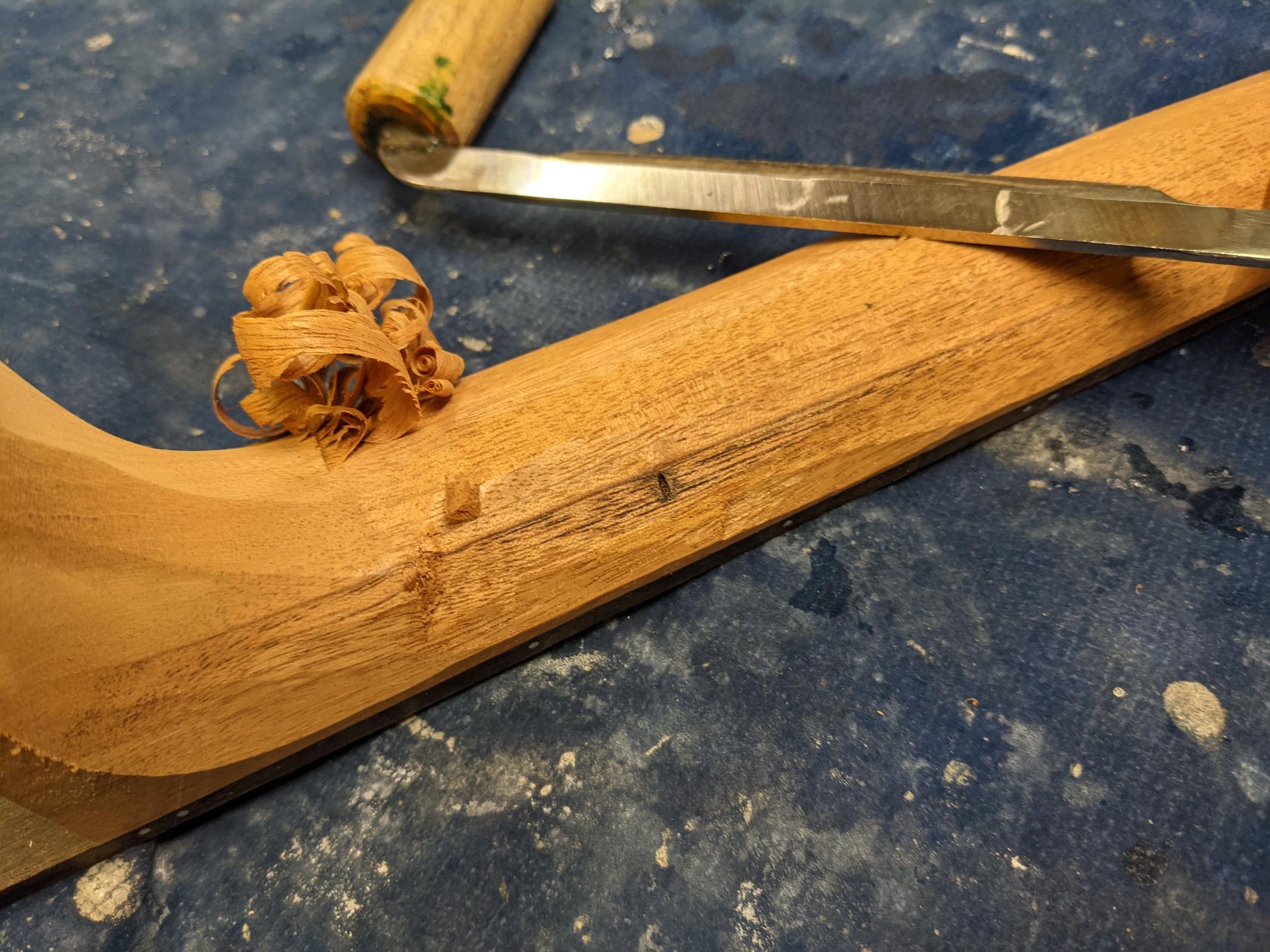
When I began shaping the mahogany with a drawknife, it looked perfect, but as I cut deeper, a faint line became darker, and one more shaving exposed a tiny hole. Another shaving and it became a bigger hole. Oh dear. All that work! Actually, those are not the words I used.
If we were making larger numbers the process up to this point would be done by machine before we glued on the fingerboard and head veneer, so all that time work and materials would not be at risk, just one more piece of scrap wood. But when we work the way we do, lots of things are different. There are many reasons for the choices and order of work in manufacture, it can be fascinating, and I can tell you all sorts of stories about why things are the way they are. All the arrangements here have developed over fifty years, they have changed many times depending on available materials, muscle power, skills and equipment, no doubt many will change again.
Anyway, all was not lost – when this happens all too often the flaw gets bigger and it all has to be scrapped, but with the very next shaving, the hole got a little smaller, and by the time I had reached the intended shape, it had disappeared. More new words were used. I might tell the new owner; he likes a good story.
August: Roy Harper
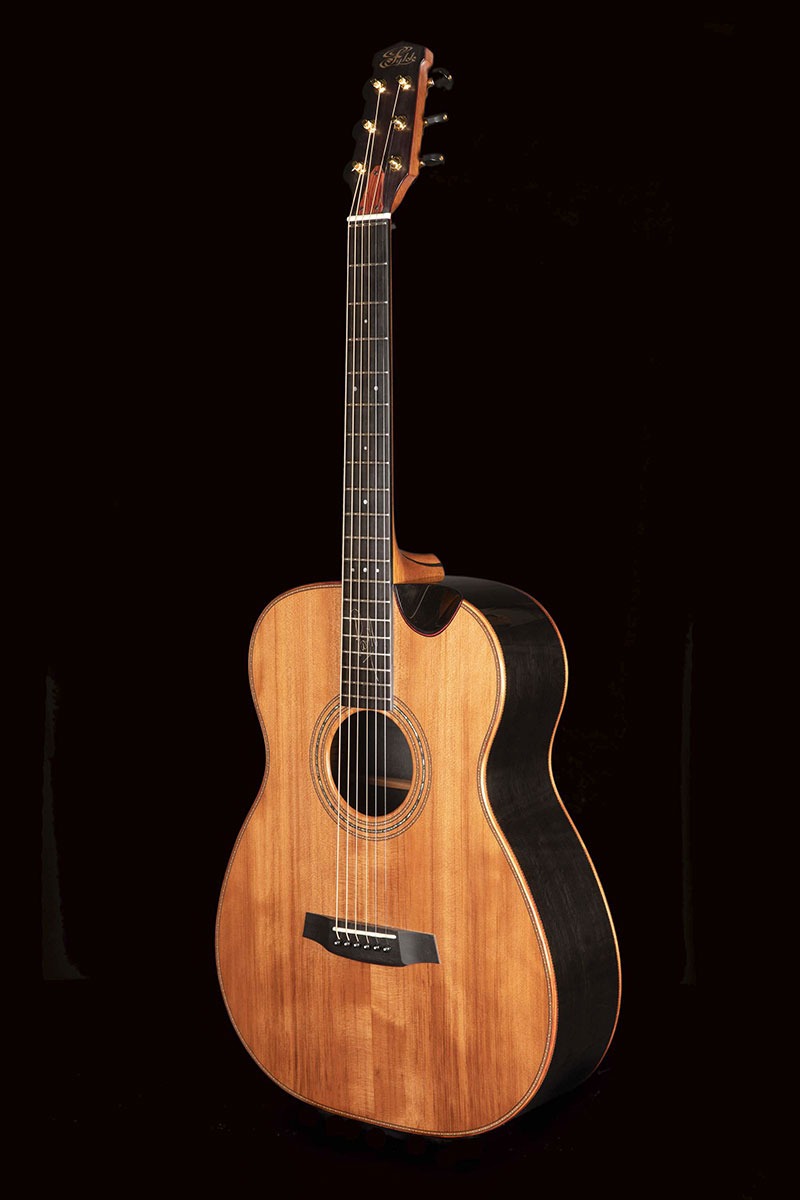
We shipped this guitar to Roy almost two months ago, but I didn’t want to say much until I knew it had arrived safely and he’d had time to play it. Well it arrived safely, and Roy has been playing it ever since. “It’s Excellent”. All good.
Roy had a Falstaff for many years, so we used that as a basis for lots and lots of discussion. There are differences – a 12 fret neck join, Bog Oak back and sides, a Sinker Redwood soundboard and Tulipwood bindings. The headstock shape and tuner positions are slightly reworked so that Roy can play chords from “above” the nut.
To regain fret access from the short neck we’ve included a small bevel instead of a cutaway, and because he asked me to, a little bit of Abalone shell inlay round the soundhole.
The final “detail” – Roy’s signature inlaid in silver wire. We did discuss leaving the frets out altogether at this position, but the wire is very fine, and I felt the frets would help hold the inlay in place! Parts of the inlay required five attempts, I sometimes think I lack patience, then I do something quite daft like this just to prove myself wrong. By now I should have learnt the amount of effort these things require. Well I did learn, then I forgot, so I had to learn again, many times.
Roy is busy writing and recording as the music world opens up, let’s hope we hear some new music soon.
August: Crimes against Nature

I try to keep up with any news on endangered species, not just rare timber, but also Ivory and live animals, because the problems and possible solutions are all connected at many levels. I found this article particularly interesting, although I had to get my dictionary out a few times. Forgive me if this is a little patronising.
Carceral – relating to or suggestion of, jail or prison
Fungible – easily exchanged for something of a similar value.
On a slightly different note, for some years I’ve been making the point that rare woods will disappear, not because guitar makers (or others) will cut all the trees down, but because the trees will burn or die before we ever get the chance. I’ve been re reading “Six Degrees” by Mark Lynas. He makes the point that if Global warming goes much further, it won’t be just forest fires in Greece, Australia, Siberia and California. The Amazon Rain forest itself will catch fire and it will impossible to stop. It will all become smoke. That thought is unbearable for all sorts of reasons. We can’t make guitars out of smoke, but at that point, I think we will have other things to worry about and even guitar playing won’t help.
August: News from the Conservatory
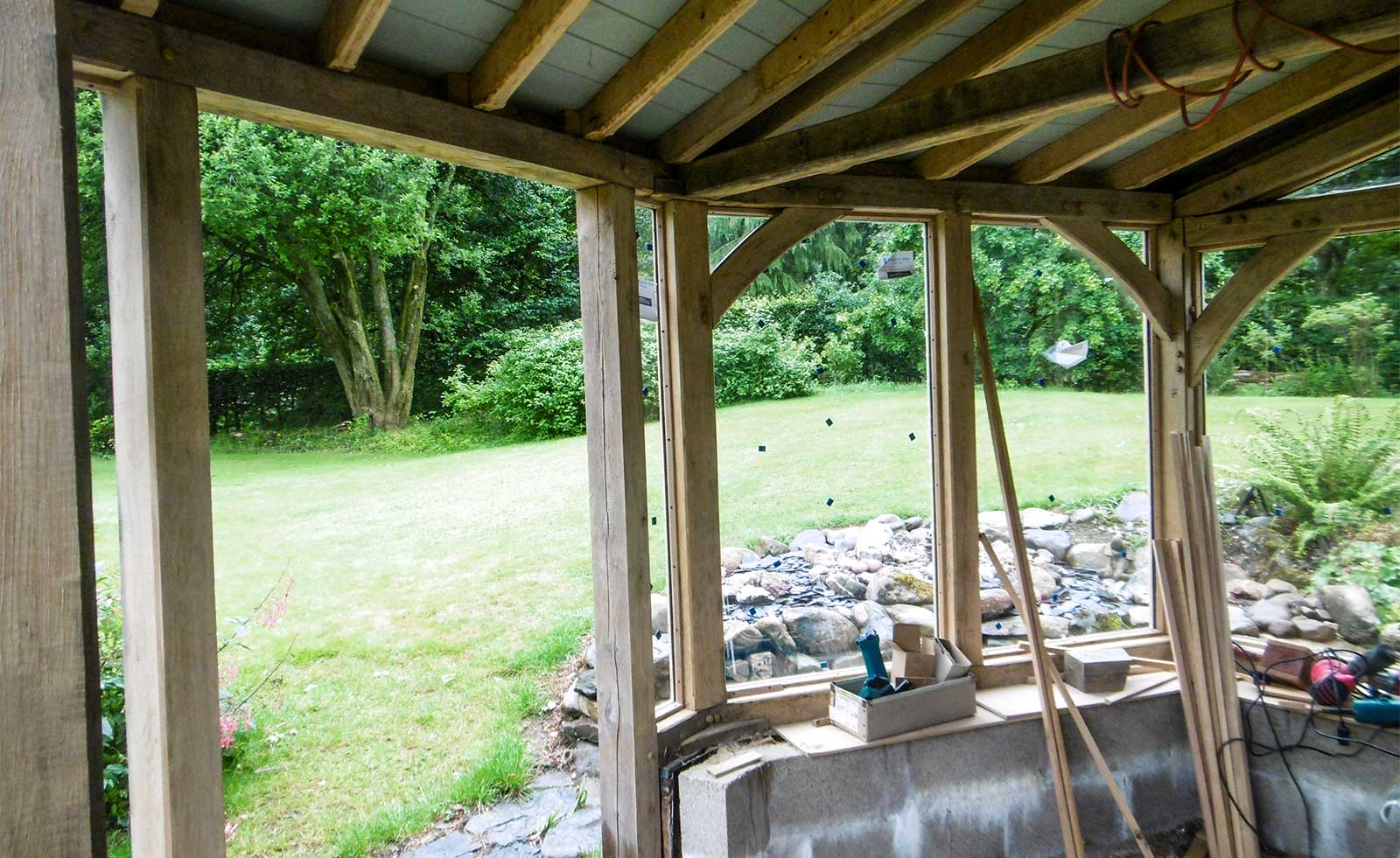
There has been a massive advance in my project. I have managed to fit glass to some of the windows so now I can see out of them. Can you imagine how much extra light there will be when I have glass in all of the windows? Very soon I hope to fit a door so that at long last I’ll be able to go in and out, it’s been very hard not having a door, I’ve had to carry all the wood through the window … Nurse!
September: Walnut Leonardo - new model
The Leonardo model is becoming rather popular, even though it’s never been advertised, featured in magazines or sold in shops.
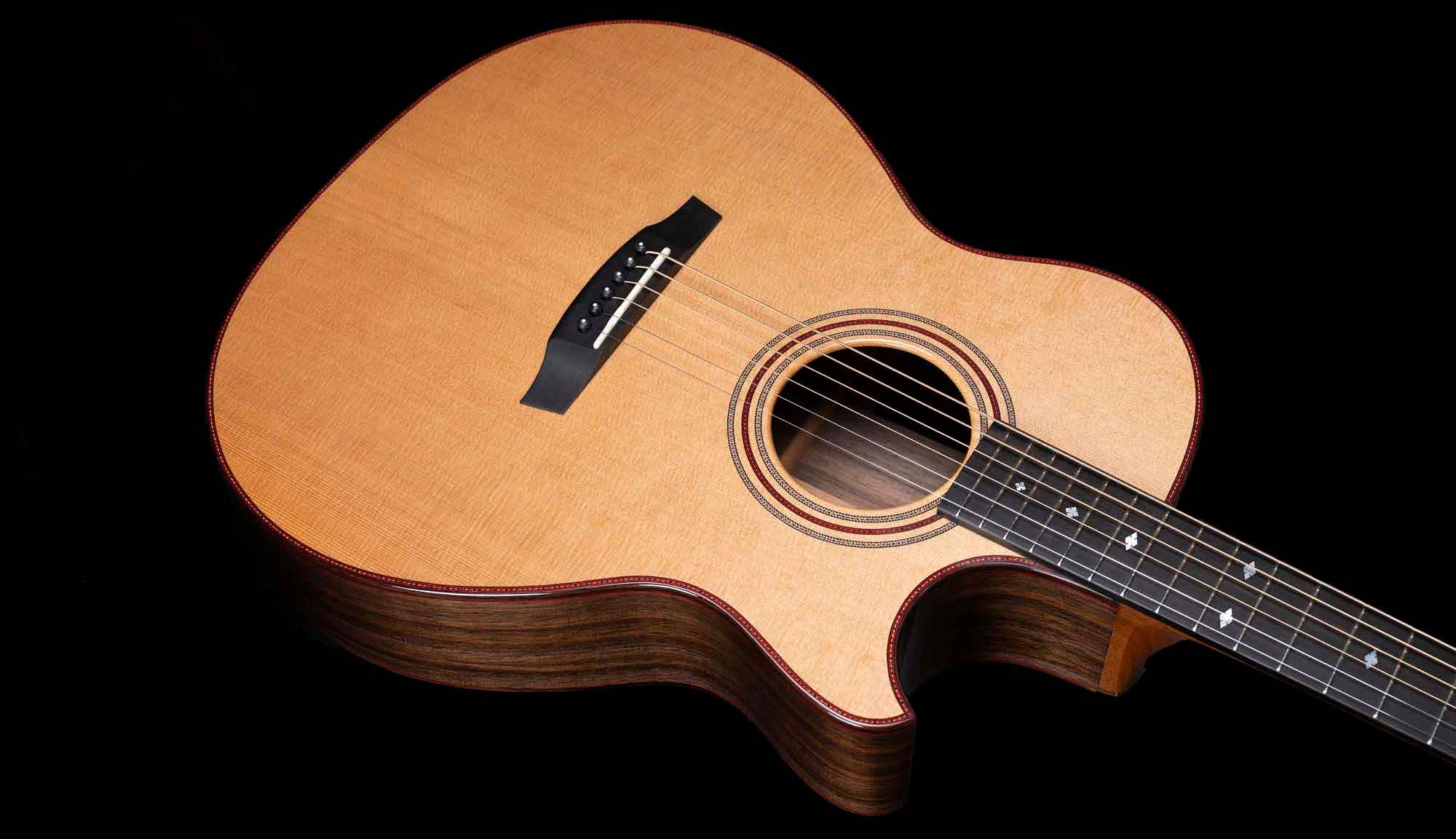
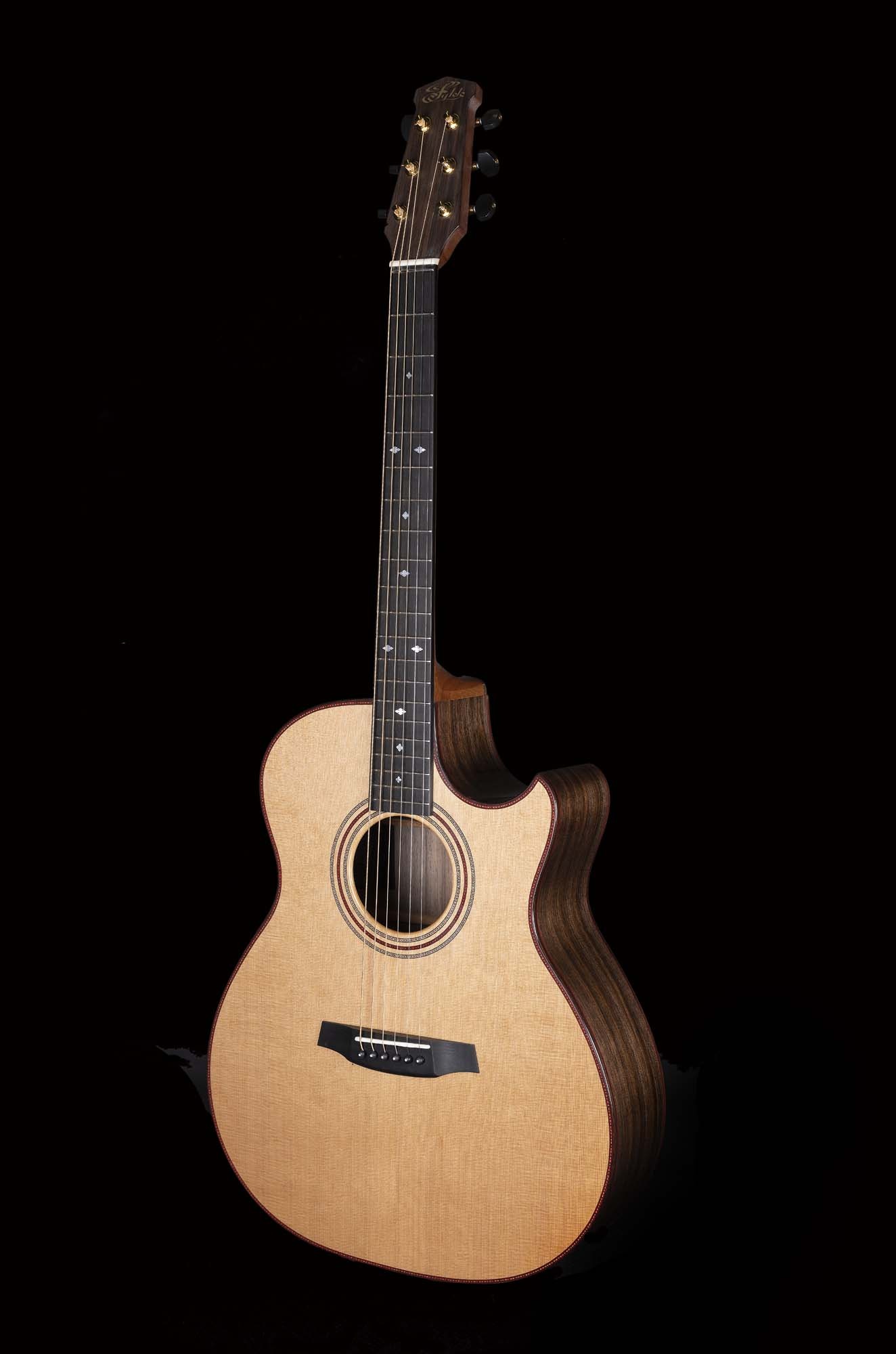
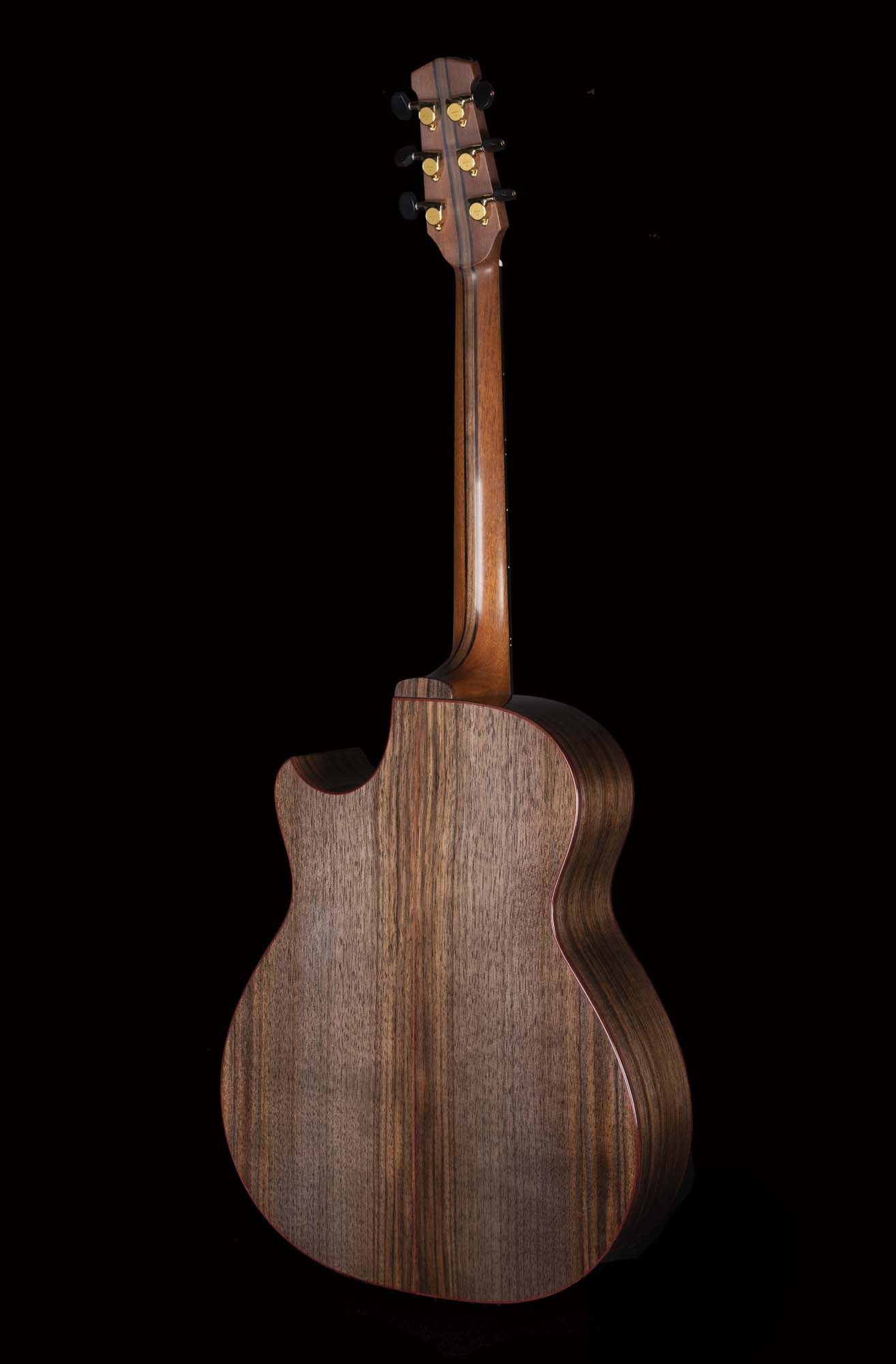
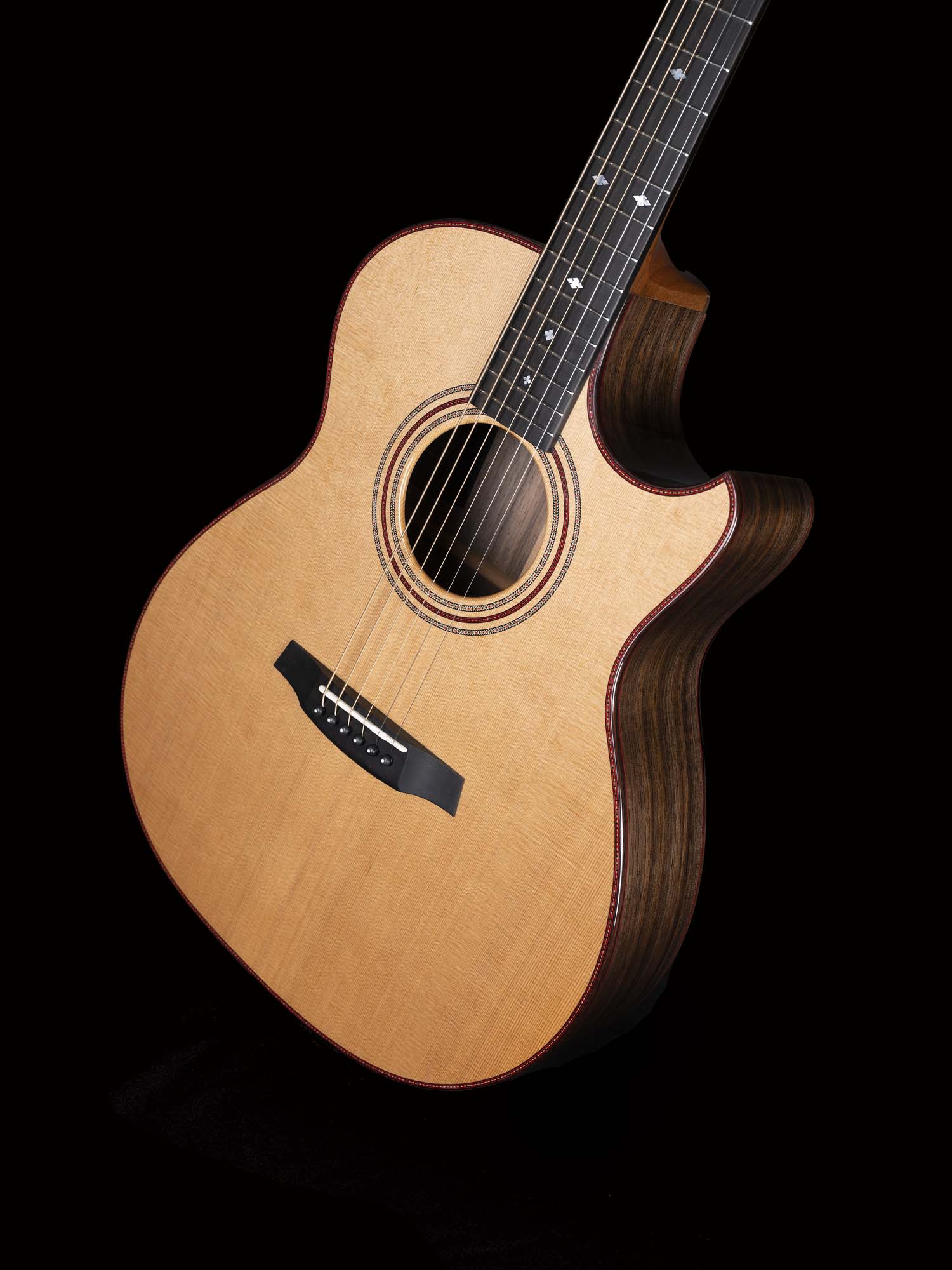
This is yet another custom version for a lucky customer. Claro Walnut back and sides, Cedar soundboard, Mahogany and Walnut laminated neck, red lines and marquetry purfling, Pearl Diamond fingerboard inlays.
It’s such a lovely thing and It’s a long time since we launched a new “Standard Model”. Also, it’s such a good opportunity to add a different timber, Claro Walnut, to the other timbers we have available, so watch out on the website. The Walnut Leonardo. Available to order soon, estimated price £5,900.
September: Before we go any further
There is a definite change in music now that Covid restrictions have been lifted, not only are artists back on stage in front of real people, but albums are being released, and videos being made. Some of these must have been held back for quite a while, and others have clearly benefited from all that extra down time, it’s getting rather busy and I have lots to write about.
It’s always been hard to decide what to use in the newsletter and what to leave out, it’s getting even more difficult now, and not helped when I leave it a little too long. Obviously I like to show the professional artists and the fancy guitars, but I also enjoy showing clips from amateurs and lesser known players. Some items are very time sensitive, and have to be used straight away, others get put in my “reserve” list to use at a later date and sometimes that just never happens.
This month will be a big newsletter with lots of new, wonderful music and quite a bit of older, wonderful music. Some sad parts as well, can’t be helped. I think it’s one of the “strongest” newsletters I’ve been able to write, all thanks to the huge range of Fylde players out there. Thank you, I wish I had time to write more
September: Single Malt Bouzouki
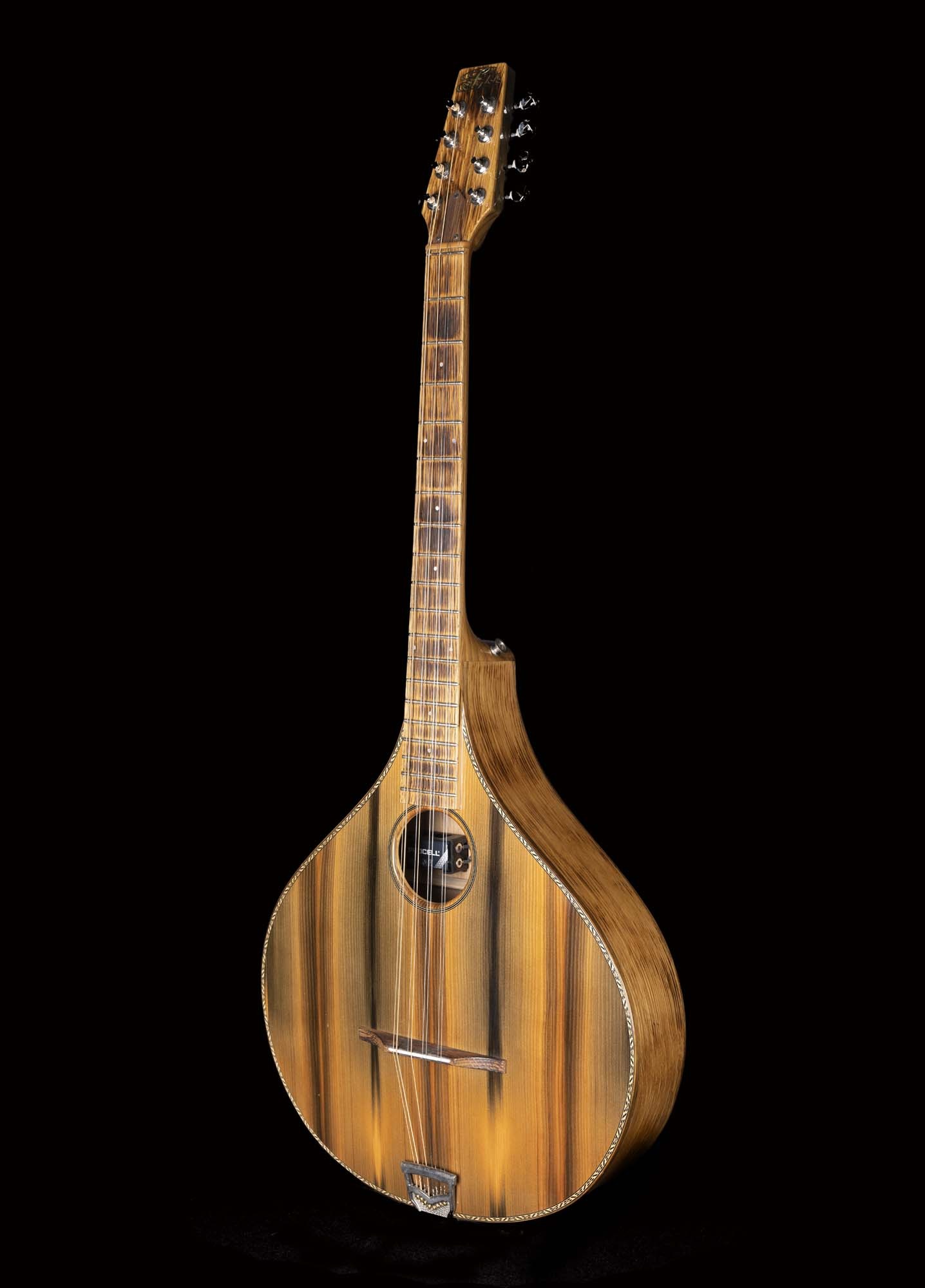
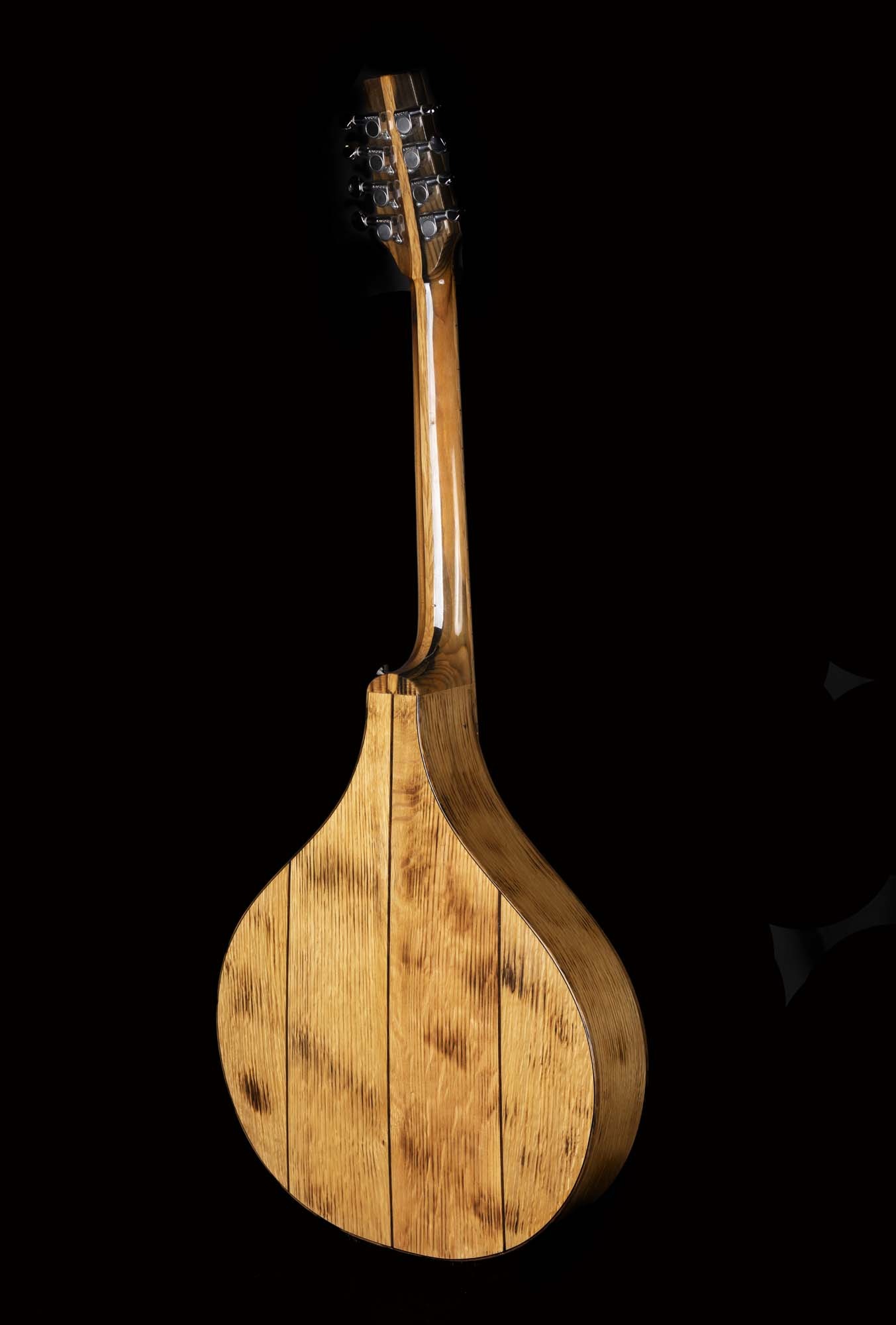
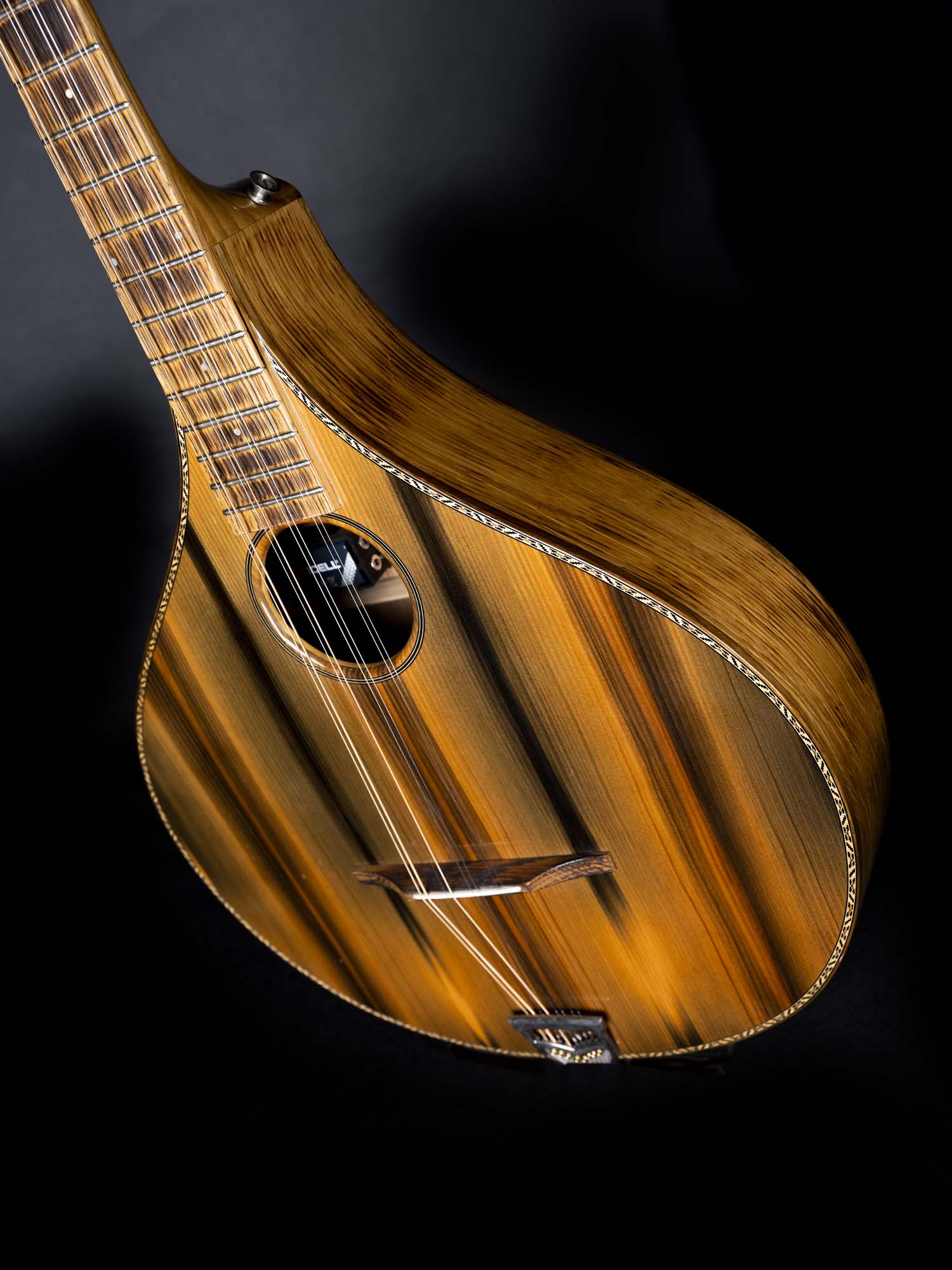
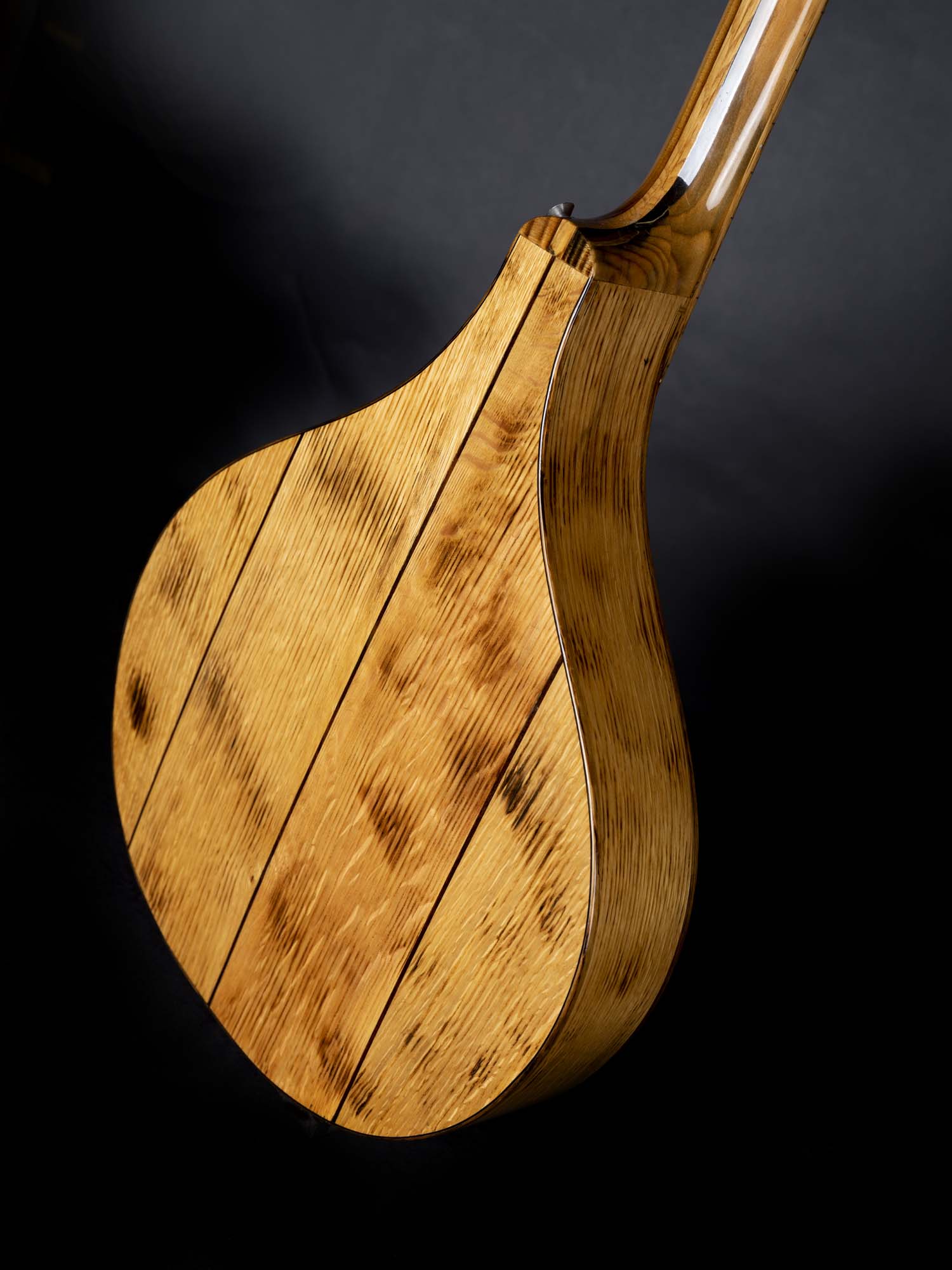
Here’s one I made earlier, 2002 in fact. Twenty years ago and it seems like yesterday. I’m fairly sure this is the only bouzouki we have made using these “original” timbers, I never did have large sizes and I was always a little fearful about the “hygroscopic” nature of oak in larger instruments. This is as big as we went, and I’ve run out of the colourful “washback” Columbian pine now anyway. I don’t think I’ll be able to get any more, at least until Talisker replaces its washbacks again in another forty years. I’ll email them.
The bouzouki is now owned by Jane Wyer, who takes musical time away from her proper job of paper conservator. I’m fascinated by the people I come into contact with.
October: ORLEANS and Martin Simpson
Martin Simpson and I have been talking guitars since 1975 and one way or another he has owned quite a few Fyldes. Two years ago, after we recorded “The Instrument Makers” for Radio Four, we made a plan over a little drink and a little food. Martin had some thoughts and I had some thoughts, so we made him a guitar. We had more thoughts, so we made another guitar. Then we had some more thoughts and we made him another guitar, it’s a weird way of working but we both enjoy it. We have had more thoughts since then, but Martin has to buy a bigger house first.
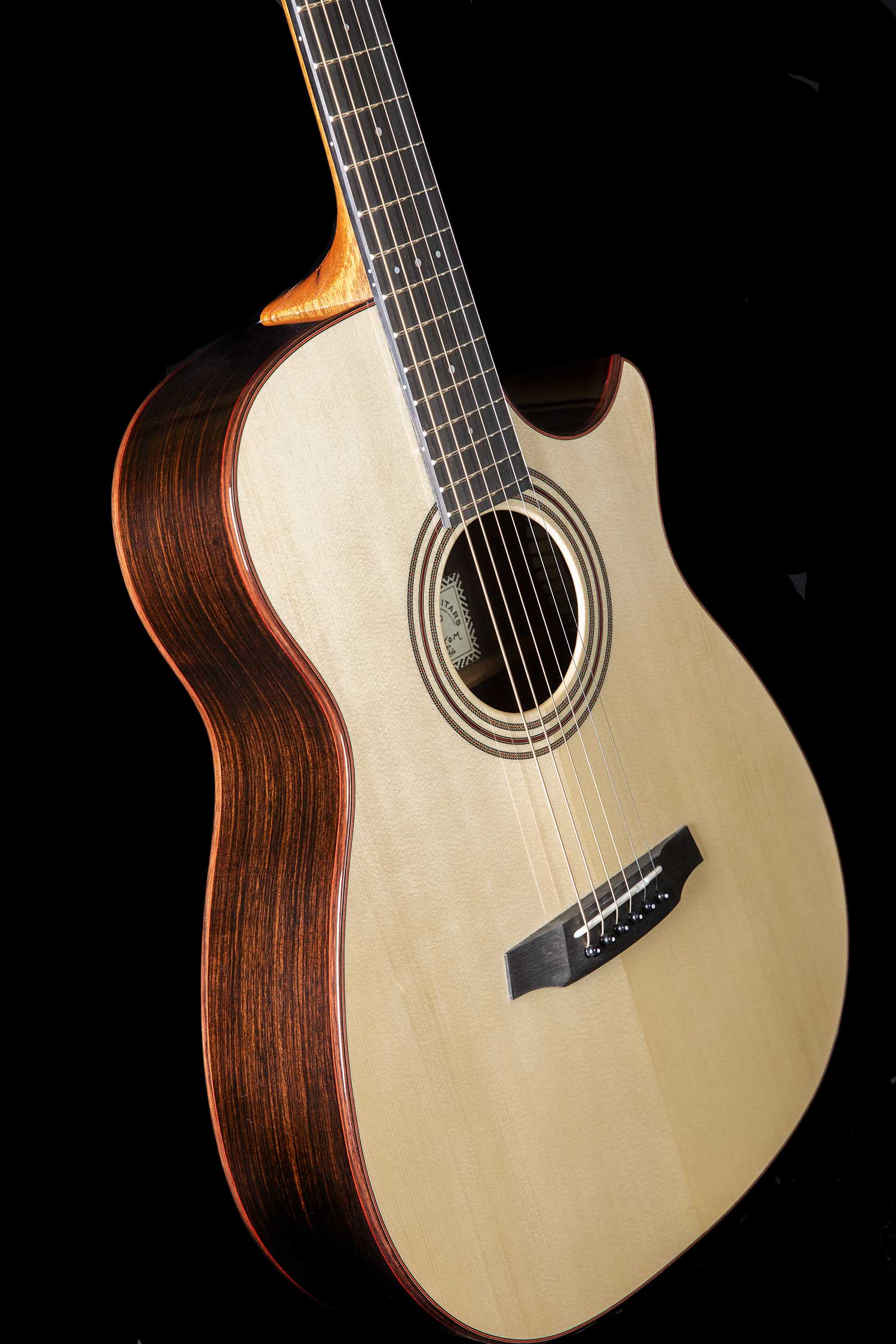
Since those three “iterations” of the basic idea, we have made two more for Martin’s friends and one to keep in the workshop as a reference. One of those is featured below, with some of the technical details. We have another, rather dramatic version nearly finished which I hope to show next month.
I want to make this guitar more often, it’s such a lovely thing, and I needed a name. I’ve had a particular Shakespearean character in mind for a long time “The Bastard of Orleans” (sorry, that’s a straight copy from Shakespeare, don’t blame me). It’s such an evocative name, but probably a bit harsh and it doesn’t “scan” very well anyway. I will point out though, that the term was a mark of respect at the time, a Royal acknowledgment of an illegitimate son. We saw the play, Henry VI part one, at Stratford, it’s a very powerful play, but the amount of saliva flying round on stage would have closed the theatre nowadays. We were in the front row, exceptional, never seen the like before or since.
Anyway, back to the story. It so happens that Martin lived in New Orleans for quite a while, which has to be fate. The idea was so simple that it’s taken a long time to sink it, we both agree that the “FYLDE ORLEANS” is splendid and very appropriate. I’ve missed out the other bit, because Martin is a very very nice man.
October: A Nice Buzz
This is one of the “Orleans” models before we decided on the name. The starting point was a twelve-fret short scale, using the Falstaff body size, but reduced in depth and with a cutaway to restore high fret access. There would be no metal components in the neck, just four sections of carbon fibre reinforcement continuing through the neck into the body. This one is a little different, it has the carbon fibre, but with an adjustable truss rod added as well, partly to see how much difference it makes. It’s early days, so far, I’d say that both concepts work very well but I’m tempted to keep to the idea of no truss rod because it is so “honest” and simple, and it really does work.
Martin thinks these guitars are the most comfortable to hold and play that he has. Even with the relatively heavy Rosewood and Spruce, the weight is only 1.8 Kgs and the physical balance is a delight.
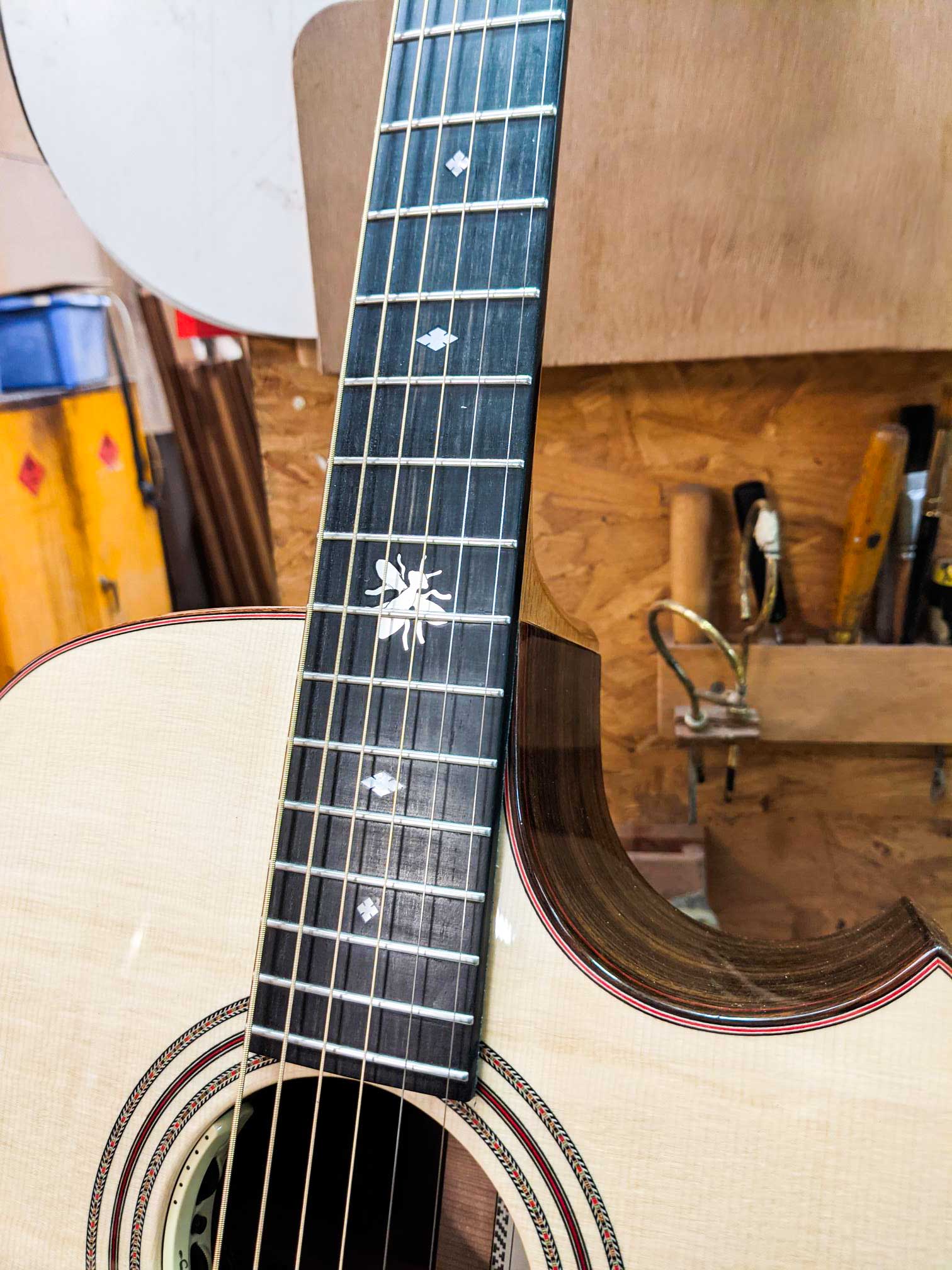
The customer asked for Bee inlays, so one of the pictures above is my pathetic attempt at humour, long term readers should be used to this by now. I cut the “proper” Bee from solid silver because I didn’t fancy my chances of cutting the thin antennae and legs out of Pearl. Even so my first attempt lost a leg, so I had to start again. Anybody want a five-legged silver Bee inlay on their guitar? I have one spare.
I’d forgotten that I keep my piercing saw blades in a Falstaff cigar tube! Hamlet’s aren’t big enough.
There have been various observations of course – “It buzzes at the twelfth fret” . Mike English joined in with “It’s a hive of activity down here”. “Everyone buzzing about”. “That’ll keep you busy busy busy”- and he tells me off for MY jokes!
“A nice buzz” was the title of the track that Peter Berryman recorded for the Fylde Acoustic Album in 1977. Memories
October: Whisky and Wood
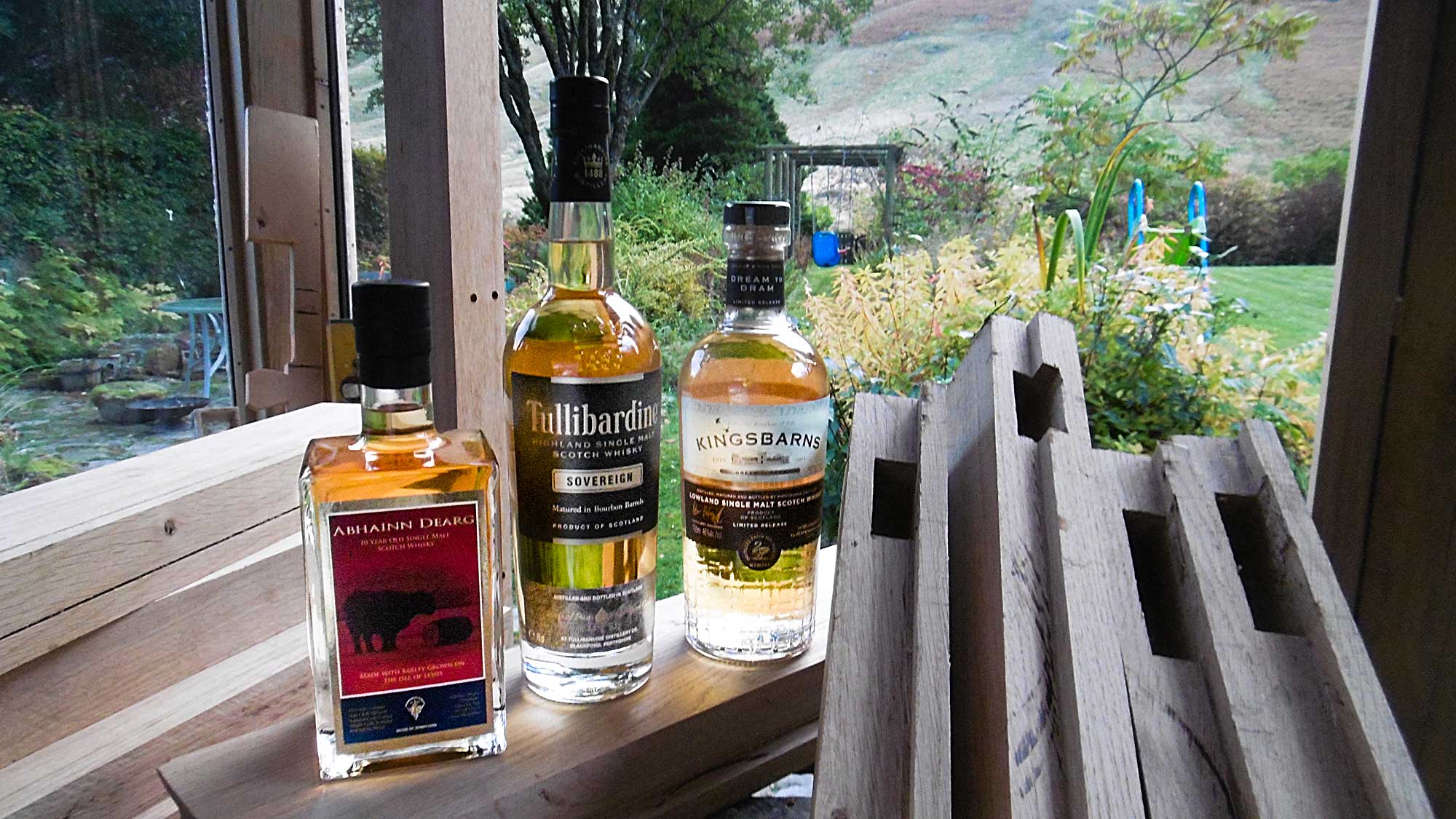
I have more progress with the conservatory, mortices cut for the doors, tenons started. I’ve been a lot more careful with my poor battered hands after the two recent operations, but I did cut these by hand and so far, no ill effects, thank you NHS. I do find that a little anaesthetic helps though, here are my latest three bribes/gifts/thankyou’s. I’m amazed that I don’t get many duplicates, I can only suppose that Moira sends out a secret updated list. She’s a clever girl, but then she tells me I have too many bottles. I don’t understand, how is that possible?
I’m afraid to say that Alex and Paul are in the early stages of a similar hobby, nothing at all to do with me of course, I do my best to keep them safe.
October: Damien O'Kane
Two rather nice pictures from Damien, he is starting to use the new bouzouki. “I love it. It has so much body and depth to it.”
Thanks Damien
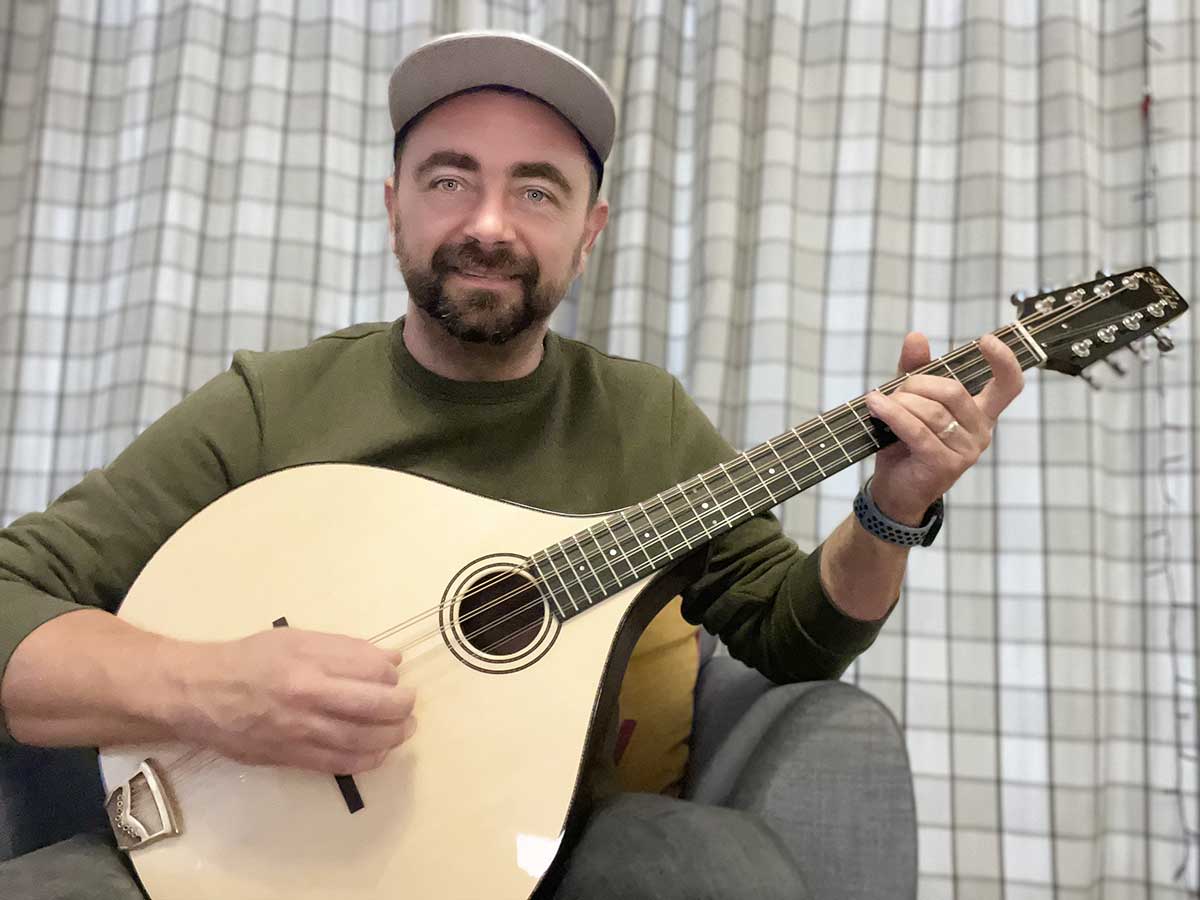
October: John Smith drops in
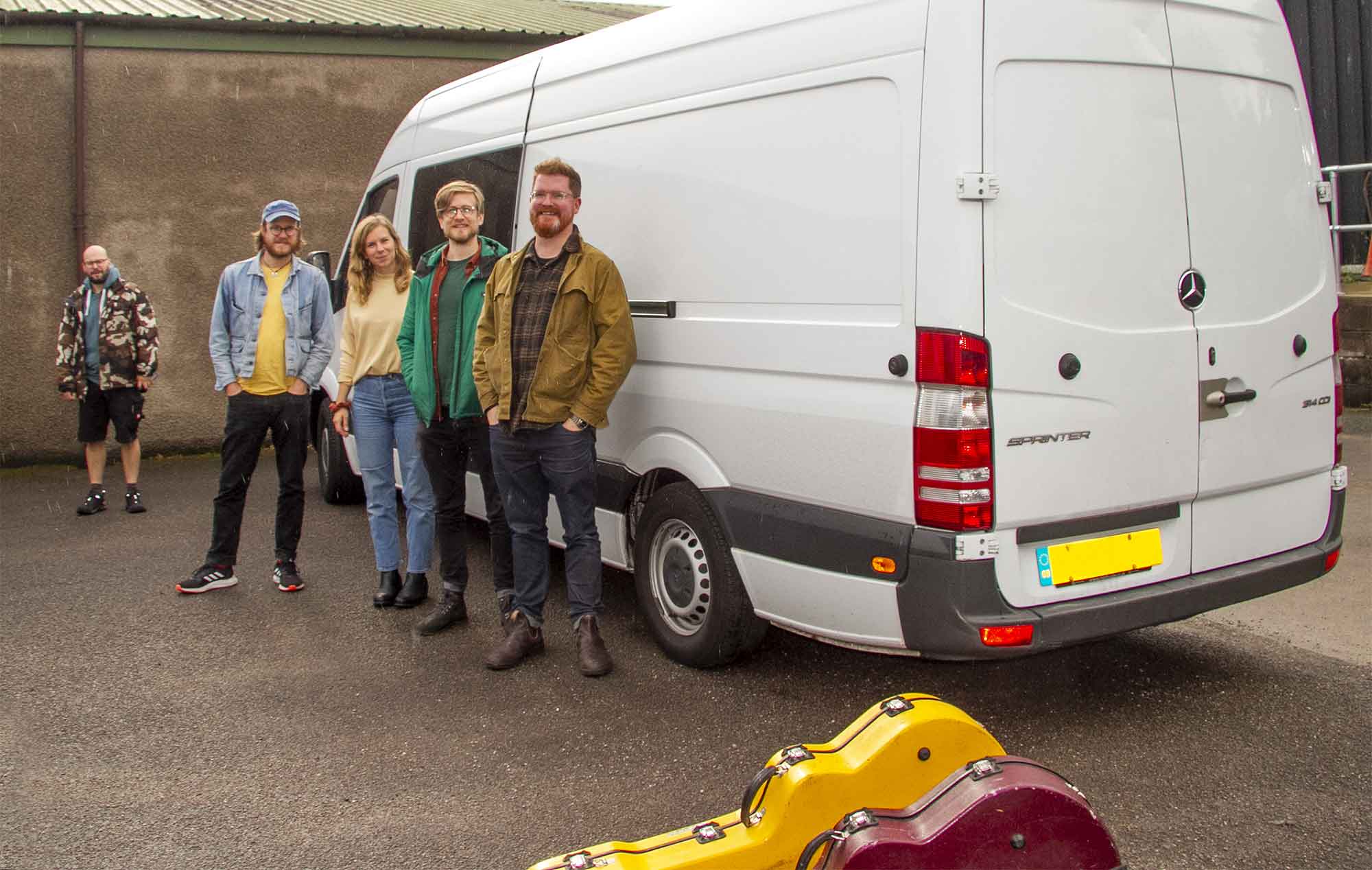
We had a lovely time when the band dropped by a few days ago but I’d forgotten to buy biscuits. John left two of his guitars to be serviced, which he’ll collect next week.
Then a few days later we saw the splendid show at Stoller Hall in Manchester, it’s a great venue and John had five video cameras working away, we shall have to see what comes of that.
October: The No Train Blues
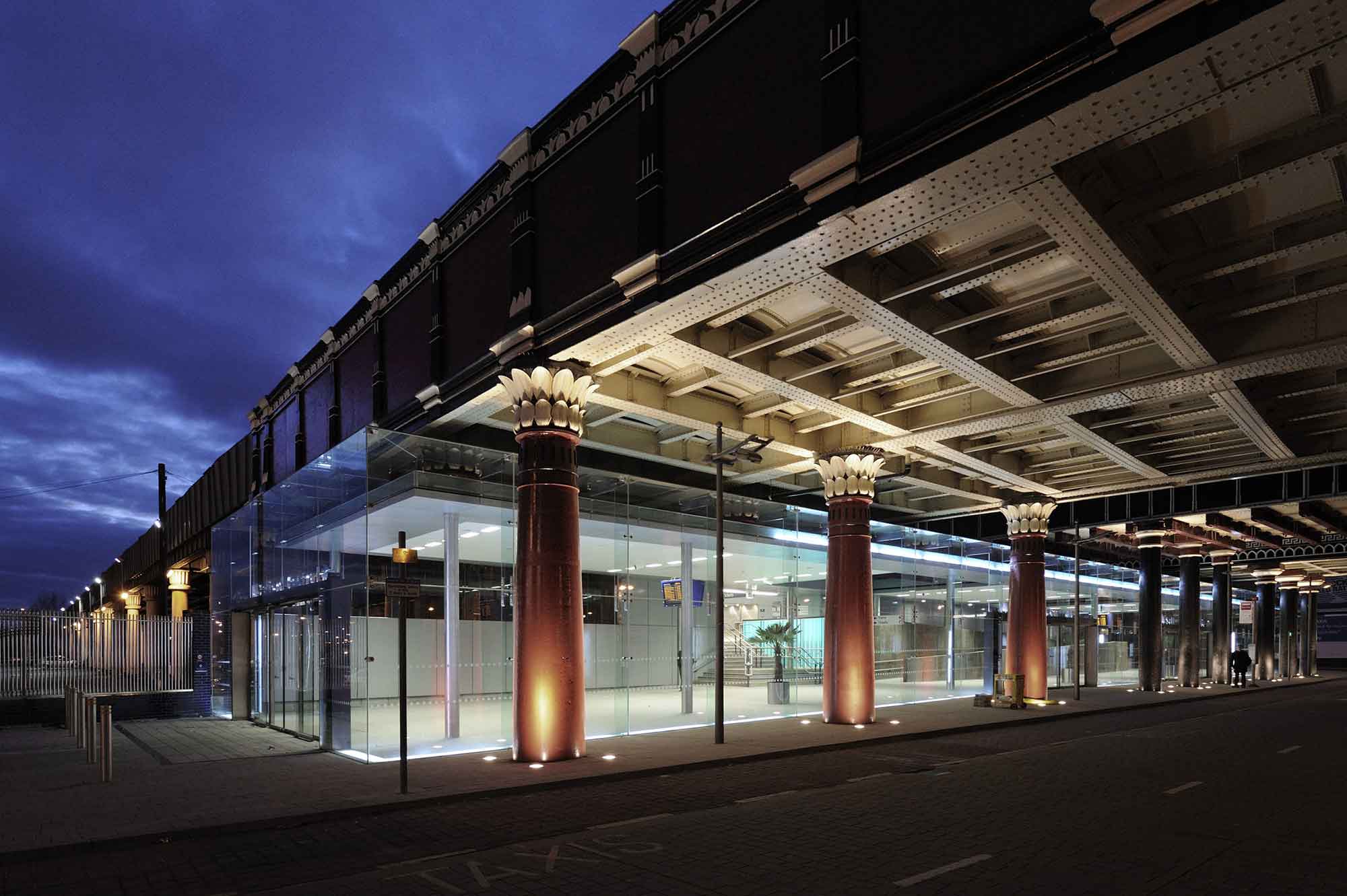
Rather than drive to Manchester from Blackpool and have one of us sulk because he couldn’t have a drink, Keith and I decided to let the train take the strain. What a good idea we thought, we’ll have a few pints we thought, catch the last train back we thought, change at Salford and not stress about anything. That all worked quite splendidly until we set off home after the show, got off the train at Salford at 11.30 and looked for the advertised connection.
No train.
We asked the only rail employee we could find – “which platform does the Preston train leave from please?” “No more trains tonight, just one back to Manchester”. “But it’s on the timetable” ” Sorry, there are no more trains” “Are you sure?” ” There are no more trains, other than one back to Manchester” “But—-“
Stunned silence, anxious looks, neither of us had a phone. More silence. Hesitant discussion of options. Quick but fruitless search for taxi. Rail employee no help whatsoever. Rail employee disappeared. Empty station. Final train arrived, our only option, taking us to our unknown doom.
Back in Manchester we had a choice – hotel, taxi or sleep on a bench.
The taxi drivers lit up with delight when we told them we needed to get to Blackpool. The driver at the front of the taxi rank didn’t speak very good English and didn’t understand where we wanted to go. The driver of the second cab did speak good English and knew exactly what was involved – I could see the pound signs spinning in his eyes. It was quite funny watching his dilemma, he obviously wanted the fare for himself, but I think the first chap might have been his father in law so he was a little conflicted. Anyway, we did the right thing, chose the first driver and of course we needed to pay the man before he would drive us anywhere. We tried counting those new ultra-slippery plastic notes, in the dark, in a strong wind, slightly drunk. We needed £140 and we didn’t have enough. But perhaps we did, and it just blew away, we’ll never know. A good job he had a credit card machine.
I think we will question that choice of driver for the rest of our lives, it’s quite likely that he was a retired fighter pilot. While still in Manchester, the speed bumps were ignored, and once on the motorway he used all four lanes plus the hard shoulder in a constant sideways swooping motion, a bit like ice skaters do to get up speed. Have you ever taken the slip road off to the left then suddenly changed your mind and swerved back onto the motorway at full speed, crossing all the bumps and ridges in between? In a Black Cab? We have. Half way along the M61 we began to scrabble for our seat belts – watch the film “Bullit” and you’ll see what I mean. And guess what? Despite all the delays, we arrived back before the train that didn’t exist would have arrived if it had existed. Thank you, Mr very understanding but scary fighter pilot taxi man.
November: Richard Hawley's Black Orleans
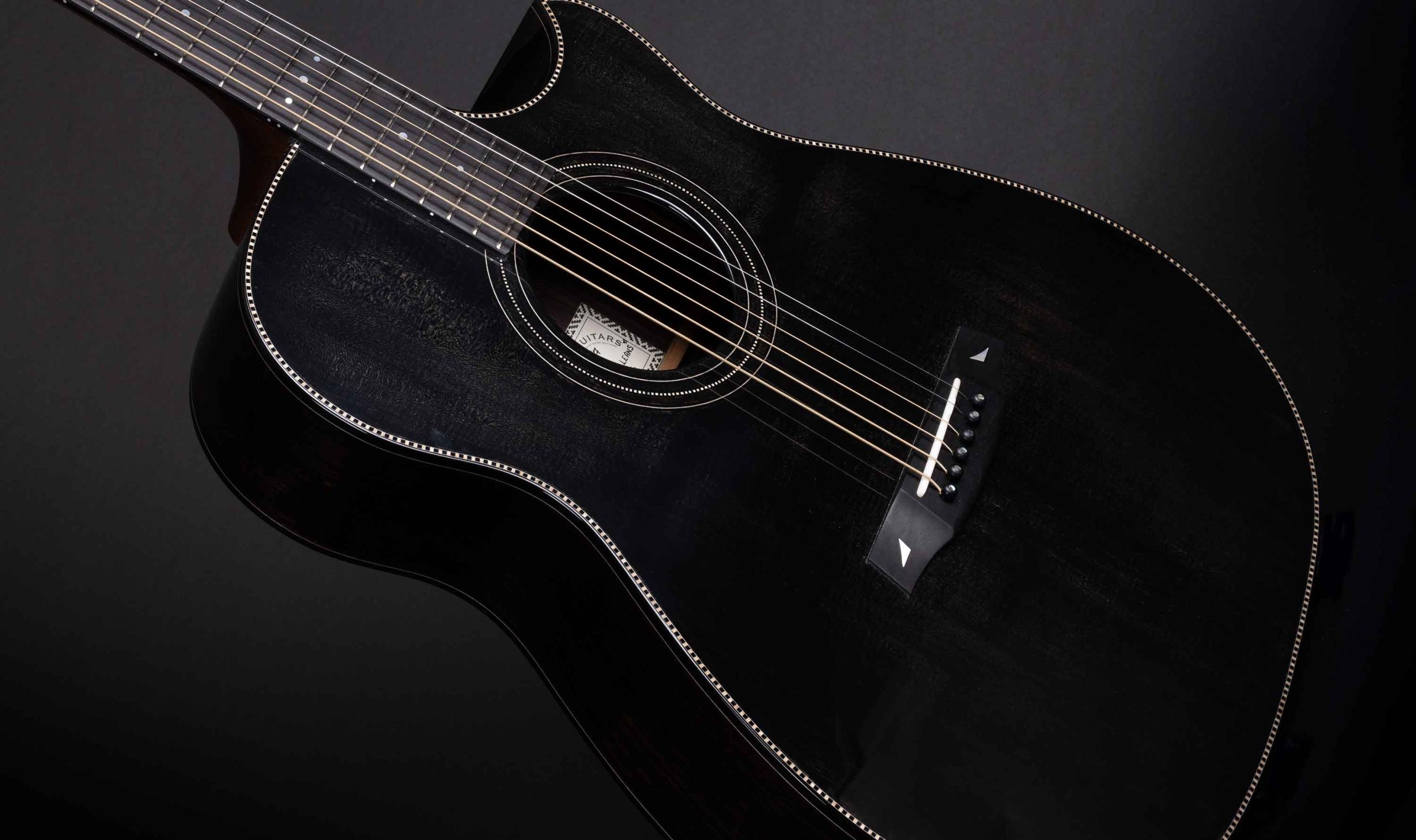
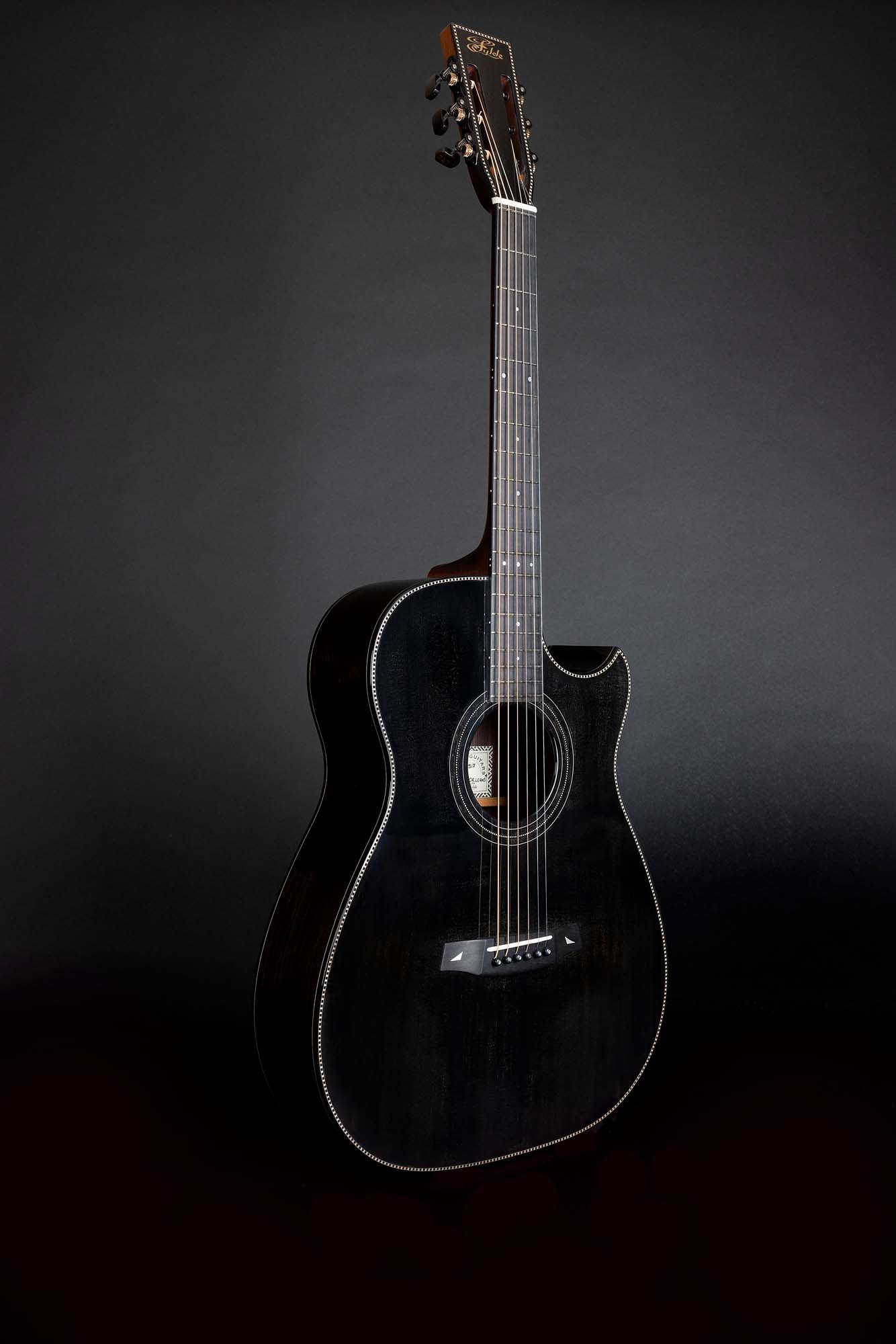
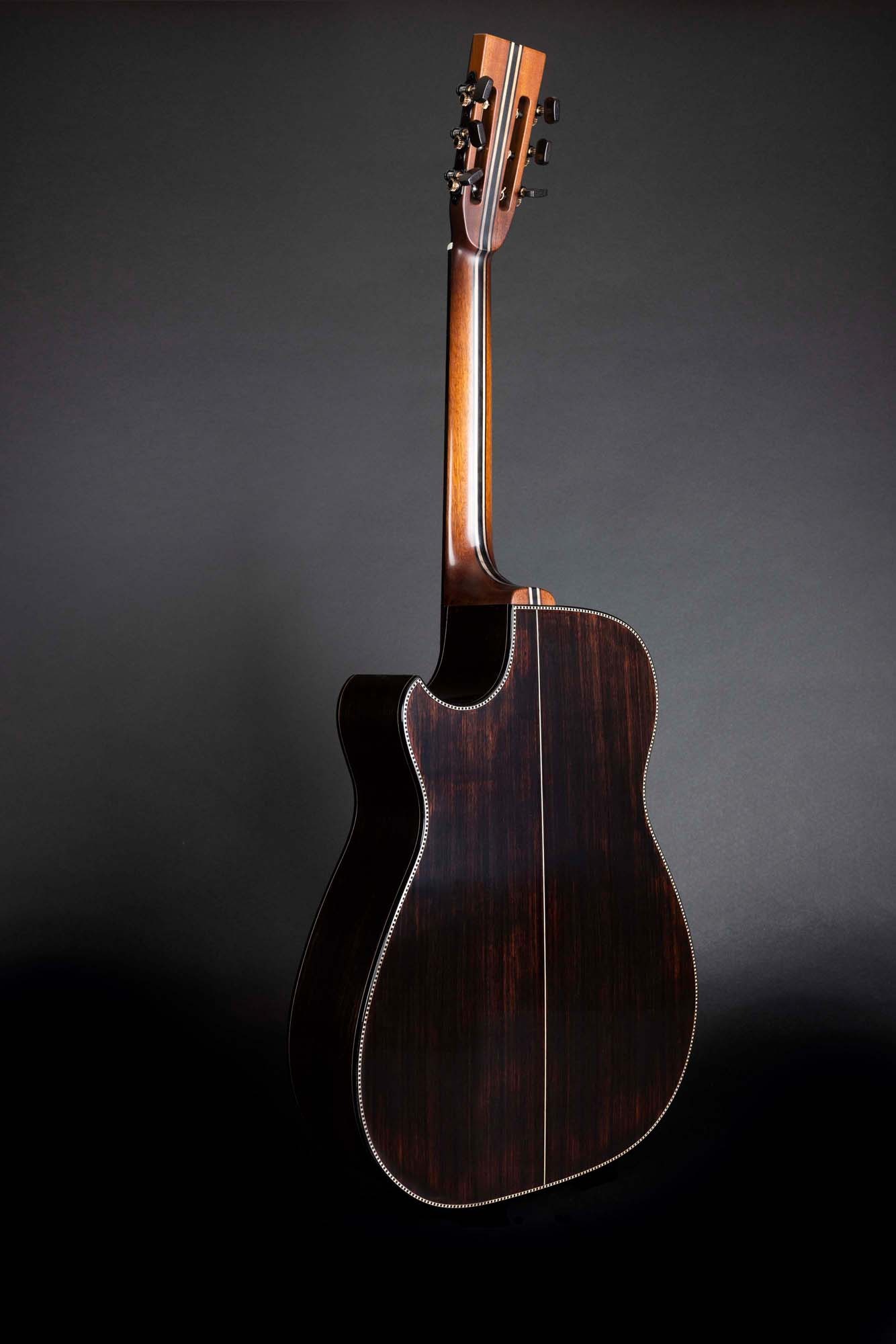
I always like to have an impressive guitar picture to start off the newsletter, a bit like starting a thriller with a description of a gory murder – it grabs the reader and leads them on to the next item.
So here we are, it’s not a murder but it is a radical departure from what we normally make. Richard and I had been discussing the idea for about two years. He wanted the “checker” purfling like a Rickenbacker and the guitar needed to be black, referring to some other iconic American guitars.
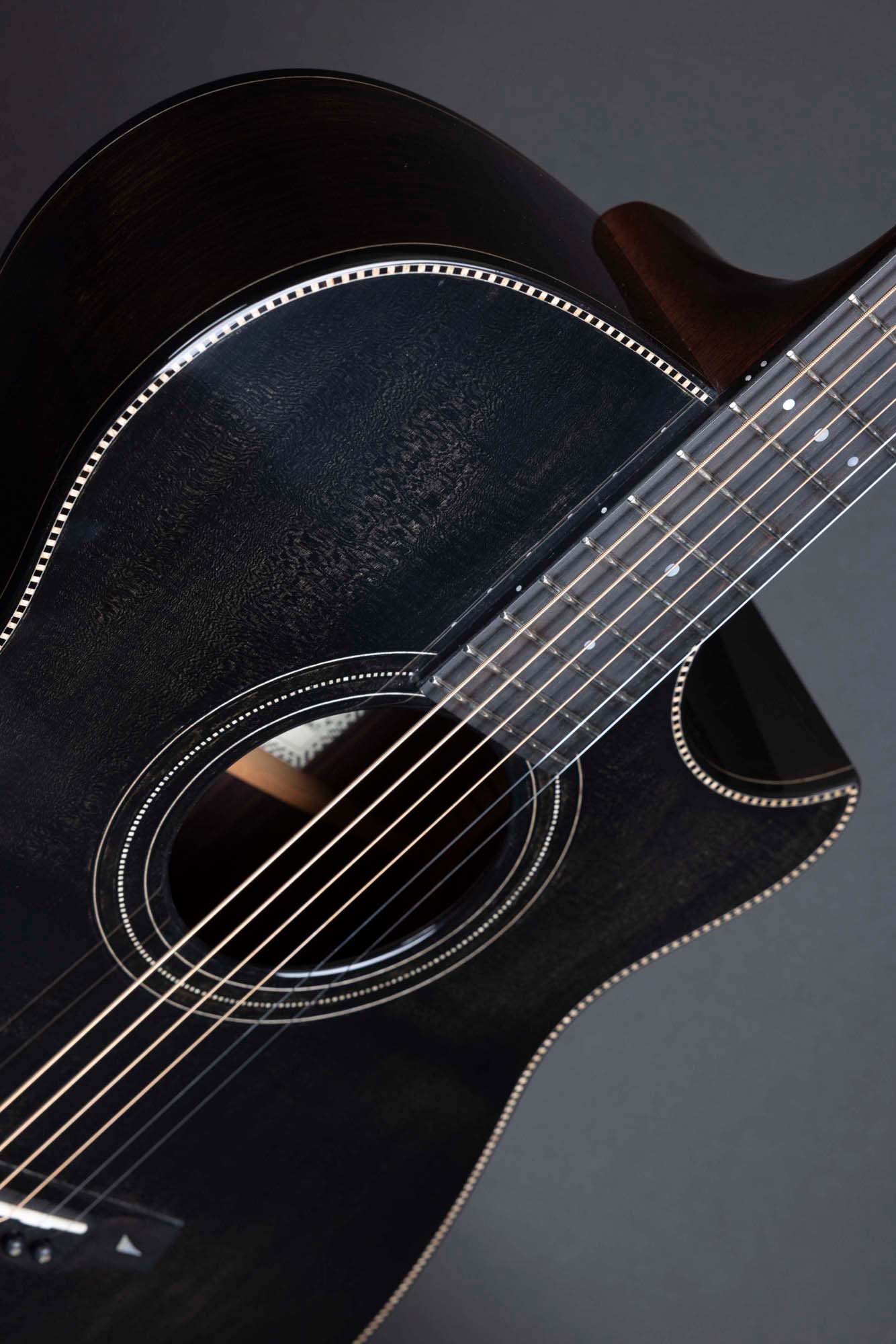
It’s a long time since I “painted” a guitar, and it’s not something I enjoy, inevitably it requires extra thickness of finish compared to what I am comfortable with, so the idea languished. Then after a while, Martin Simpson told me that Richard had fallen in love with his “Orleans” guitar and we started to put various options together. I made some experiments in staining Spruce and Rosewood rather than painting the wood and getting extra “body” into a transparent finish. The back and sides are Indian Rosewood and the soundboard is European Spruce. The neck is a laminate of Mahogany, Maple and Ebony, with just a little “mysterious” shading. The tuners are black Schallers, the strap pin is black, the neck is reinforced with carbon fibre, plus an adjustable truss rod, all working incredibly well. To complete the dark project, we fitted a Di Marzio Black Angel pickup which will match the impedance of Richard’s Electric guitars on stage so he can use only one lead and not stress the sound engineer too much.
At one point, the guitar had my version of ” Sharks Tooth” fingerboard inlays which all of us in the workshop thought were lovely, but the consensus from Hawley land was a little less enthusiastic. So, we changed the fingerboard. I still have the inlays if anybody is interested?
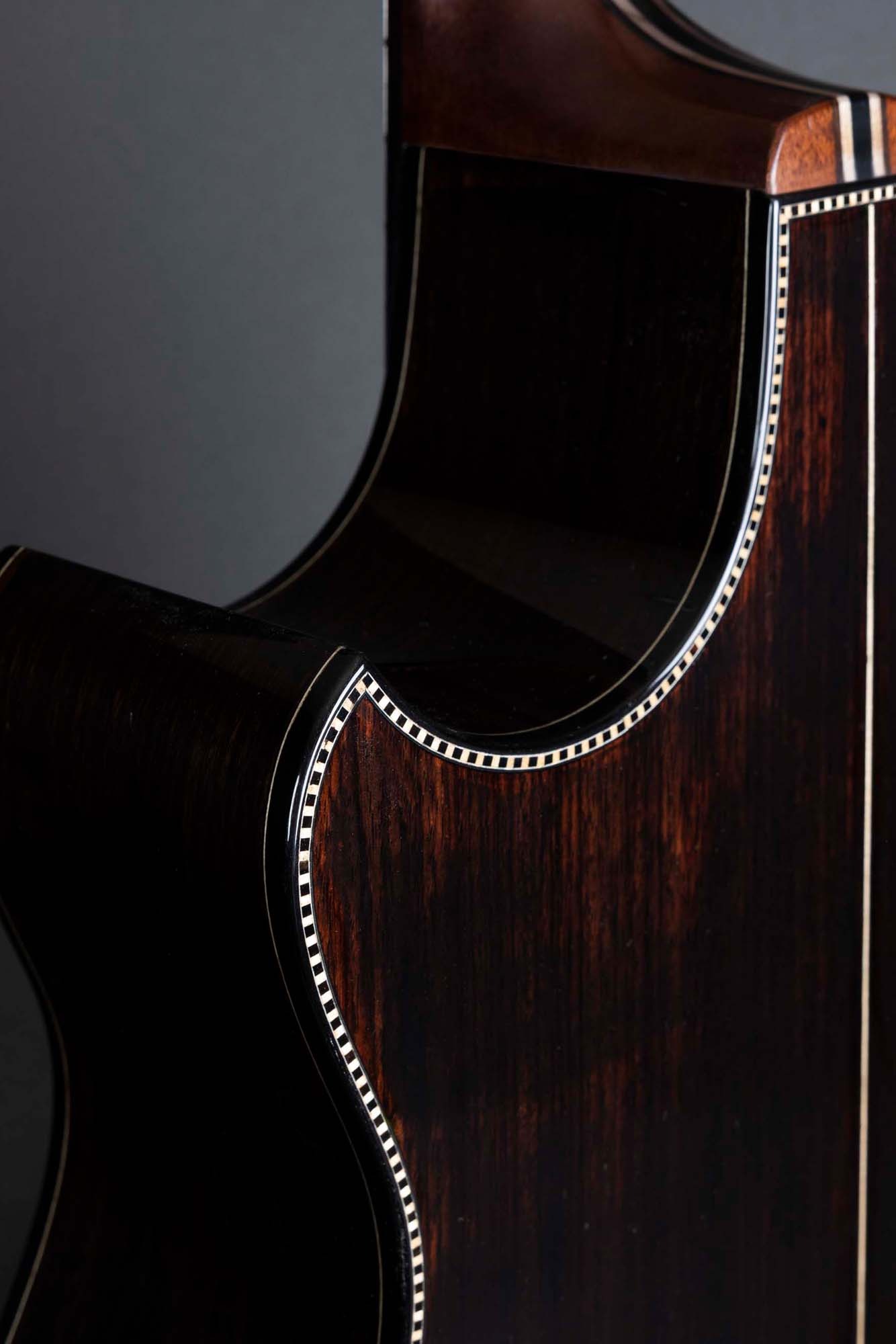
The checker purlings are Ebony and Maple, cut and thicknessed, stacked into blocks, glued and recut about ten times until I had enough to make the long lengths needed, then sandwiched between thin black and white veneers before being cut again into long thin flexible lines. The purfling round the headstock is a slightly different size but made in exactly the same way.
In order to stop the black stain “bleeding” onto the purfling, I sealed the chequered lines with superglue before carefully staining everything. After a thin coat of clear lacquer, I scraped the colour off the purflings, then built up the required finish with slightly tinted lacquer to enhance the depth of colour without covering the grain. I think it works really well, we can still see the grain of the Spruce and the red colour of the Rosewood, even though the overall impression is solid black.
We are all very pleased with this, one of those times when something I wouldn’t normally contemplate just happened to appeal to me. It’s not a murder, there was only a tiny bit of blood, but it doesn’t show through the black stain so nobody will ever know.
We had a little fun with the name and the label inside – “Black Orleans” was the obvious one, but Richard fancied Hor’Leans, and we liked “Hawleans”. We still haven’t decided.
So now we have “grabbed you”, let’s move on to the next item, there is a lot to show this month.
November: Mandolin for Sam Fender
One way or another, one part of the music world connects to all the other parts in a very small number of steps. I had a phone call from someone one step away from Sam, and one step away from me. As simple as that.
I shall be watching Sam’s new video’s
November: Devious subterfuge uncovered
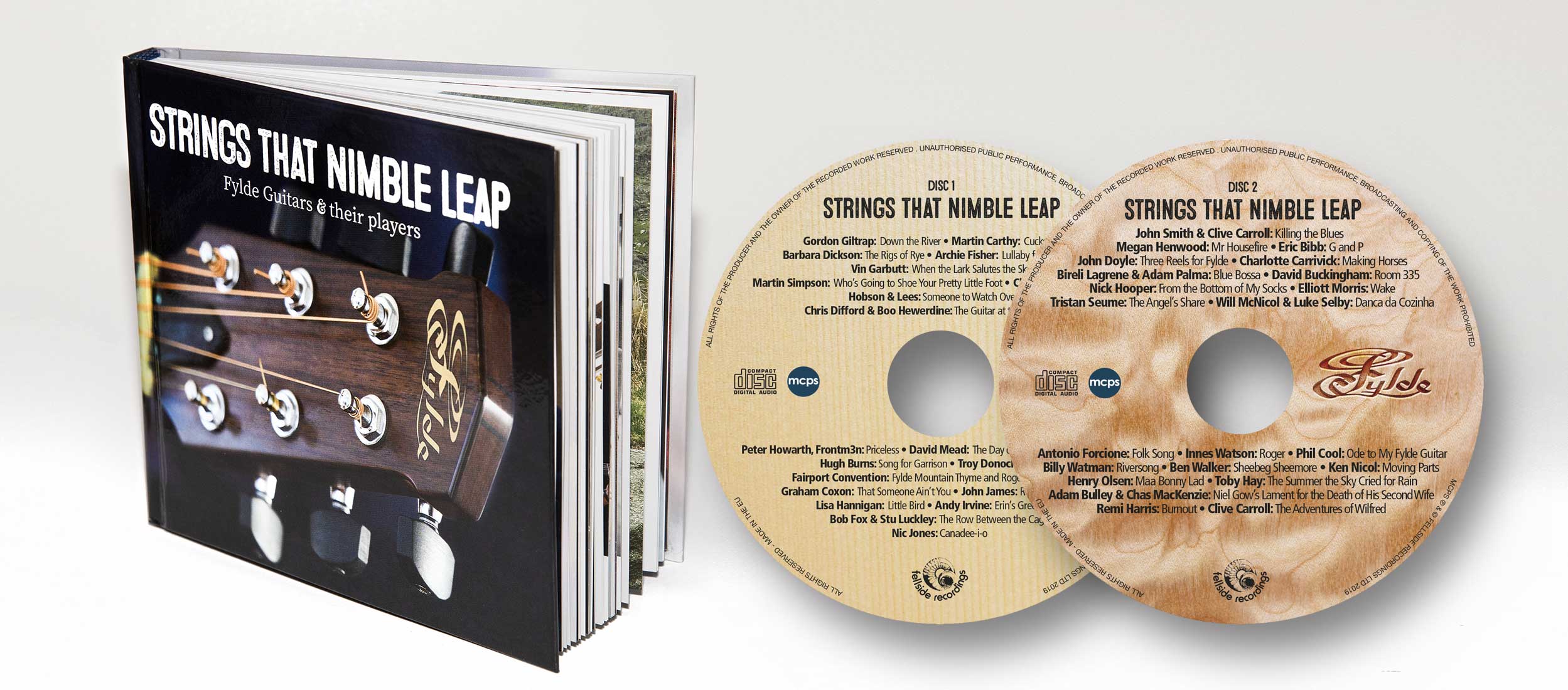
I was contacted by a customer to say that he hadn’t received the CD that he had ordered, I was able to reassure him that we had sent it out some time ago and I promised to look into it. This is only the second time when something has gone wrong in the post, and I was preparing to send a replacement, when he emailed back. His wife had intercepted the CD and hidden it, intending it to be a surprise Christmas present. He very nearly got two!”
December: Bevel Bevel
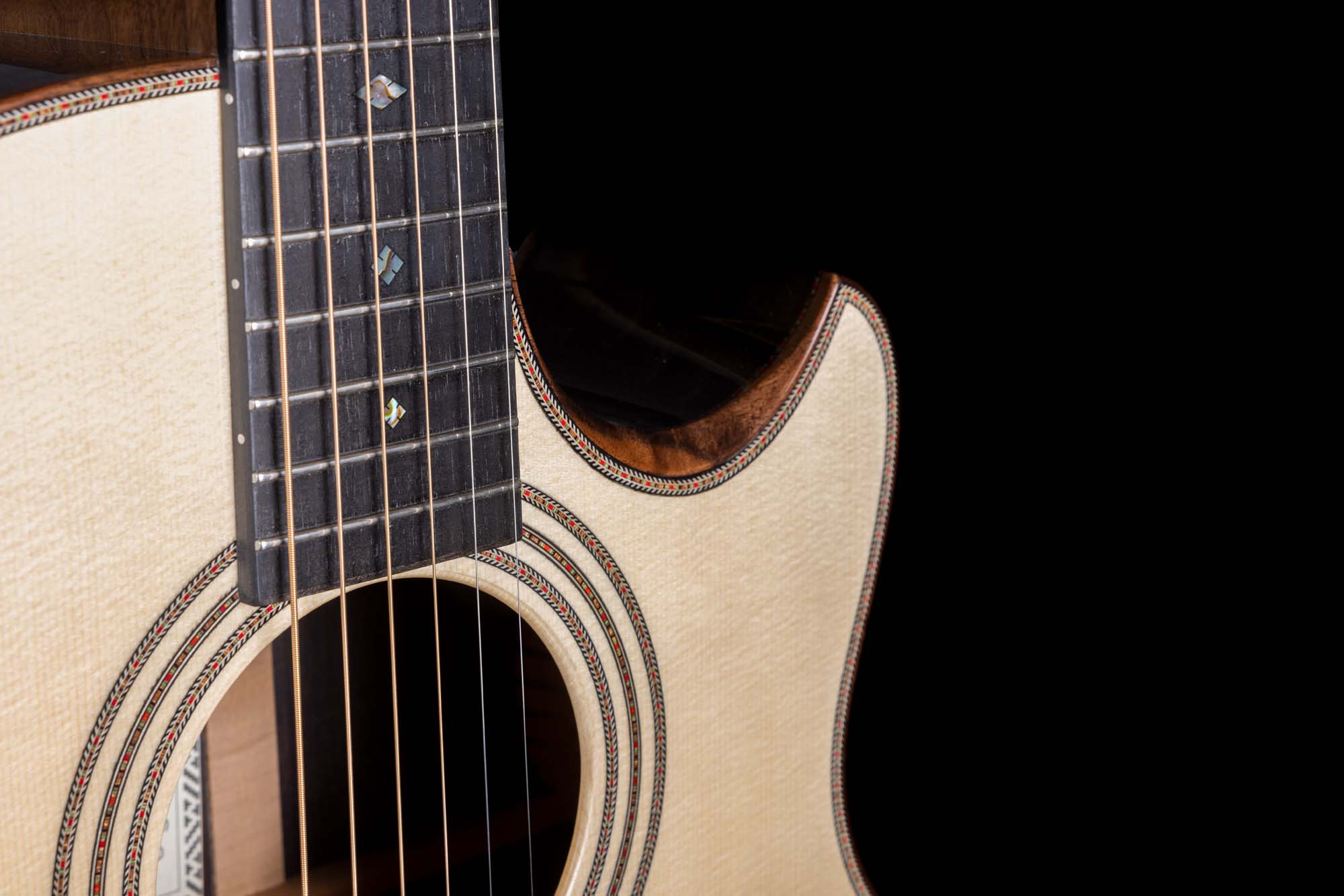
A very special order for a customer in the USA. I’ll explain the design features before I talk about the woods and tone.
Comfort in playing was top of the list, every edge and corner has been “Bevelled” to stop all those conflicts with various body parts, and the neck has been carefully discussed. The customer has found that the only necks that suit his needs are on guitars made by Jim Olsen, but Jim doesn’t offer the other essential features. The obvious answer was to contact Jim and discuss his approach to neck shaping and he was very willing to chat. In fact, we have been swapping photographs of our Gardens as well. Talking to other makers is not something I usually enjoy doing, but this time it’s been fun – I’ve found another friend!!
The bevels on this guitar are made from Claro Walnut, none of them are thin veneers, that would have been too easy; some parts are three or four millimetres thick, bent and pulled into shape, others are carved from bigger, thicker pieces , the key being to anticipate the difficulties and plan accordingly. I think I’ve explained my procedure before – careful thought, patience, and lots of heat, moisture, muscles, and swearing. The bindings are bordered by delicate marquetry inlays.
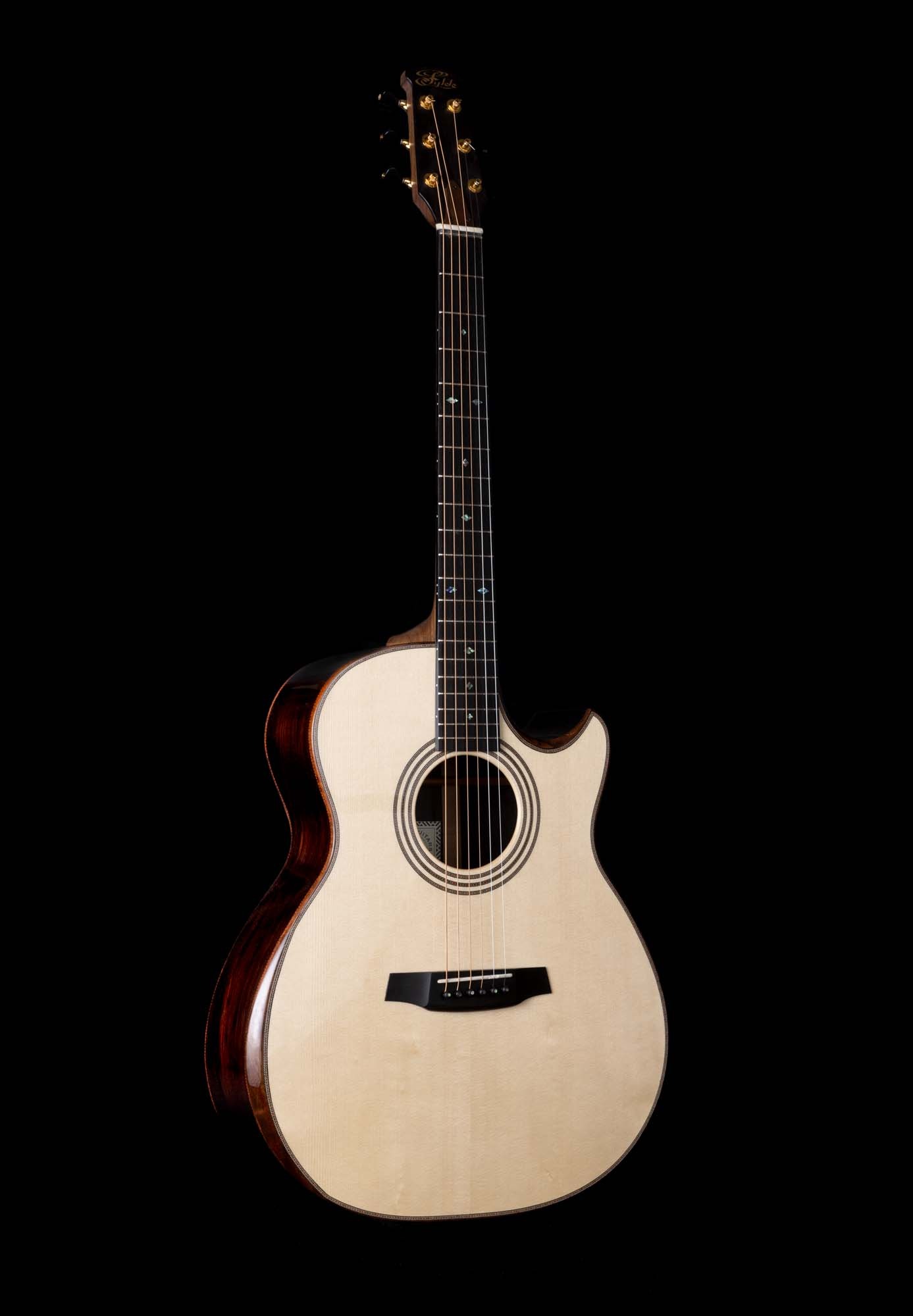
The back and side are African Blackwood, the Soundboard Italian Spruce, and the neck is laminated from Claro Walnut and Mahogany with two strong lines of Ebony. Abalone fingerboard inlays and coloured marquetry purflings. The sound is typical for this combination of timbers – I would describe it as “clean and pure”. A package of beauty, tone and comfort.
March: The Belltar
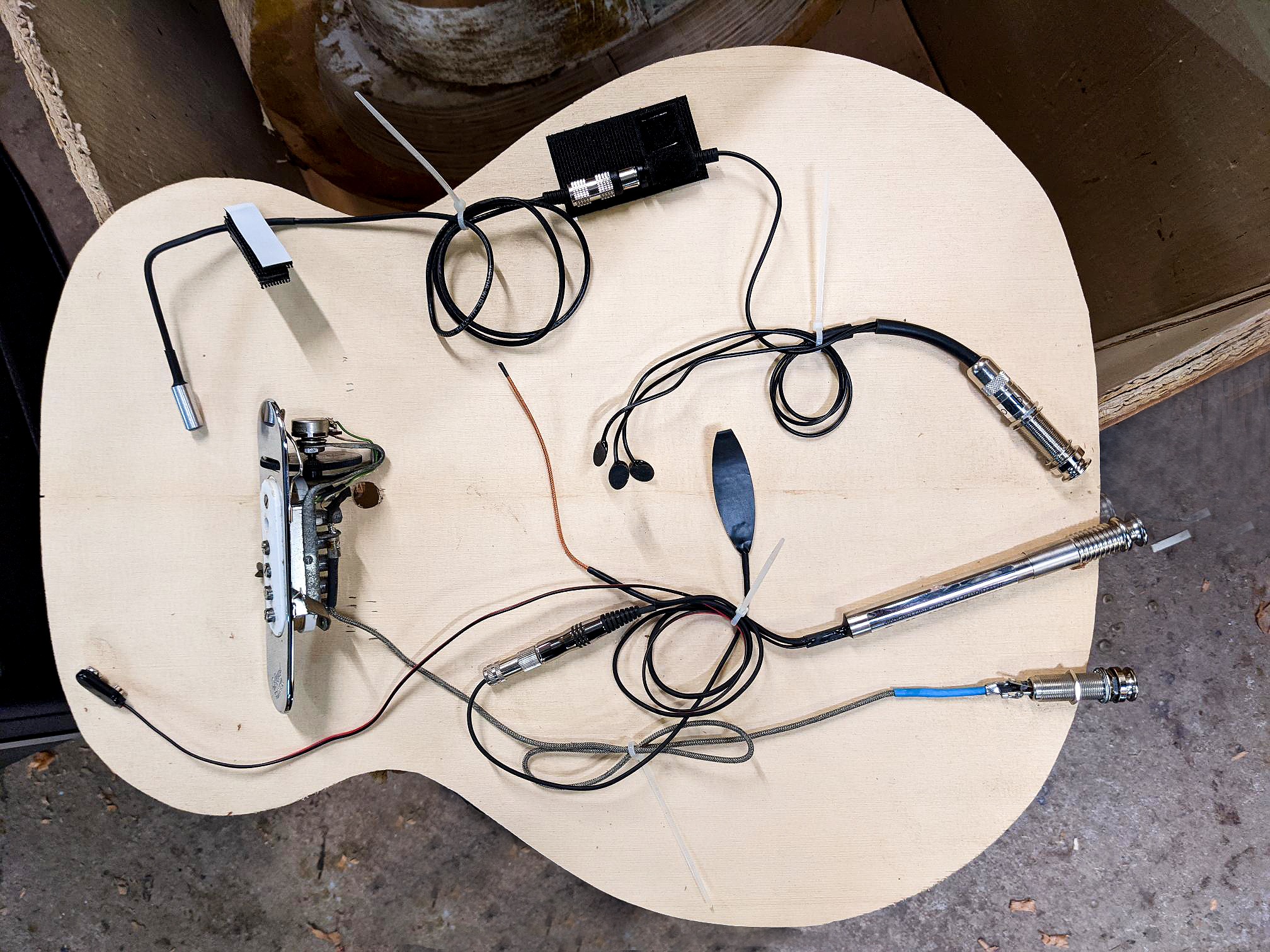
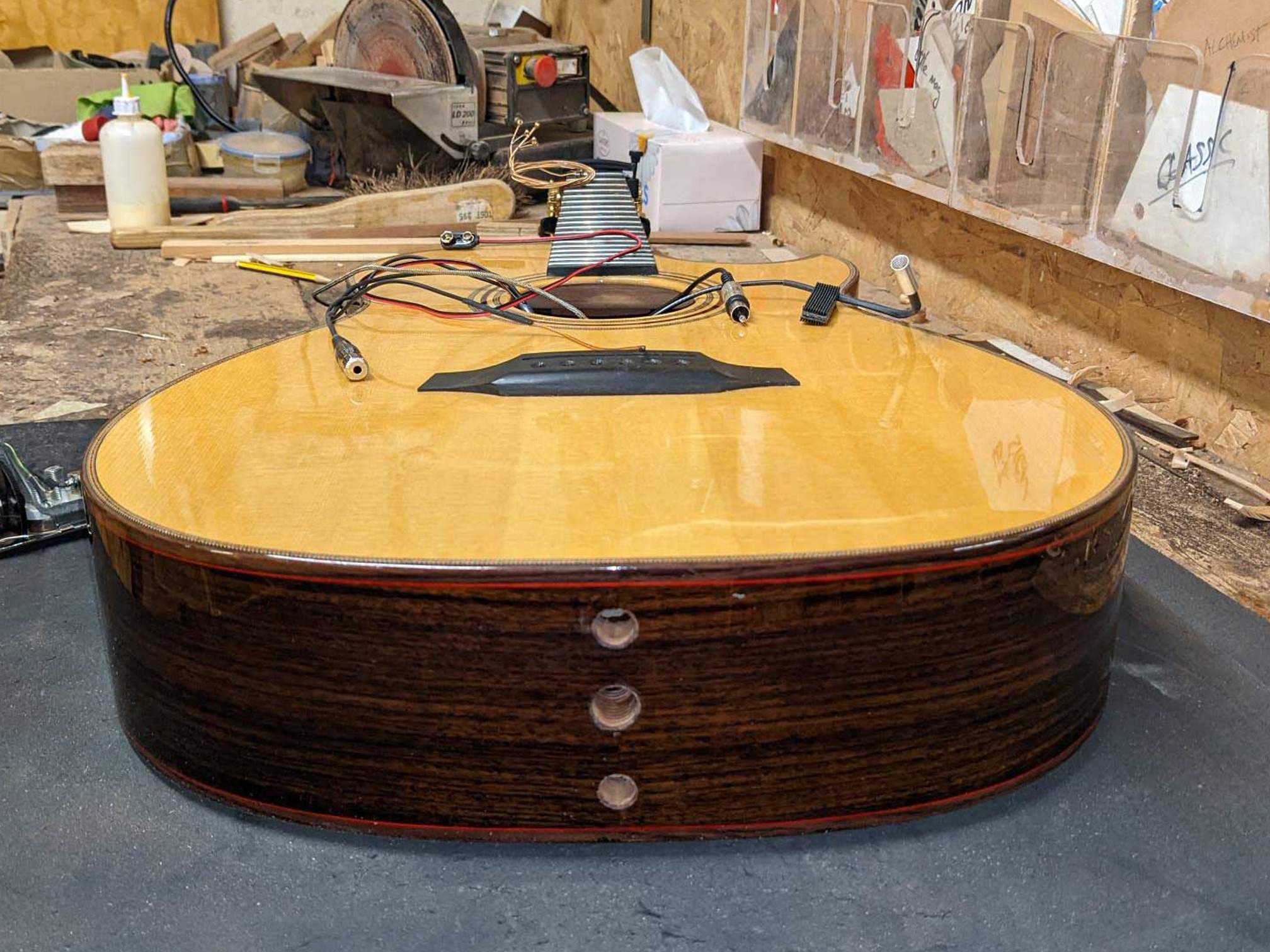
No, it’s not a knitting pattern, or the wiring for an old radio.
It’s three distinct pickup systems that we are fitting to Martin’s “Indian Orleans” guitar, not one system at a time of course, he wants all three in one guitar!
For many years, Martin’s famous amplified sound has been based around Highlander pickups, but they are no longer being made, and he has discovered the equally excellent “K & K” pickups that are fitted to his Taran guitar. He also loves using his vintage DeArmond magnetic pickup through a Fender amplifier. Three systems, one with a microphone and one with a soundboard sensor, so actually, that is five individual “sources” which he can mix and match as required.
What to do?
Simples – ask that idiot Bucknall to fit them all.
It’s not easy. All pickups have their individual quirks and difficulties, particularly around keeping loose cables and heavy metal connectors from rattling around inside. If we could climb into the guitar, this would be simple, but I learnt my lesson on this fifty years ago when I actually got my arm stuck inside Martin Carthy’s guitar (true, read the book). This time I spent a lot of time drilling holes, making special cable clips from Velcro and planning a sensible procedure, then passed some of the life-threatening parts to Alex. The final stages were back to me with Paul holding scalpels and retractors and making tea with Valium.
Does it work? I’ve no idea, I don’t have a five-input amplifier, but I’ve noticed that Martin has sacked his bassist, drummer and keyboard player so he must be confident.
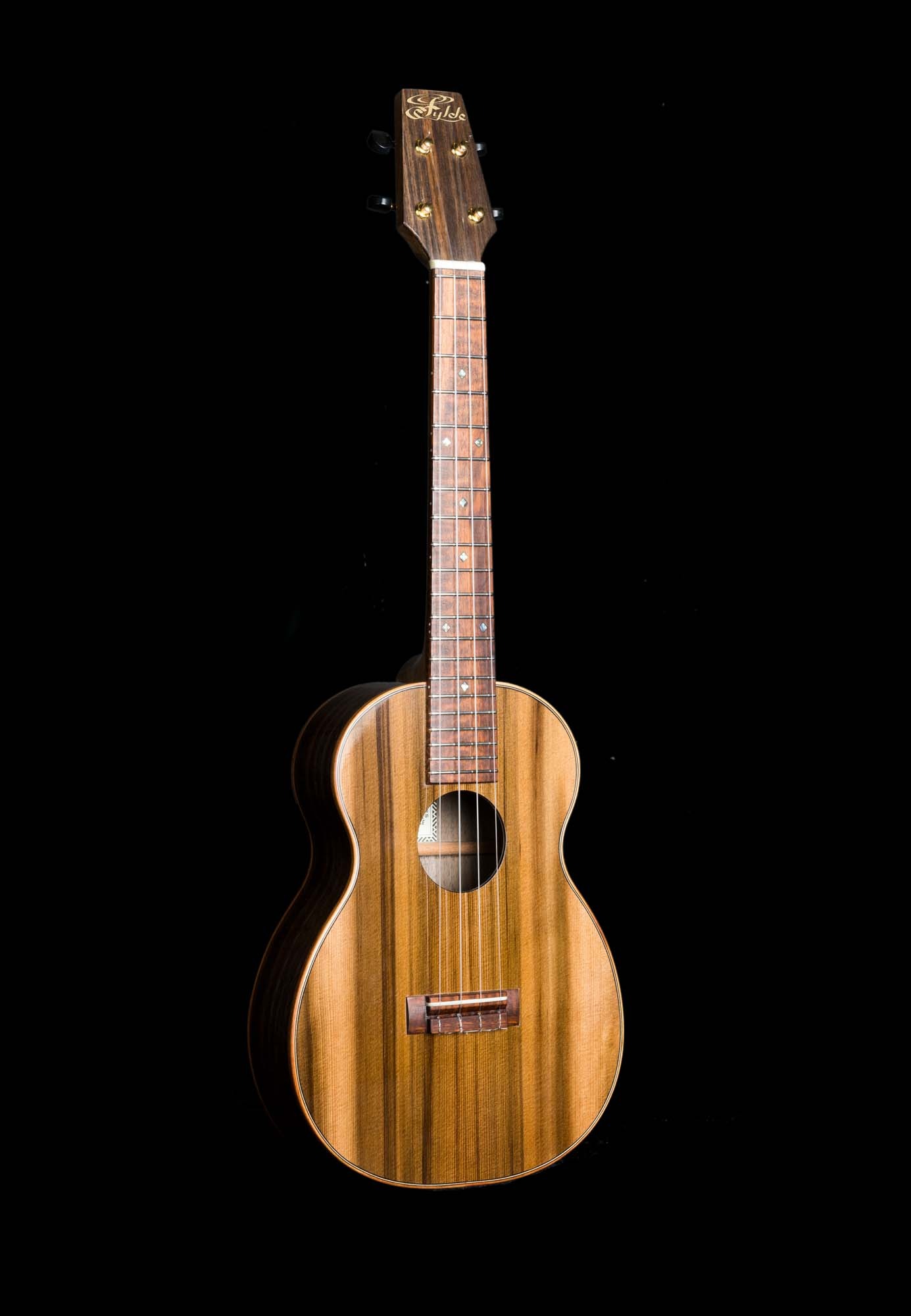
December: Custom Ukulele for David Holmes.
You remember David? He’s the guy that makes his living “down the pit”- the orchestra pit at various West End shows, currently the Tina Turner show which we do hope to see again before long.
This uke will take his Fylde count to six. The body is made from Claro Walnut, I don’t need to cut up full size guitar wood, because I usually buy wood in logs or boards rather than single sets, and I have a lot of smaller sizes. Likewise, for the Sinker Redwood Soundboard. The neck is made from Walnut, the bindings from Brazilian Tulipwood, and the fingerboard from Snakewood!
So now I’m wondering if I can get a video of David playing his Fylde Ukulele with Tina Turner singing? Any requests?
December: Custom Bubinga Mandolin
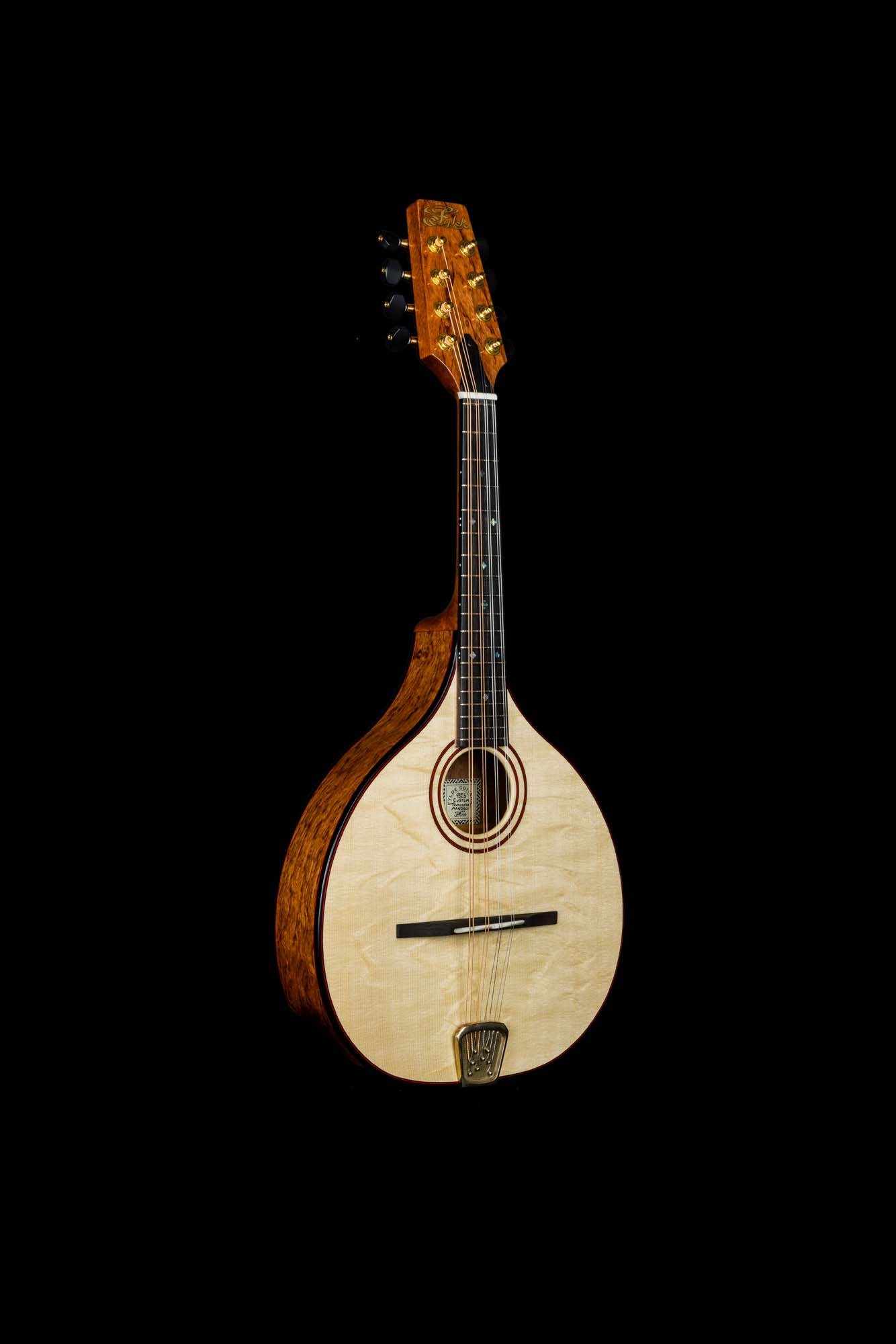
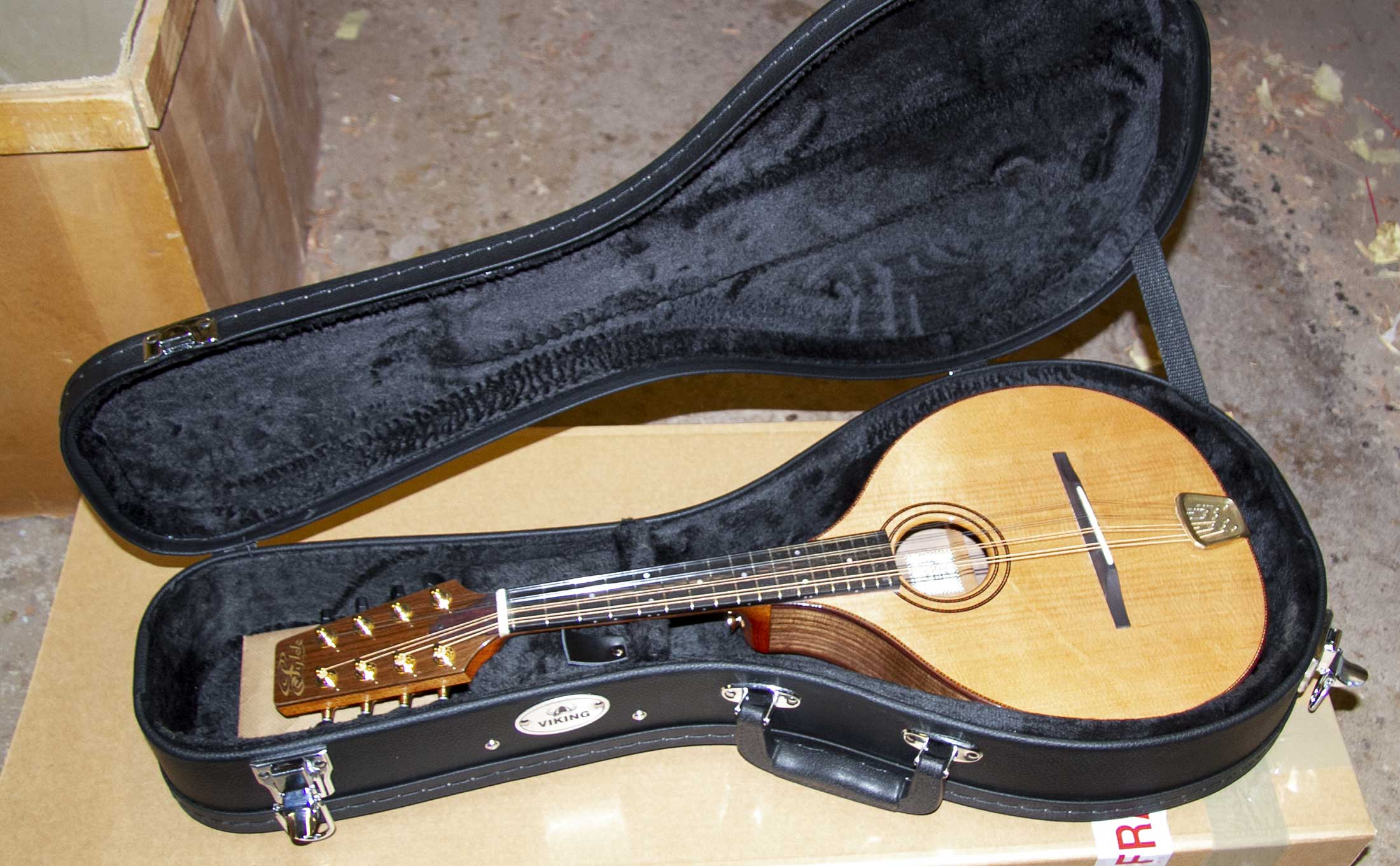
A common story, the customer wanted something a little different and I wasn’t going to discourage him. Mandolins are such a convenient shape, they can sometimes be made from guitar offcuts, and it means that we really don’t get much waste. This time though, that’s not what happened. I love Bubings in small sizes but find it a little overpowering in guitar sizes, so I was happy to cut the best parts from a full size “set”, concentrating on getting the best figure. The top is Bearclaw Swiss Pine, part of a small batch of unusual wood I acquired by a special contact in the tonewood business. The bindings, neck lamination, fingerboard and truss rod cover are black Ebony, contrasting splendidly with the Bubinga and framed by red border lines.
“It really is a thing of beauty and the craftsmanship is so evident. You must be proud of yourselves producing such amazing instruments for the price you do. Can’t thank you enough.”
December: Customer Eye Test
It’s very important to me that all our friends and customers maintain excellent eye sight, so I’m very pleased to be able to offer you all this eye test, free of charge. If I find any other test concerning other aspects of your health, please be assured I will offer them to you without any cost to you. It’s OK, you don’t need to thank me, I’m that sort of person.