

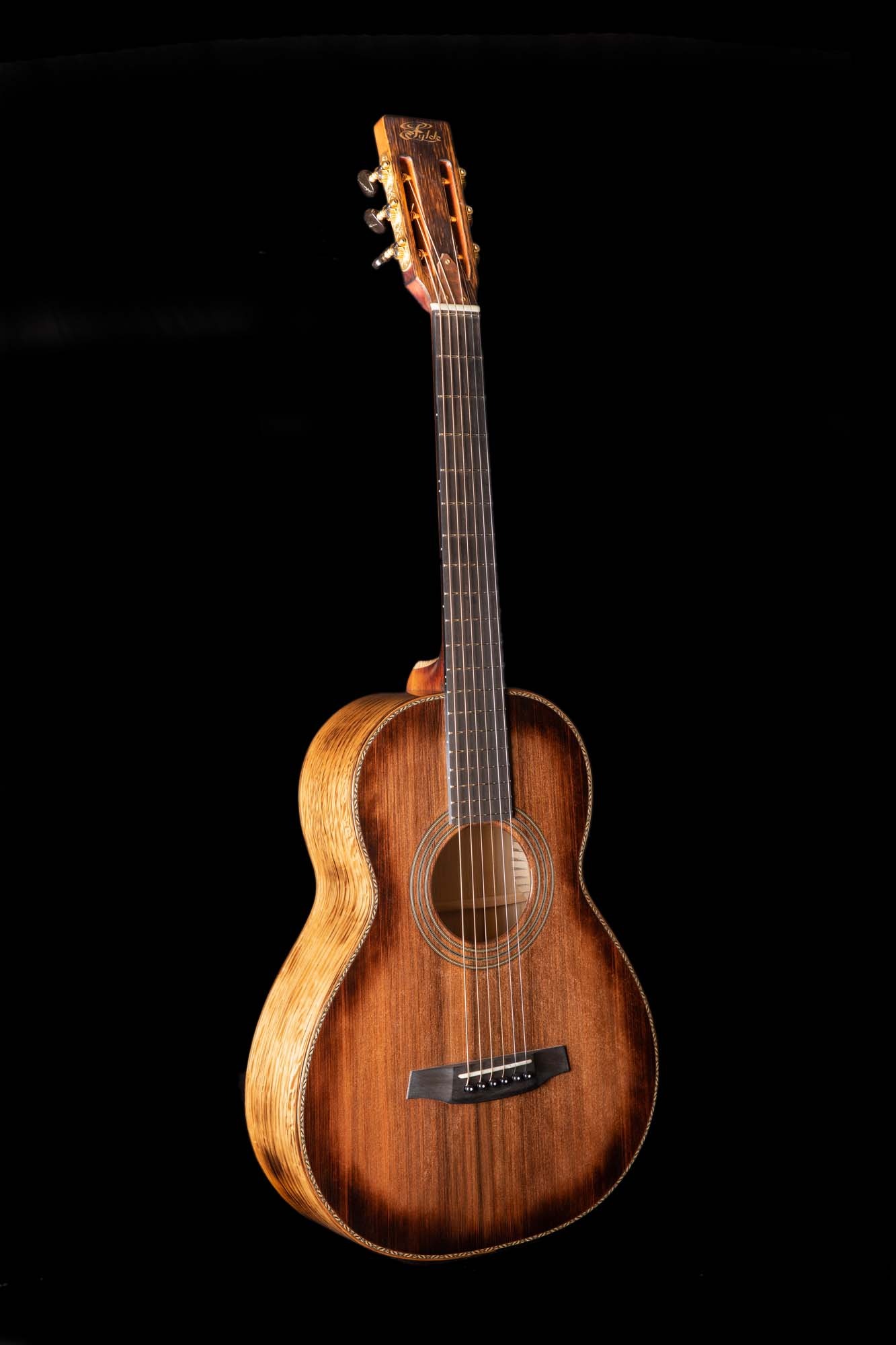
January: New Style Single Malt Ariel
I’ve made some changes to the Single Malt instruments recently.
There will never be a shortage of oak barrels, but I have run out of good looking washback vessels for the soundboards, so from now on I will be using Sinker Redwood, with a little “sunburst” added, and more conservative Ebony fingerboards and bridges, with reclaimed Mahogany for the neck.
I might even use “Rocklite Ebano” for the fingerboard, so that the whole guitar is still made from reclaimed or “eco-friendly” timber.
This really is a very striking guitar. The tone is rather more mellow than the original Single Malt.
Doesn’t it look lovely?
January: New Guitar for Louis Campbell
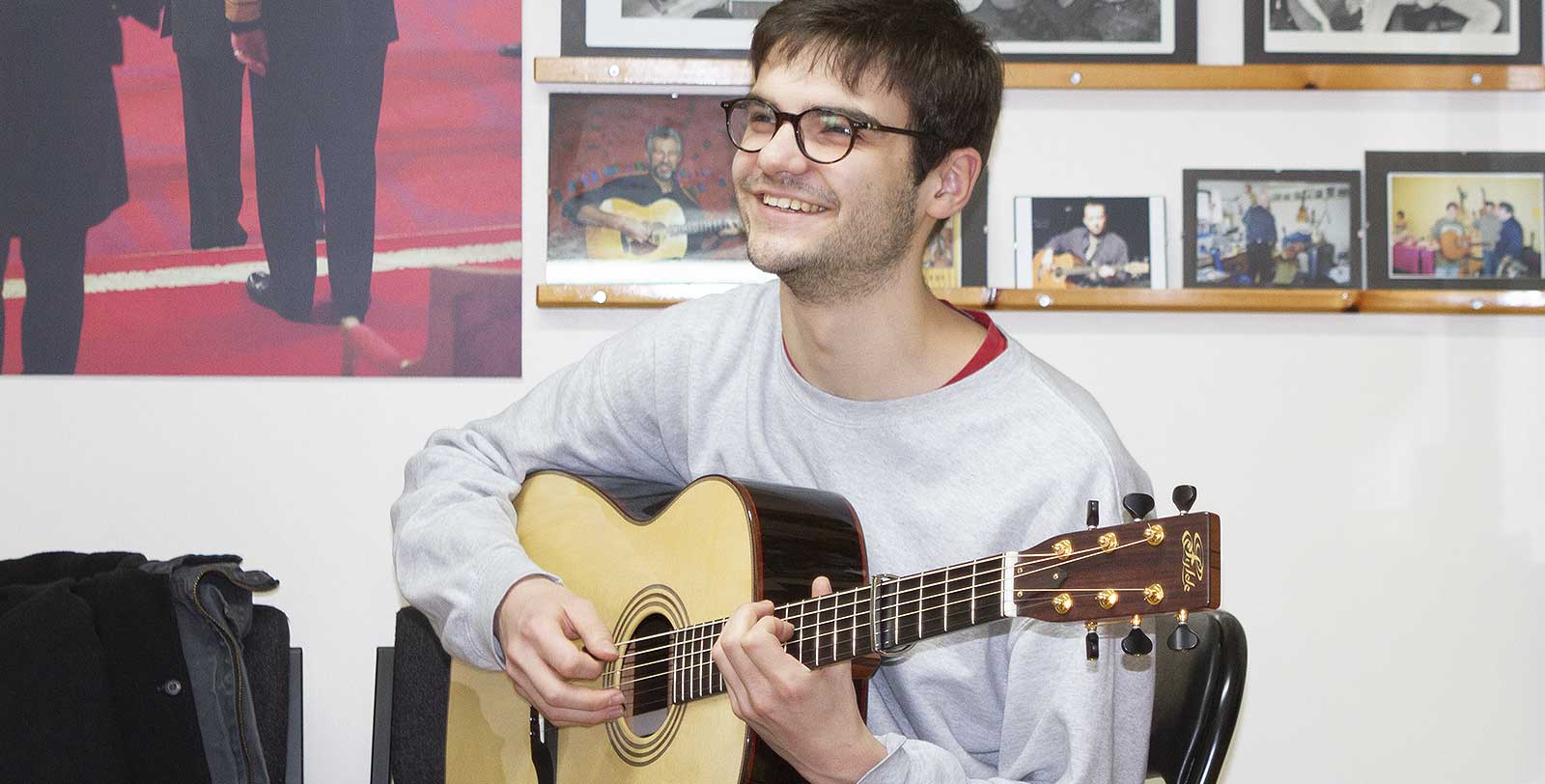
Louis is a student at the Royal Northern College of Music with Craig Ogden for Classical Guitar, and is one of Martin Simpson’s students for “The other stuff”
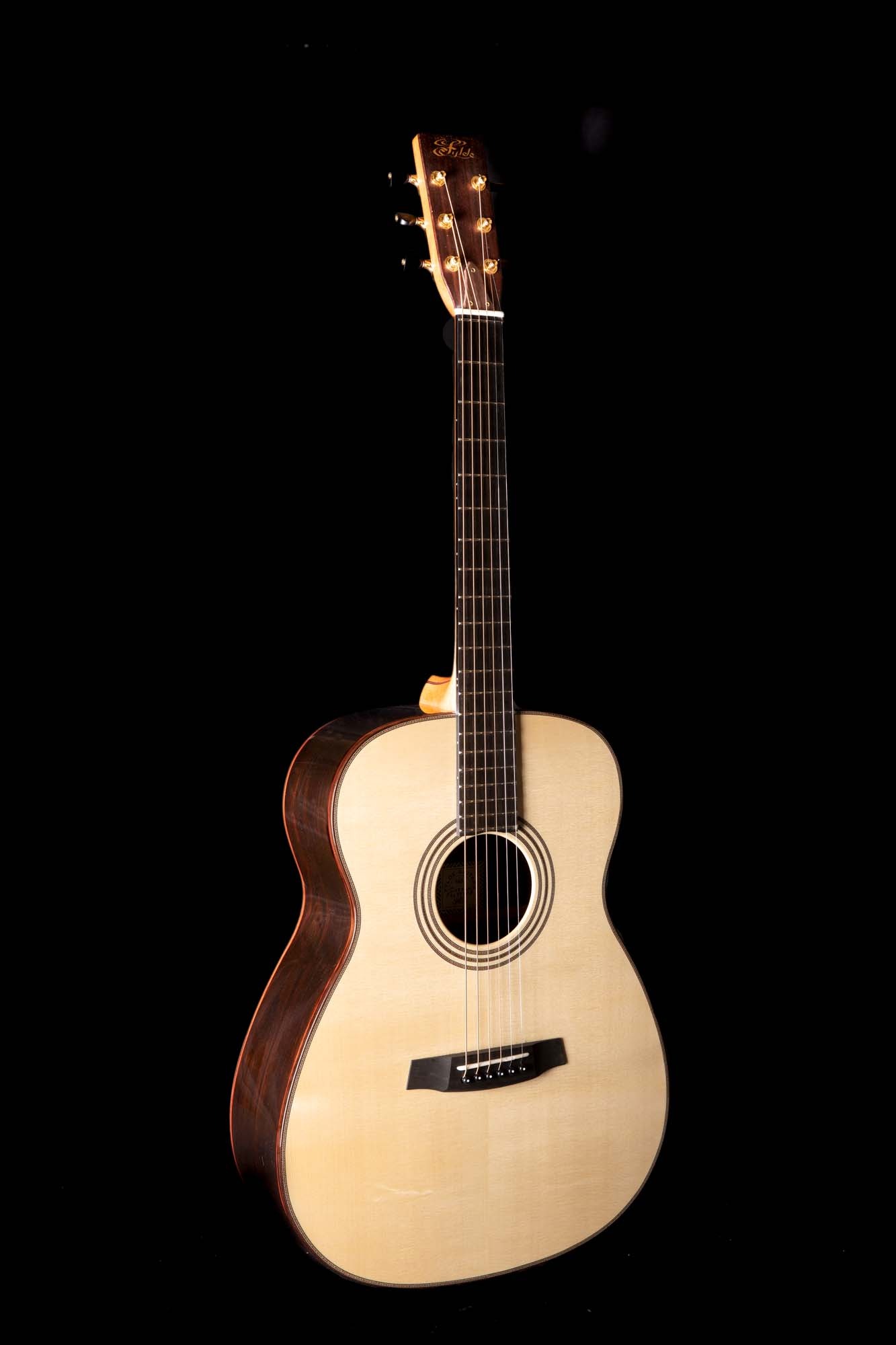
Louis has been used to playing 14 fret guitars, but Martin is a big influence, and Martin’s Fylde guitars are 12 fret, so:
13 fret it is then. How many of you spotted that?
The soundboard is Swiss Pine, with lots of very fine “silking”. The back and sides are Madagascar Rosewood, it’s so dark that at one point I thought I’d used the wrong piece of wood, but careful inspection with a magnifying glass reassured me. The 13-fret neck join wasn’t just a whim, it’s a genuine attempt to find what Louis needs, and it wasn’t my suggestion, it was a combination of Louis’ thoughts with Martin’s encouragement. It’s difficult to say how much difference it makes to the sound as we can’t make direct comparisons, and once again, words don’t work very well, but I think it does have some of the fullness of 12 fret guitars, and some of the strength of tone of a 14-fret. We are all pleased, let’s hope it isn’t unlucky!
Louis is playing in Sam Sweeney’s band, which is touring in May, and opening some of the shows with Owen Spafford.
January: The Night Shift
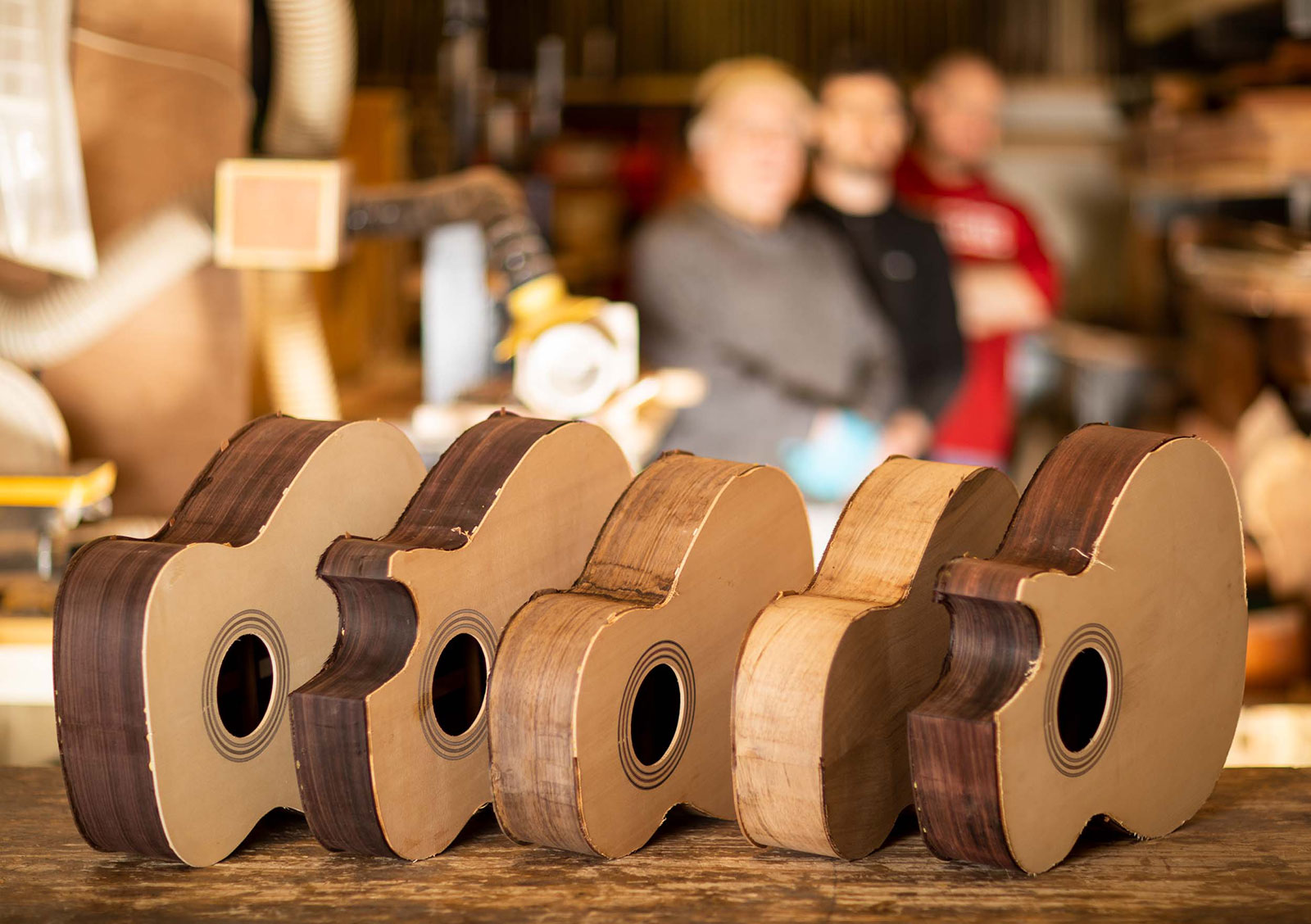
I’m often asked how we manage to get through so much work.
In this picture, you can just see the night shift arriving.
When Alex, Paul and I eventually go home, tired and aching, dusty and hungry, the night shift takes over, you can just see them in the background, easing themselves out of the underworld. They don’t need feeding, health and safety is never an issue, and they have gone by the time we are back in the next morning.
If it’s not a full moon, those five guitars might be finished when we get in tomorrow.
left to right
Special Falstaff for John Doyle; Slim Falstaff for Adam Palma; Custom Ariel for Findlay Napier; Custom Ariel for David Buckingham. Another “test” guitar similar to the “Martin Simpson” Falstaff, just so we have one around.
January: GG guitar from about 1976
I think this was the third guitar Gordon had from me.
It was built very lightly, with a Cedar top, and Cedar bracing. Despite Gordons very light stringing at the time, it didn’t survive very well and someone persuaded Gordon to have the top replaced.
We can’t be sure who did the work, or even why he did it, but it was an excellent job, just about invisible. if it was you or anyone you know, contact me, I might let you pay me to come and make the tea.
Anyway, Gordon never did “gel” with the new sound, he has sold the guitar, and we have managed to rebuild it again for the new owner. This time hopefully more like the original, but with a slightly stronger structure. The work was very difficult in places, particularly getting the neck back on at the correct angle – this was the third time it has been fitted, and there wasn’t much wood left where I needed it. We don’t have any allocated time for this sort of work so we fit it in when we can. This one took about 18 months.
But the new owner, a well know music “host”, is delighted.
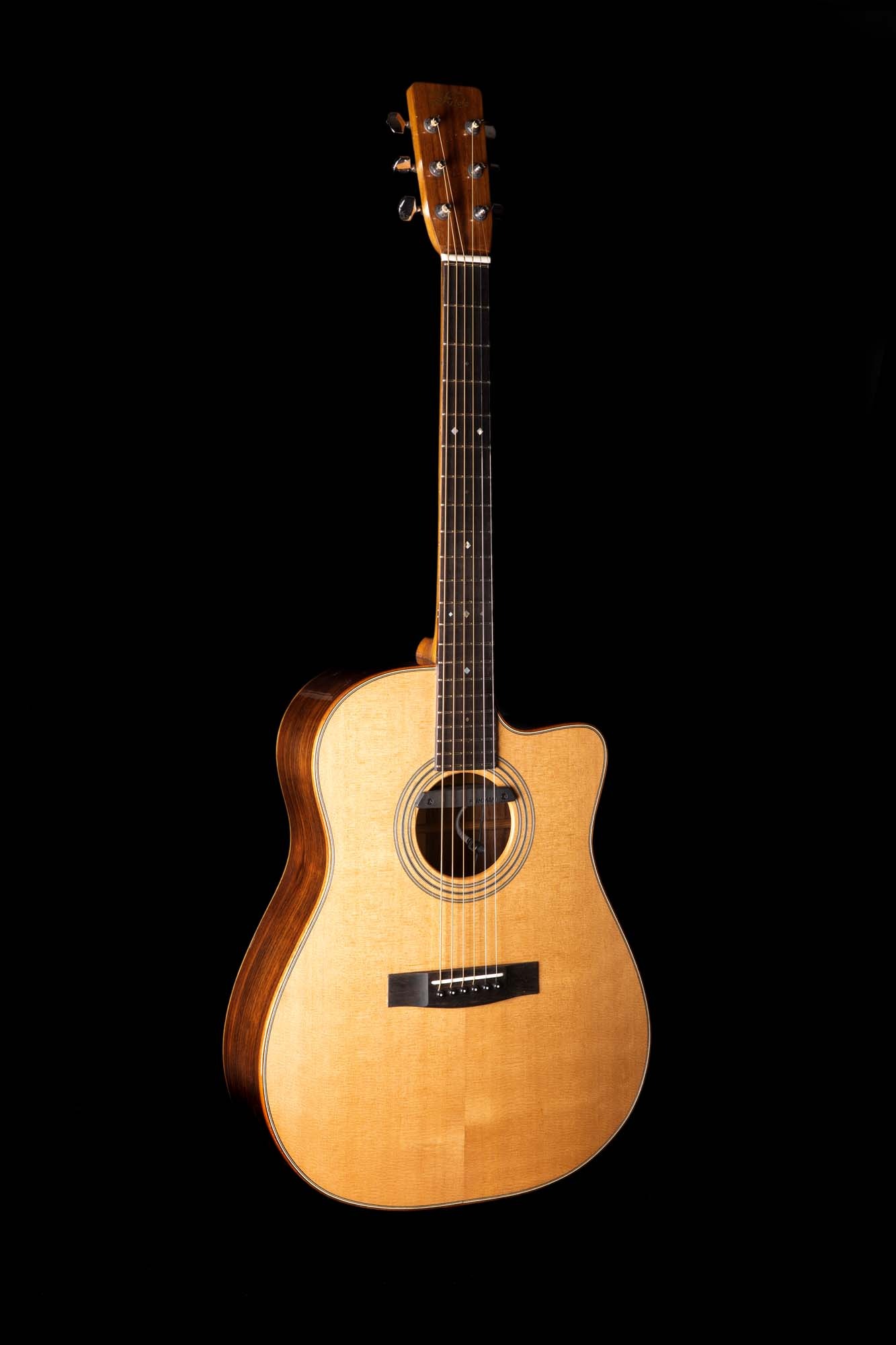
January: 12-string Goodfellow
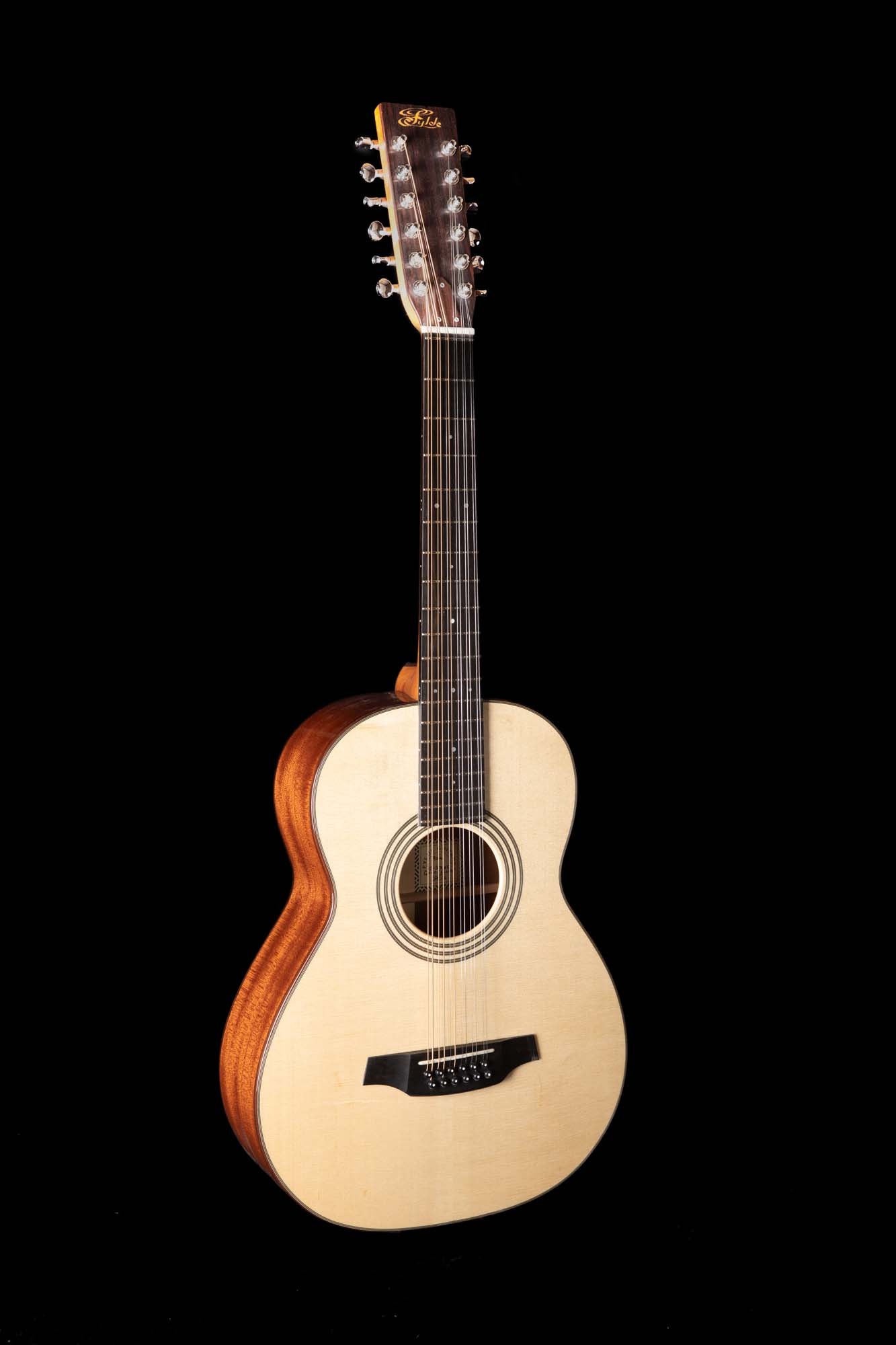
A custom order, very convenient and a comfortable size.
Sapele with a Spruce top to support the double tension.
January: The Roger's Stones
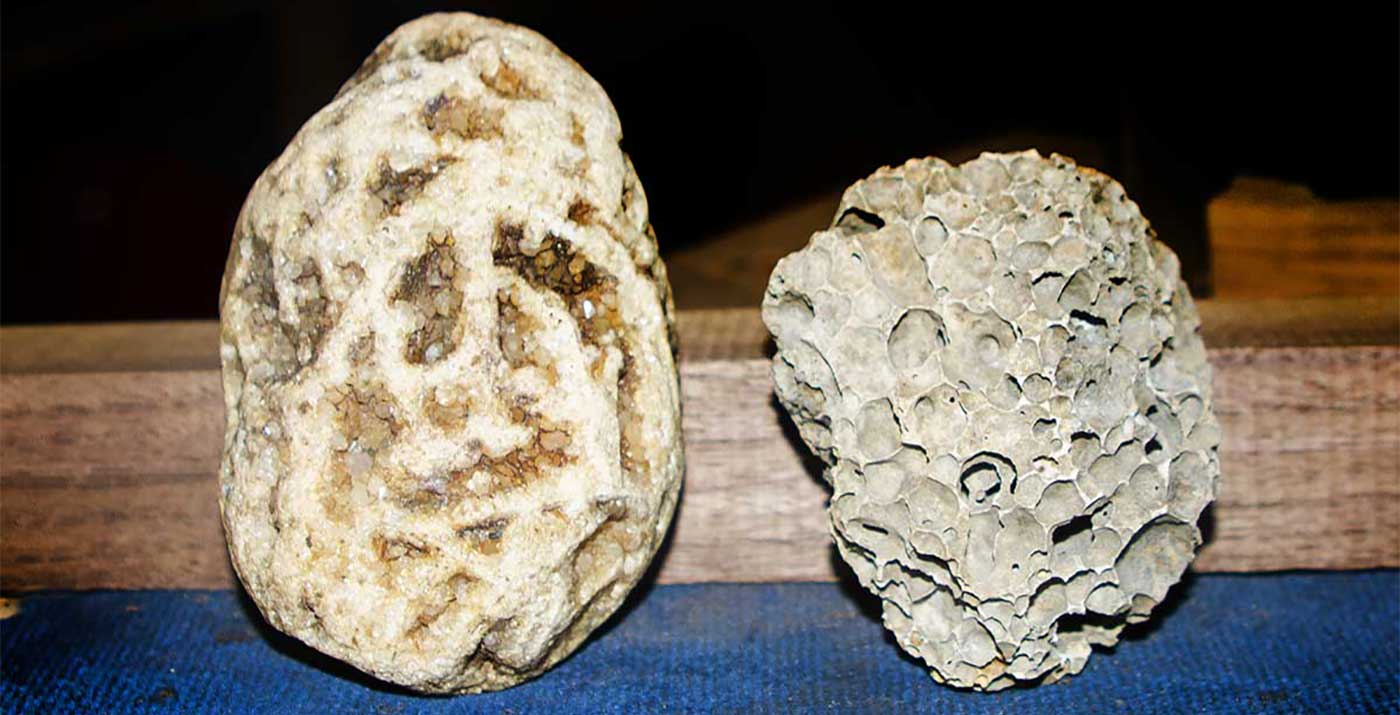
A very poor joke, even by my standards, but it’s all I have.
I found them in our garden, and as usual, there is a story. The area where we live is known for its unusual geology, lots of minerals have been mined near here. In fact, our house was built by the chief engineer of a nearby Tungsten mine a hundred years ago.
I found these in the foundations for the new “Green Oak” conservatory I am trying to build, muscles and time permitting. I’m sure the white one is Limestone of one form or another, the little crystals in the nooks and crannies are beautiful, but I don’t understand the lattice – like geometric structure around them.
The darker one is like froth made from stone, it’s not cement, it’s more like pumice but I don’t remember a volcano erupting recently. Not outdoors anyway. I’ve probably spoilt them both a bit by boiling them in washing soda to get them clean.
Moira did ask why the cooker was in a bit of a state, and when I told her I’d been “boiling my stones” she hardly took any notice, probably because she had also seen the coffee machine, which had overflowed while I was trying to rescue the cooker. She loves me really; she knows she shouldn’t leave me alone.
Anyway, enough of my domestics, what are these fascinating things?
March: Bill Bailey

A “works outing” to see Bill at a local Venue. Bill was testing out some new material to get warmed up for his next tour, he was very funny as usual, and used his Fylde Mandola for his closing numbers.
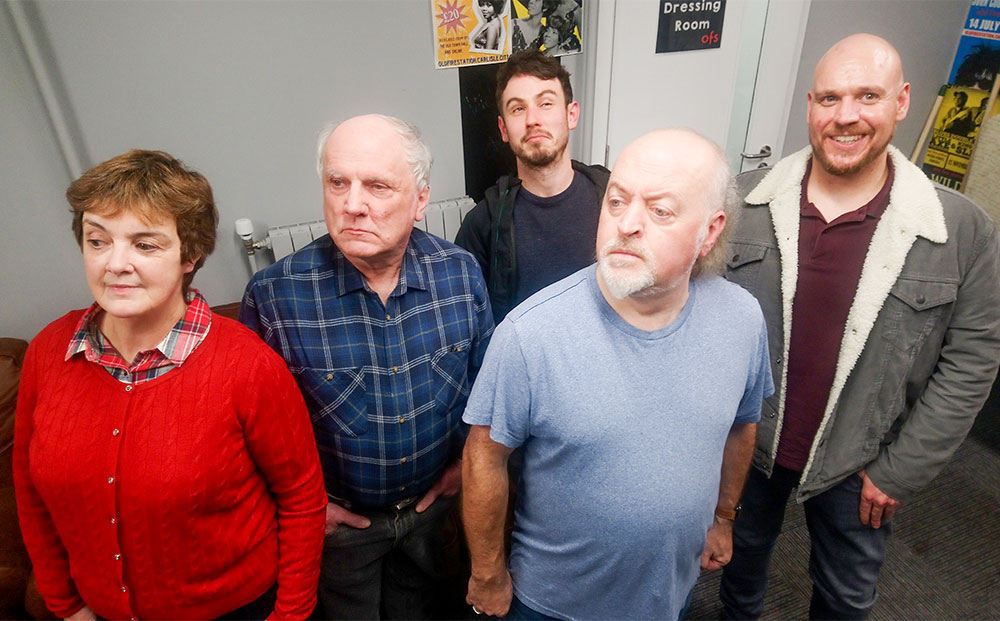
After the show, we met up to the Green Room for a chat, Bill decided that we should have a photo taken in the “disdainful, disinterested” style of the typical 1970’s album cover.
Bill obviously knew what he was doing, Moira got the idea, and I just used my normal face. But what happened to Alex and Paul? Aaah – I get it, they didn’t know what “1970’s” meant! I think Alex saw it as a holiday snap, and Paul, well, maybe a maths exam?
And here I am pointing it out in front of thousands of readers. How mean of me.
March: Guitar maker's Splinters
We don’t have many accidents here, (says me, desperately holding on to the biggest piece of wood I can find), but there was an “incident” a few weeks ago and Moira decided that Alex and Paul should get some proper first aid training.
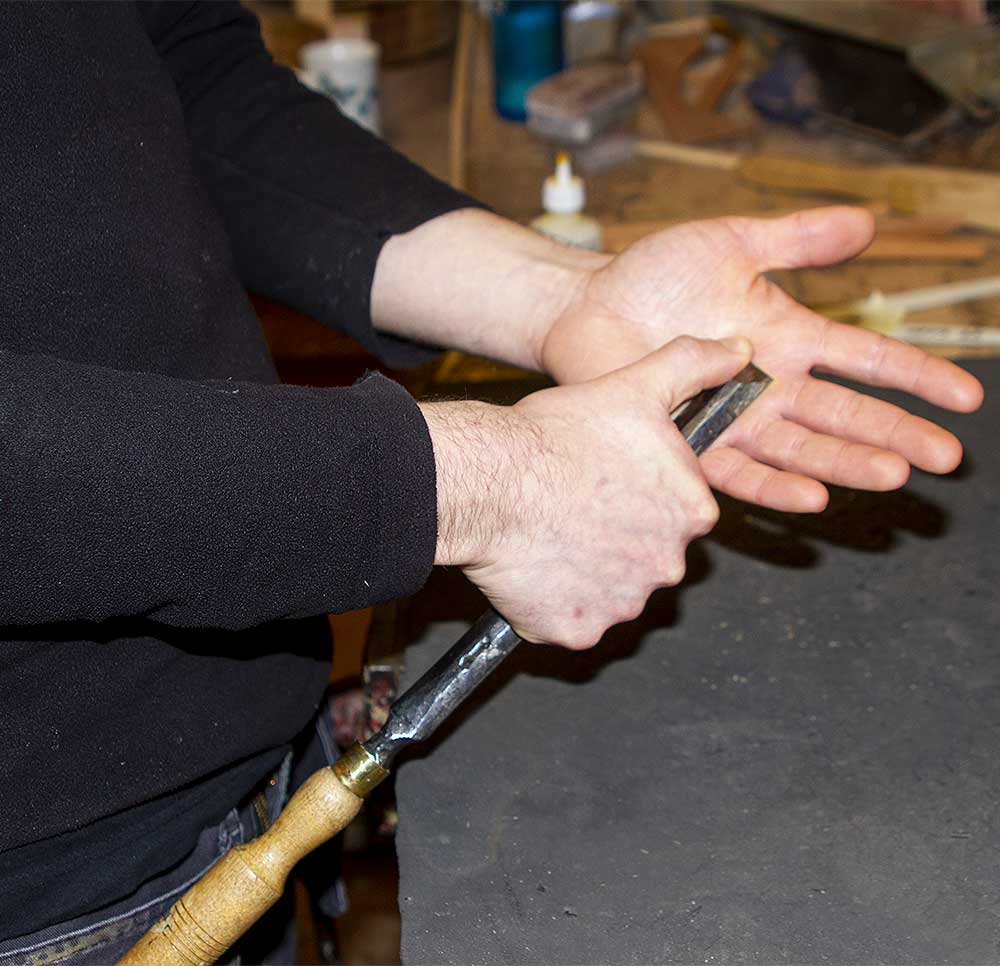
But we do get a lot of splinters, (Wenge is just about banned), and one of the first bits of training here is the best way to remove them. Many years ago, I discovered a neat little trick which nobody ever wants to try, until they get used to it and like me, would now never use any other method. A clean, sharp chisel, tiny nick in the skin above the splinter, push the corner of the chisel under the end of the splinter, press down with the thumb to grip the splinter and gently pull it out. For a deeper or bigger splinter, all that is needed is a little deeper nick of the skin. Never fails.
I wasn’t at the first aid training this time, but I do wish I had seen the medic’s faces when Alex and Paul proudly explained and demonstrated their superior technique. Tweezers? Naah – let me show you a much better way!! Well done lads.
March: Guitar maker's Splinters - 2
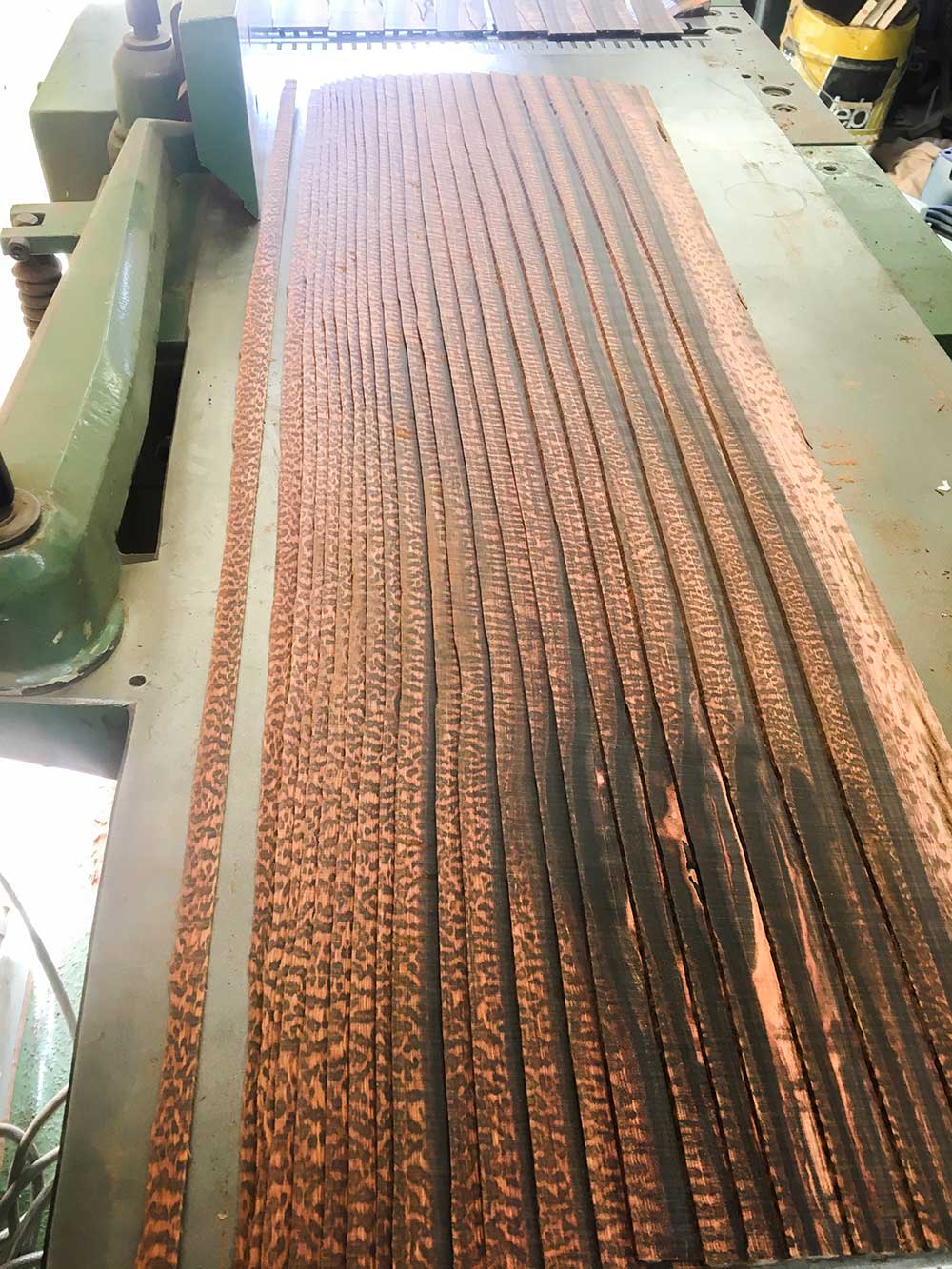
Brosimum guianense, probably the most expensive of all the exotic hardwoods. The wood is available only in small logs, and the quality can vary enormously, sometimes a log will yield hardly any useful timber, but because of the strong pattern, it’s possible to splice shorter lengths together, leaving the joins hidden in the darker marks.
I love using it for bindings, and it is available ready cut for this purpose, but that removes much of the appeal for me, because I like to be close to the timber all the way through the cutting process, if I buy ready-made bindings it’s as if I’m paying somebody else to have fun on my behalf, so when I get the chance to buy a log, it’s hard to resist. I don’t mind going without food for a while. Moira says I should try it more often, the food that is, not the log.
There has been a gap of several years when Snakewood hasn’t been available, and I’ve been running low, but I did find this rather nice log, and dragged my usual sawyer out of retirement. It’s a very skilled job, requiring special saws and lot of experience.
It’s fairly clear where this wood got its common name, it looks good when partnered with almost any other timber, but I do feel justified in keeping it for the highest value instruments.
March: The Belltar
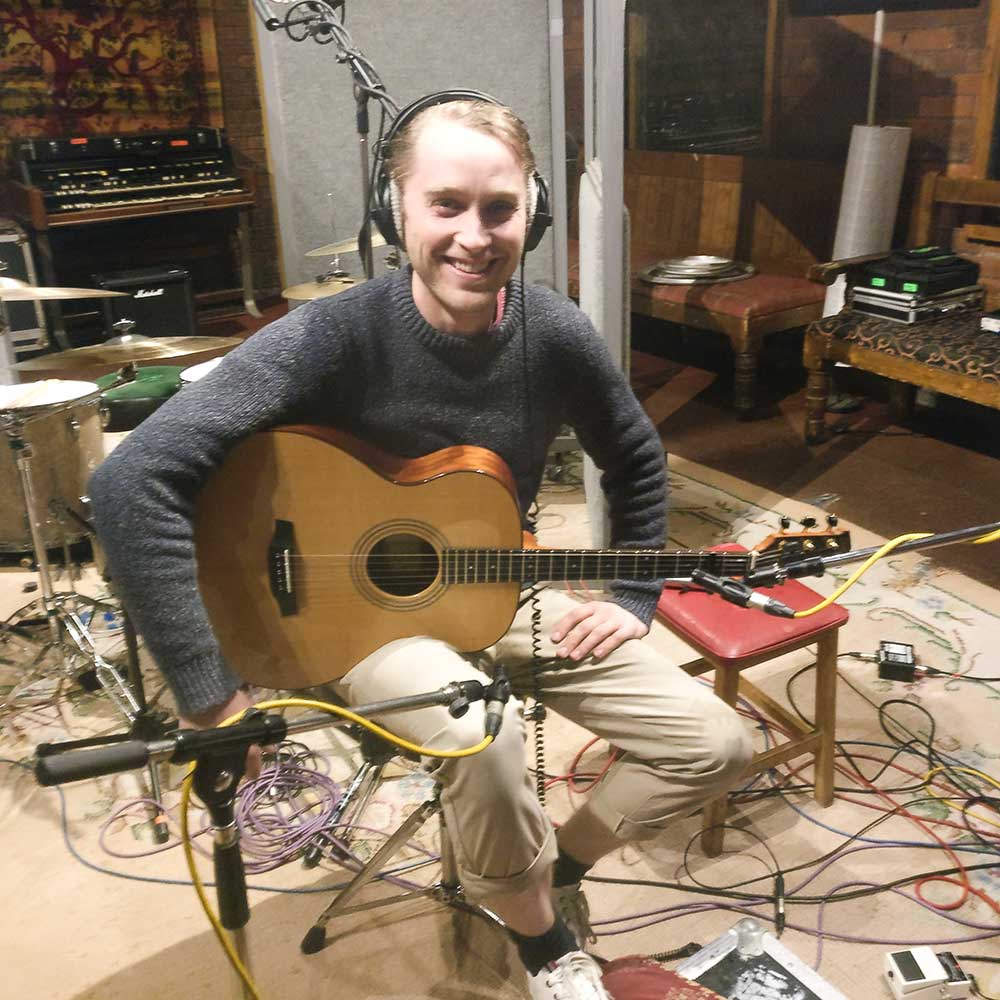
Here we are, Adam Holmes in the studio with his new five string guitar, recording with “The Magpie Arc” for their first album.
Best not to have that many loose leads when you are on stage Adam!
March: Peter the pheasant
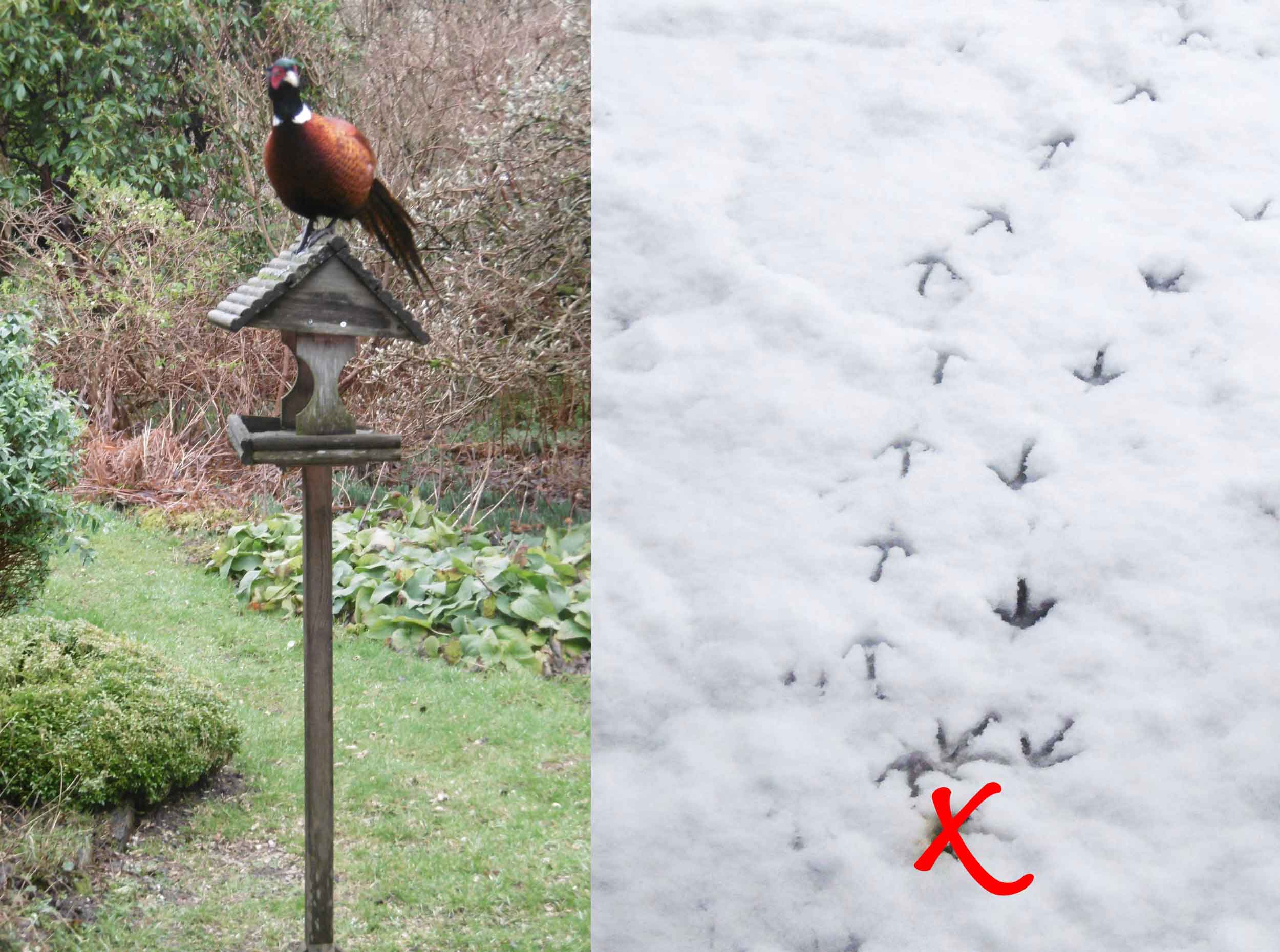
Just a little insight into our lives.
We are visited by a family of red squirrels every morning, we put a little food on the bird table, shout out “come and get it” in our best squirrel voice, and bang on the table with the food scoop. All the little birds come first, they must understand squirrel better than the squirrels, who appear about five minutes later.
But before all this happens, Peter the pheasant has been on watch. He stands on the lawn until our curtains open, then scurries round to the front door and announces his readiness for breakfast with a very loud squawk. He has been known to become impatient and peck the glass quite hard.
But a few days ago, we had a few inches of snow and we didn’t wake up at our usual time.
Peter had showed his displeasure in a very direct and rather rude way. Nasty ungrateful Peter.
March: New Guitar for Gordon Giltrap
I did wonder about how to start this newsletter, but it didn’t take long. Guitars must come before bad news, plenty of time later to talk about other things and I think we need cheering up first.
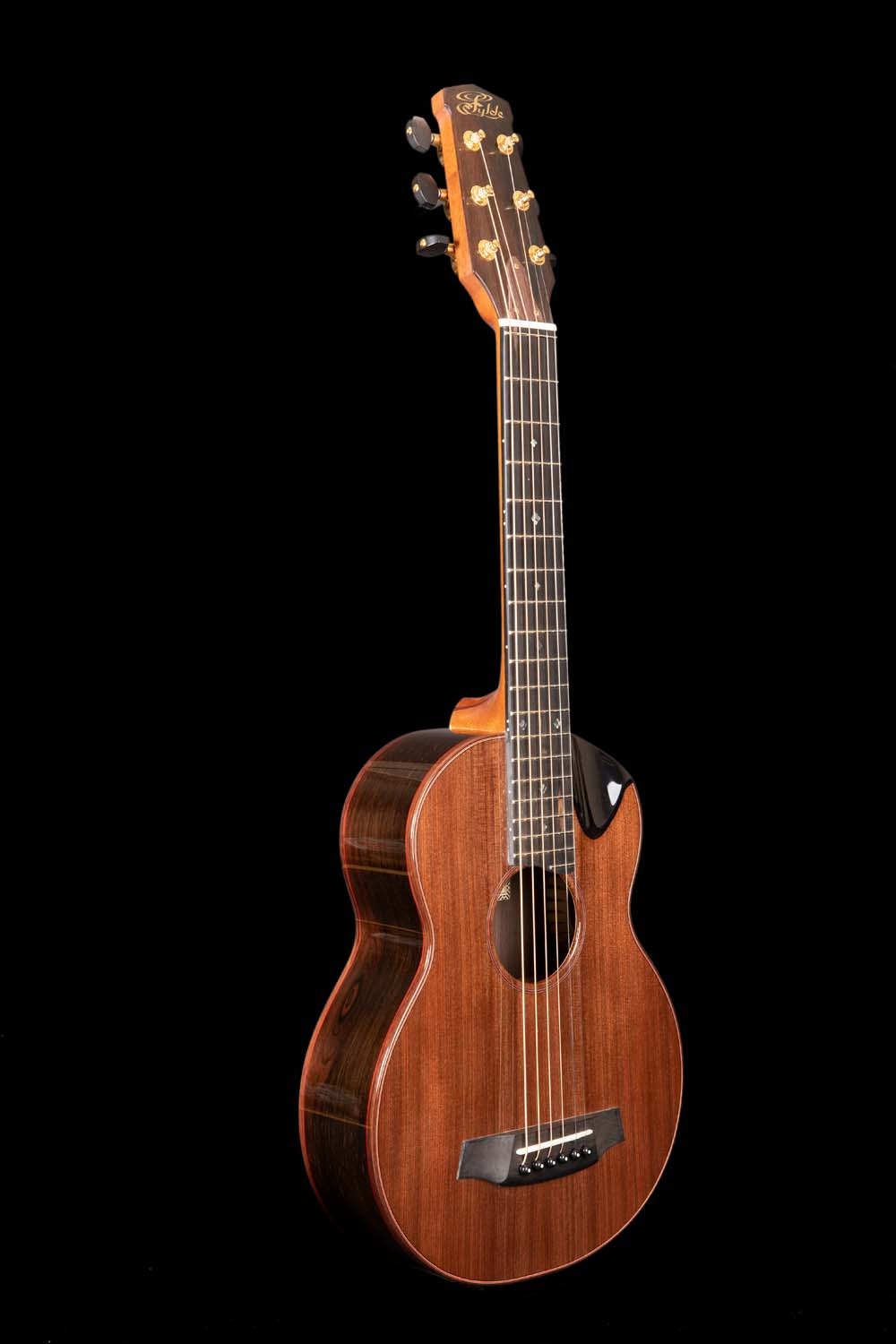
This idea has been brewing between GG and myself for quite some time. Gordon loves to stretch himself over many different styles of guitar and has made very good use of a small guitar in the past. I think he sort of issued a challenge to me over this without putting it in quite in those words. It usually goes something like this – “Rog, what do you think about …?”
The back and sides are very very old Brazilian Rosewood, deep chocolatey brown, from the stock of Harald Petersen, once a well-regarded classical maker from the Lake District. Most of it was far too small, or full of wormholes, cracks etc, but these pieces were perfect for the job.
The soundboard is Sinker Redwood that Moira and I brought back from Mendocino, California. Again, it’s a small piece, but wonderful quality, stiff and resonant.
Rosewood bindings. Laminated Mahogany neck with black and red lines. 515 mm scale Ebony fingerboard with notched square abalone inlays (and a cheeky little bit of colour!). The neck is a copy of a Fylde GG model, 46 mm wide at the nut, and the same taper, but because of the short scale, the string spacing at the bridge is less than normal. Gordon can play anything.
The bevel/cutaway was formed from four layers of black veneer, moulded “round the corner”, to remove the ugly, pointy, sharp bit.
The tone is huge, lively and full. It probably doesn’t need a pickup, but it has a K&K just in case.
I can’t wait to hear it live.
March: How to lose an hour of your life
Put the clocks forward an hour, but a whole week before it was due. Not referring to anybody in particular of course.
April: Let's start off with some lovely pictures of a guitar to distract us from other news.
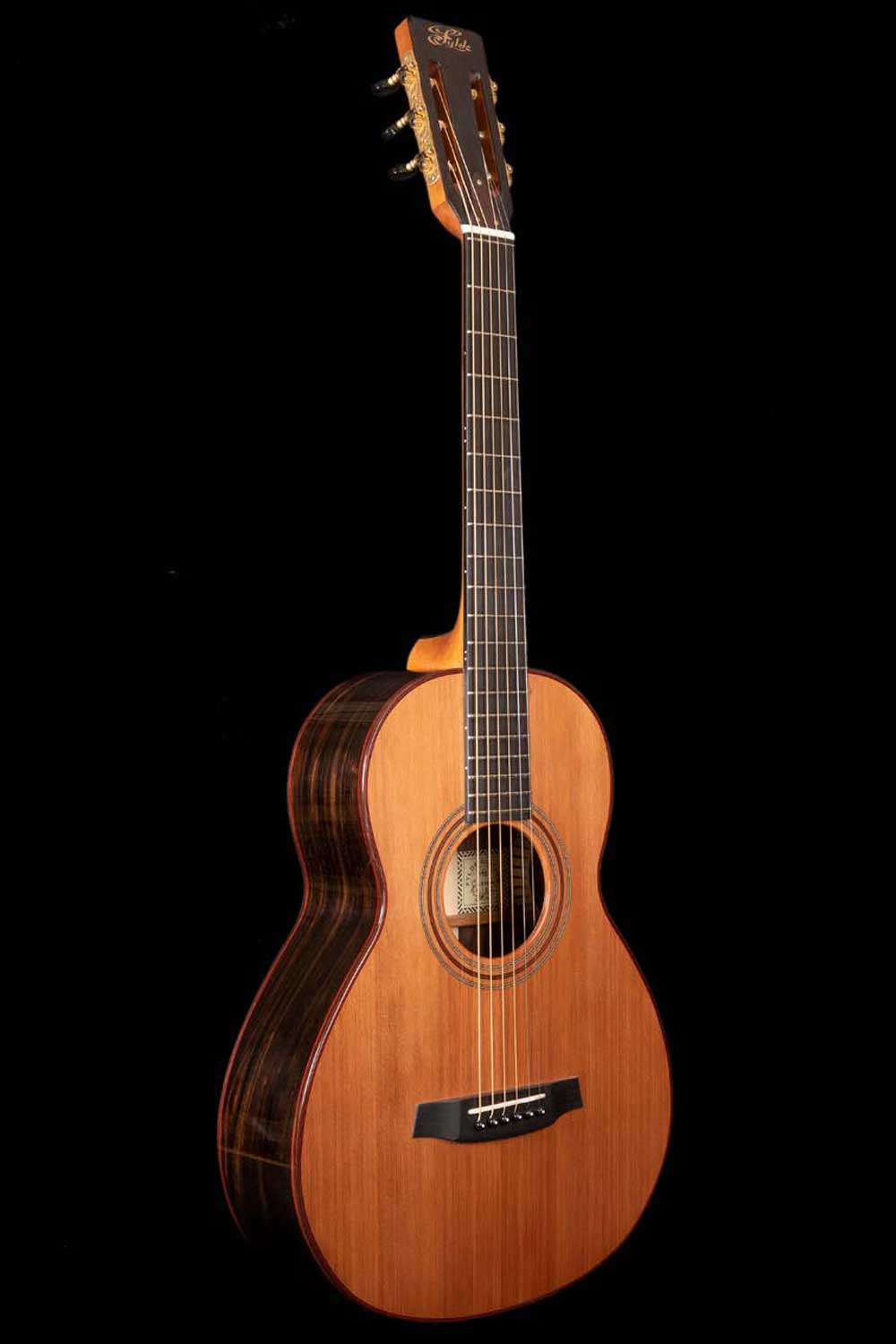
An Ariel, with back and sides from Macassar Ebony, a Sinker Redwood soundboard, Mahogany neck with an Ebony centre section and “Rocklite Sundari” bindings with red borders.
This guitar is due to go to New York. We have sent three instruments to the USA in the last few weeks, and each delivery has been quick and easy, but the situation in New York is so uncertain that the customer and me have decided to hold on for a while. The poor guitar is in a dark, dark case, in a dark, dark box, in a dark, dark corner of the workshop. This was supposed to cheer me up, I’ll stop.
April: Chris Difford's guitar stranded
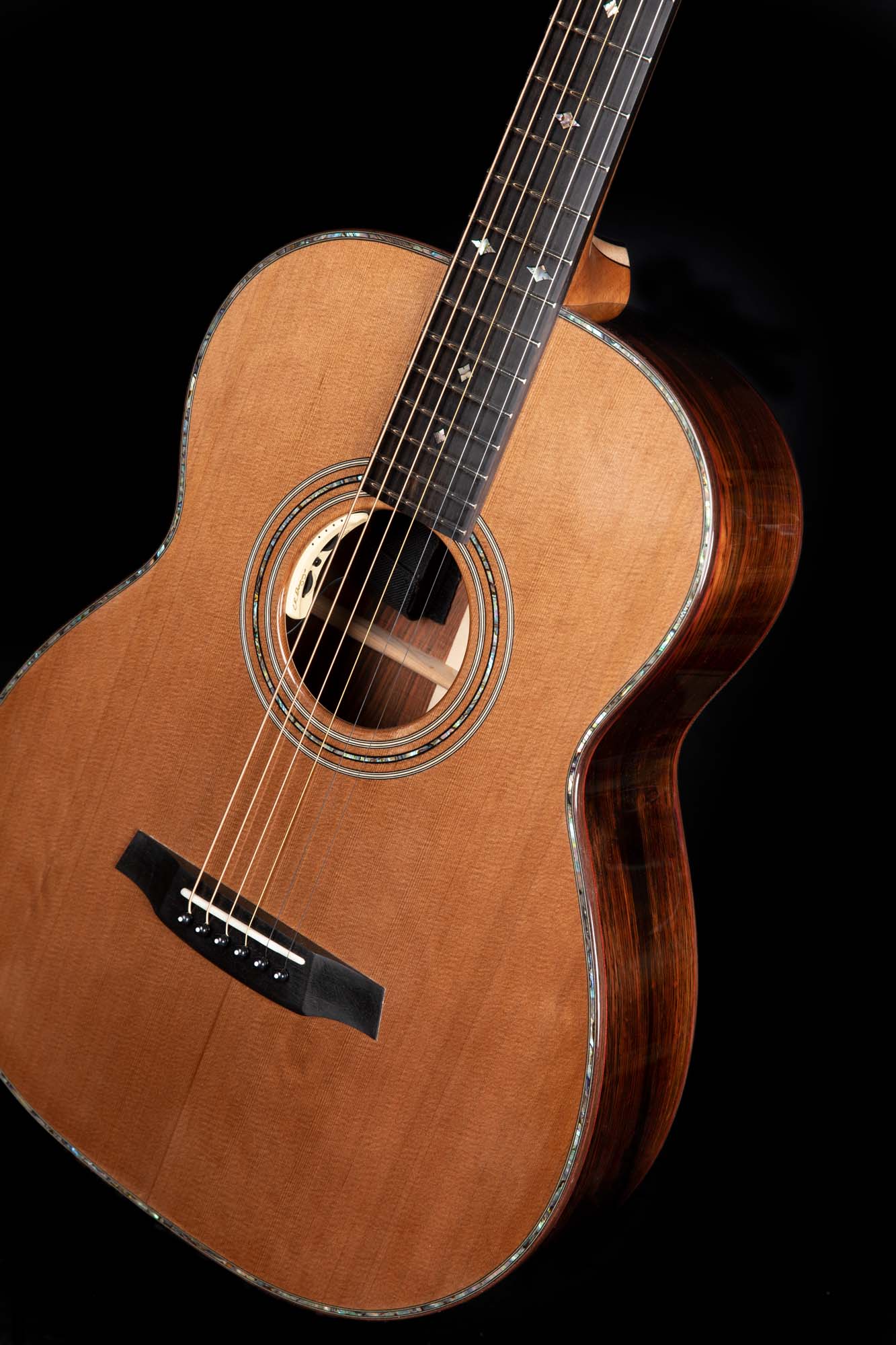
A similar story
Chris was preparing to tour the US using his new guitar, but the tours were cancelled, and his guitar is stranded, it is in storage in New York. I wonder if the two guitars will ever meet to discuss their personal lockdown.
May: New Guitar for Findlay Napier
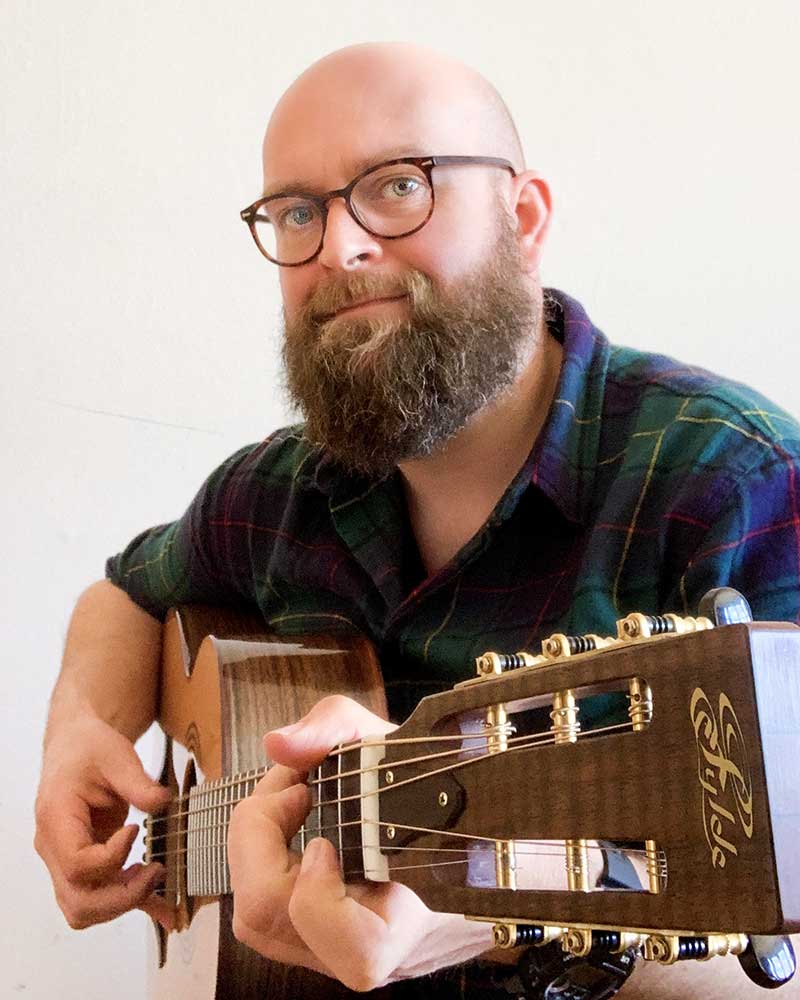
Findlay came to us via Megan Henwood, and their mutual project “Story Song Scientists”. We have a lot of friends in common, and I was really pleased to be asked to make this guitar. It’s unusual in various ways; first of course, it’s an Ariel body, but with a 14-fret neck, a combination of comfort and convenience. Findlay was keen to keep the guitar eco-friendly, so the back and sides are Claro Walnut, but grown in England, the top is windfall Cedar, the neck is reclaimed mahogany from an old wardrobe, laminated with black lines and the fingerboard, bridge and bindings are “Rocklite”.
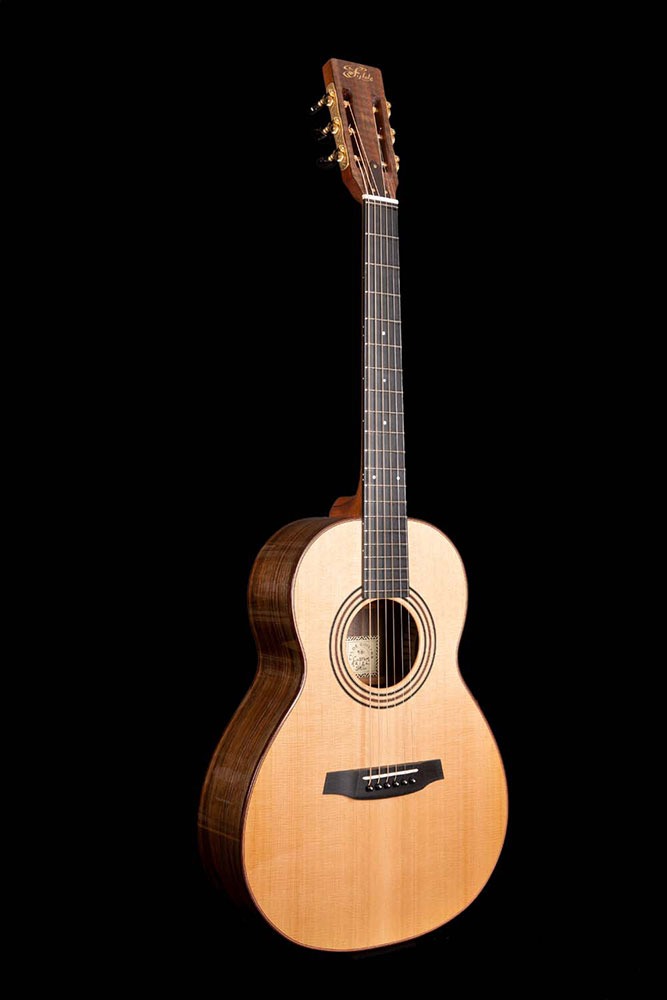
May: "New" guitar for Joseph Sobol
Joseph has had a few unusual instruments from me. This one was actually built some time ago for Rob Armstrong of “Tarras”, at the time it was a “Guitar Cittern”, with five pairs of strings. Joseph bought it from Rob but soon had his own ideas.
We’ve fitted a new neck and changed the bridge, it’s now a gentle fan fret ten string, but with six courses: four pairs and two singles. I can’t wait to hear it. Joseph – that’s not a hint, it’s an order!
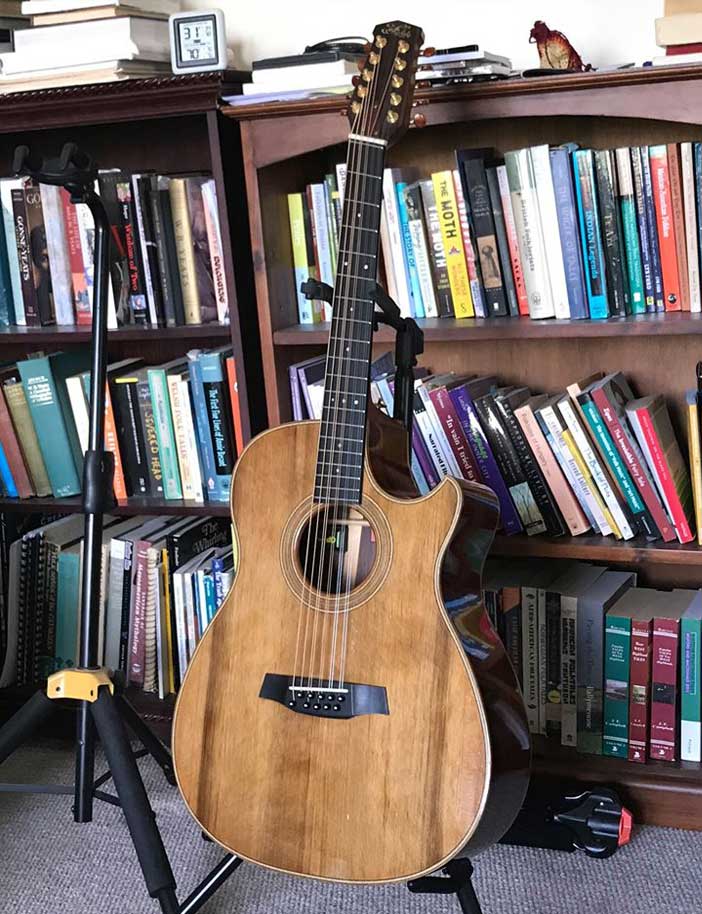
May: Gordon Giltrap. "Woman"
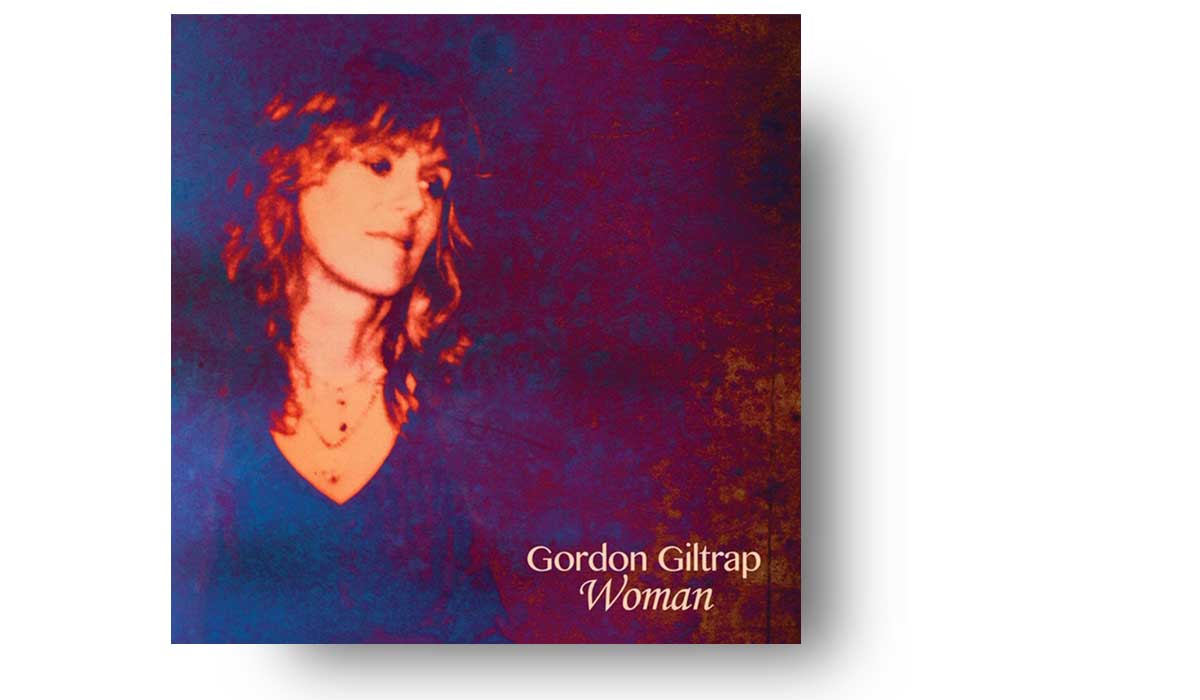
With so much going on over the last few months, I haven’t had chance to tell you about this. A compilation of pieces either commissioned by fans, or written by Gordon for personal reasons. The cover picture is of his lovely wife, Hilary.
Full details HERE
July: Nancy Wilson

There is a reason why I’ve put this picture next to Tristan’s video. He’s a big fan. The picture was taken at the home of a mutual friend in Santa Rosa CA, the guitar is a “Custom Eric Bibb”
July: osewood restrictions backfire
First, I’ll mention Ivory, and I’ll start off with a simple personal statement.
“The only place where Ivory belongs is on an Elephant”.
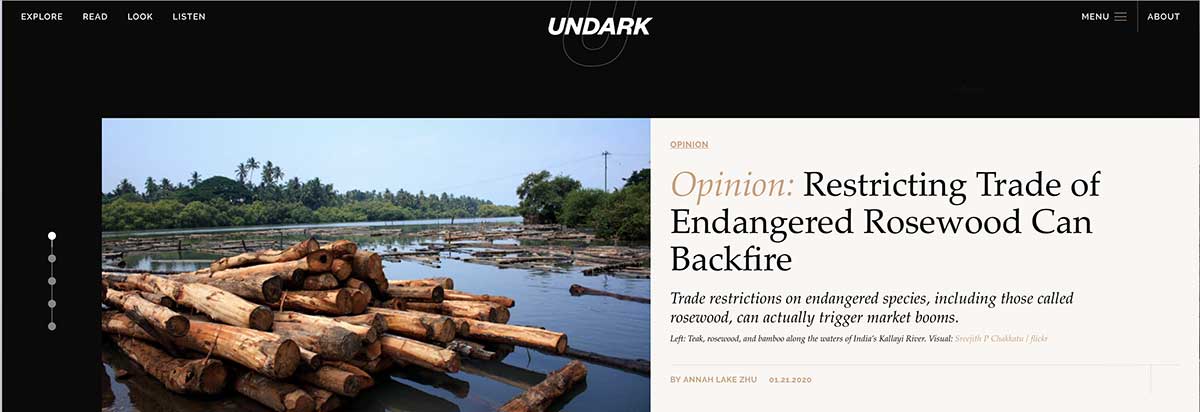
But I don’t agree with the regulation. Mostly I think it’s very badly thought through, and I certainly can’t accept the logic of destroying Ivory stocks in order to save the Elephant. I have similar thoughts about Rosewood, and I’m not the only one: Read this.
August: Bog Oak in lockdown
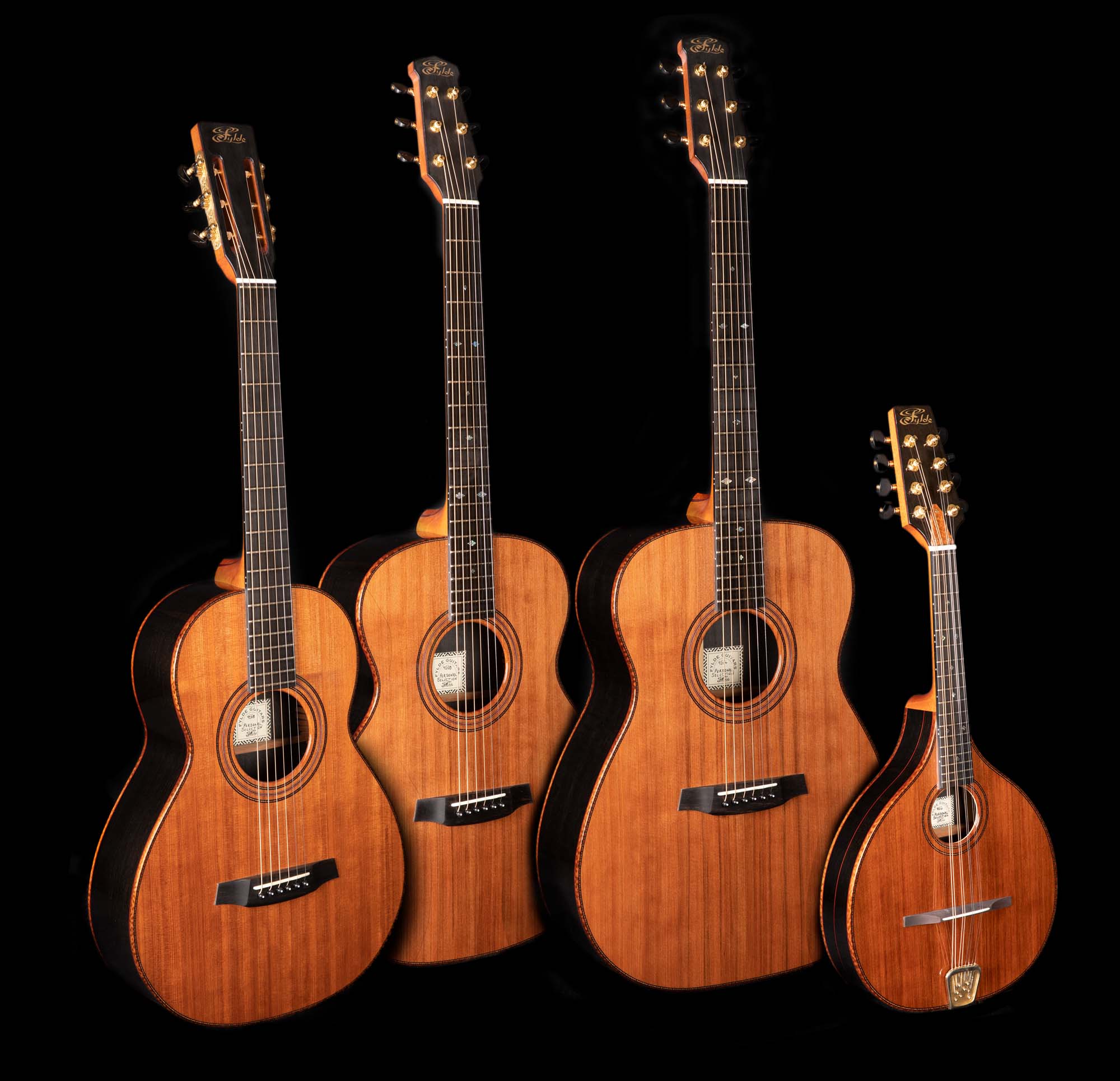
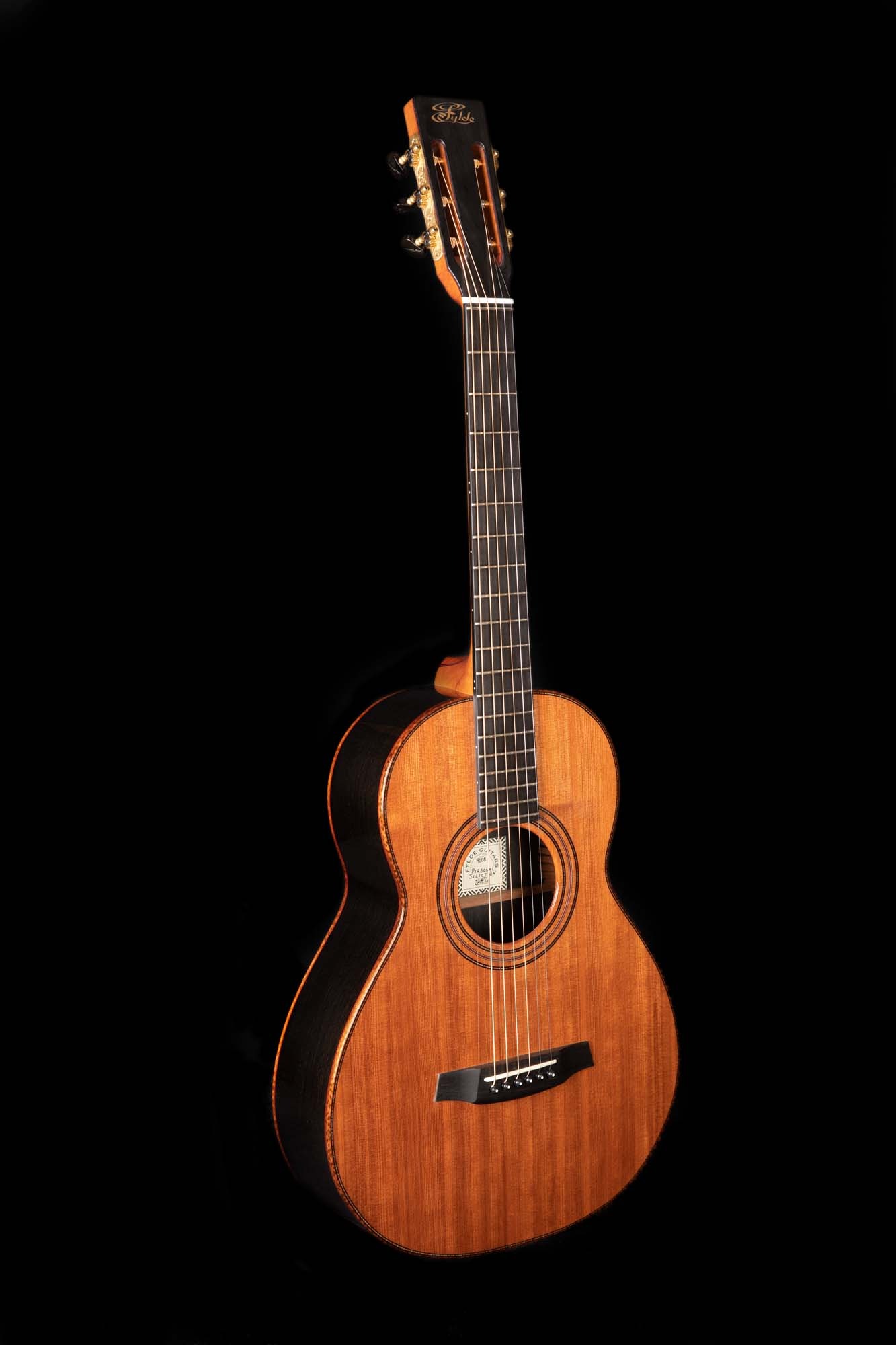
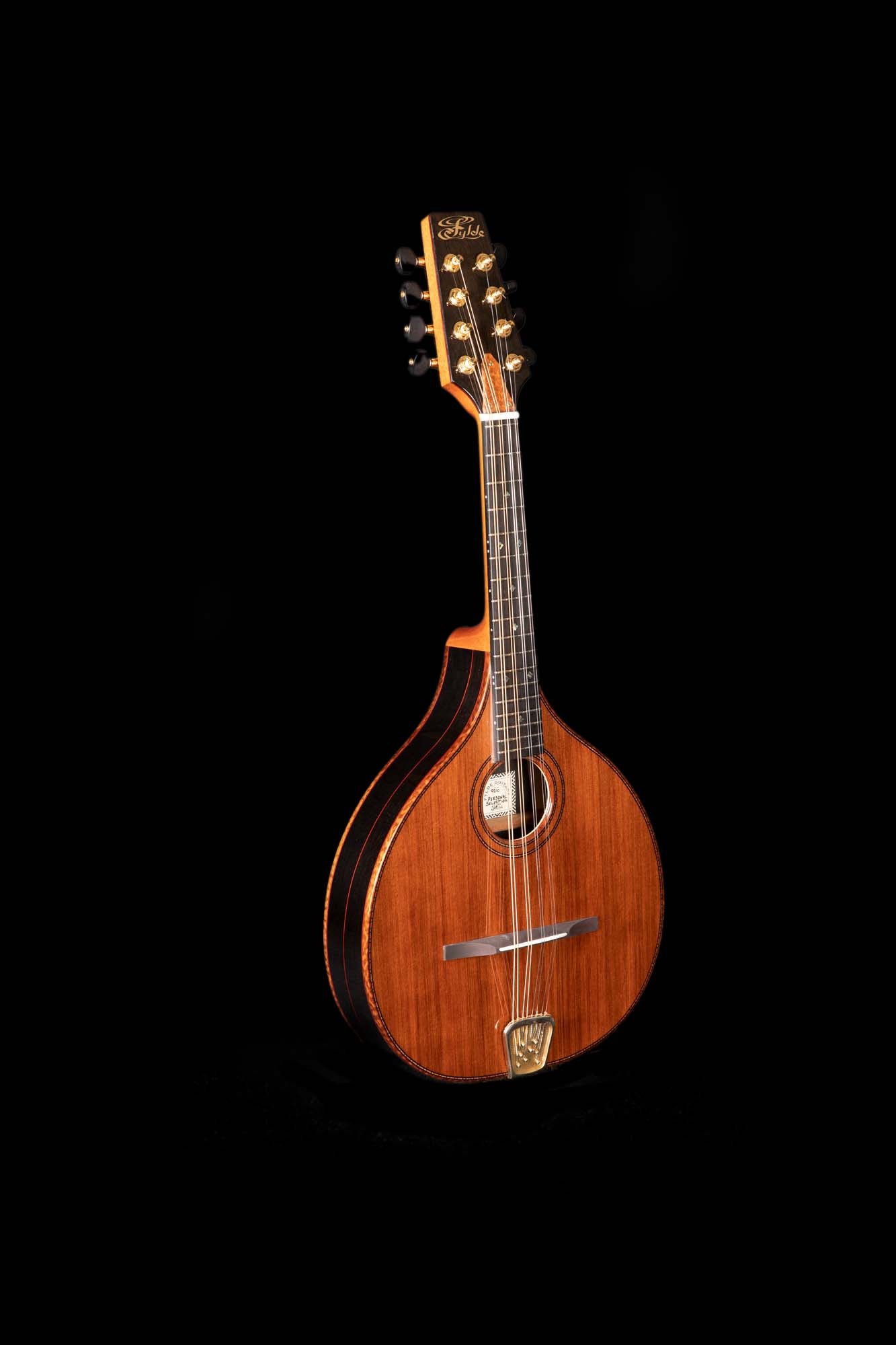
We made these four instruments as a “set” and I wanted to include a mandolin to make it look like a family. I knew they would make a wonderful picture. Was I right?
Yes, I was, thank you.
Bog Oak back and sides, Sinker Redwood soundboards, Snakewood bindings with red borders. Ebony fingerboards with Abalone diamond inlays.
Gotoh 510 tuners. All of the necks are made from one board of very old Brazilian Mahogany with centre sections from another similar board and red and black lines to match and complement the bodies.
The mandolin was made from the “offcuts” of the three guitars. Each side is two tapered sections, and the back is four sections, all divided by thin red lines. A child with three parents.
Stunning instruments. Once again Mike English cursed the dark woods (well, he cursed me really) but produced wonderful pictures anyway.
The idea was to display them at the Ullapool Guitar Festival in October, along with a number of other specially built instruments, but now that the festival has been postponed, I am free to sell them straightaway.
For sale:
Falstaff £7,200 – SOLD
Long Scale Alexander £6,900 – SOLD
Ariel £4,900 – SOLD
Mandolln £2,200 – SOLD
I can provide more details on request.
Wouldn’t it be nice if they were sold as a set?
Dear Mr. Bucknall. Would there be a discount if I bought them all?
Dear Mr Jones, probably not.
August: Myrtle Ariel
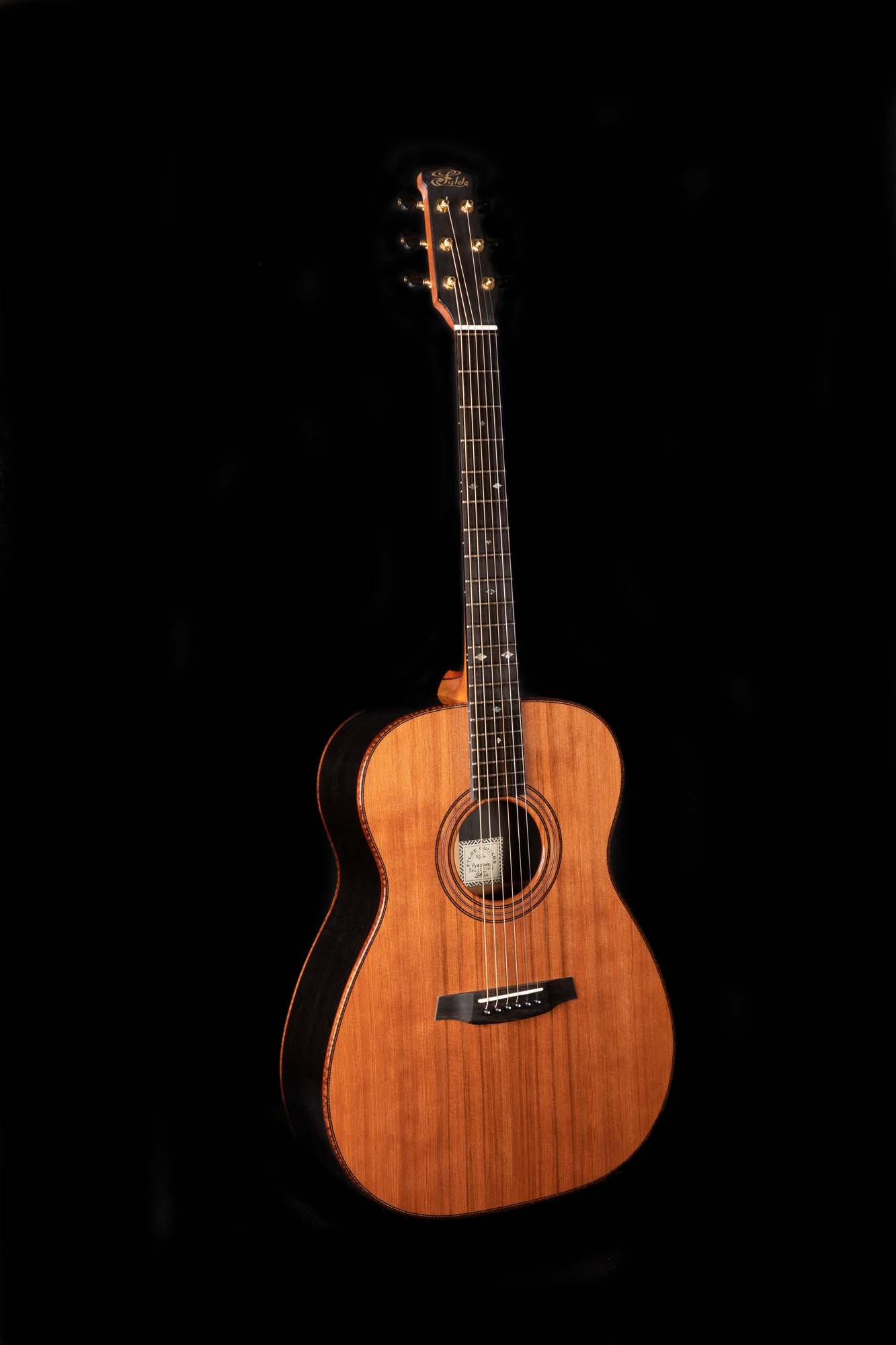
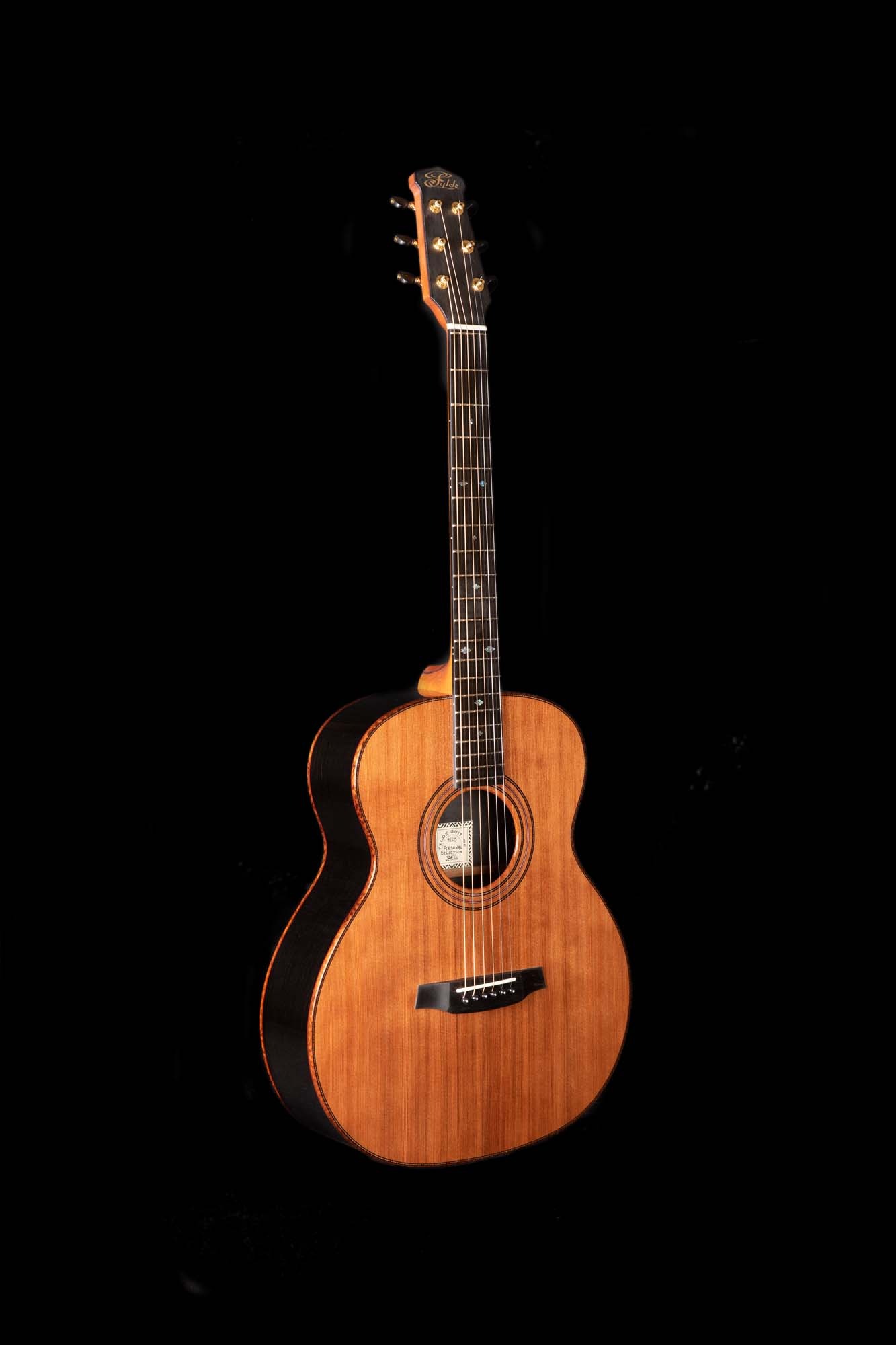
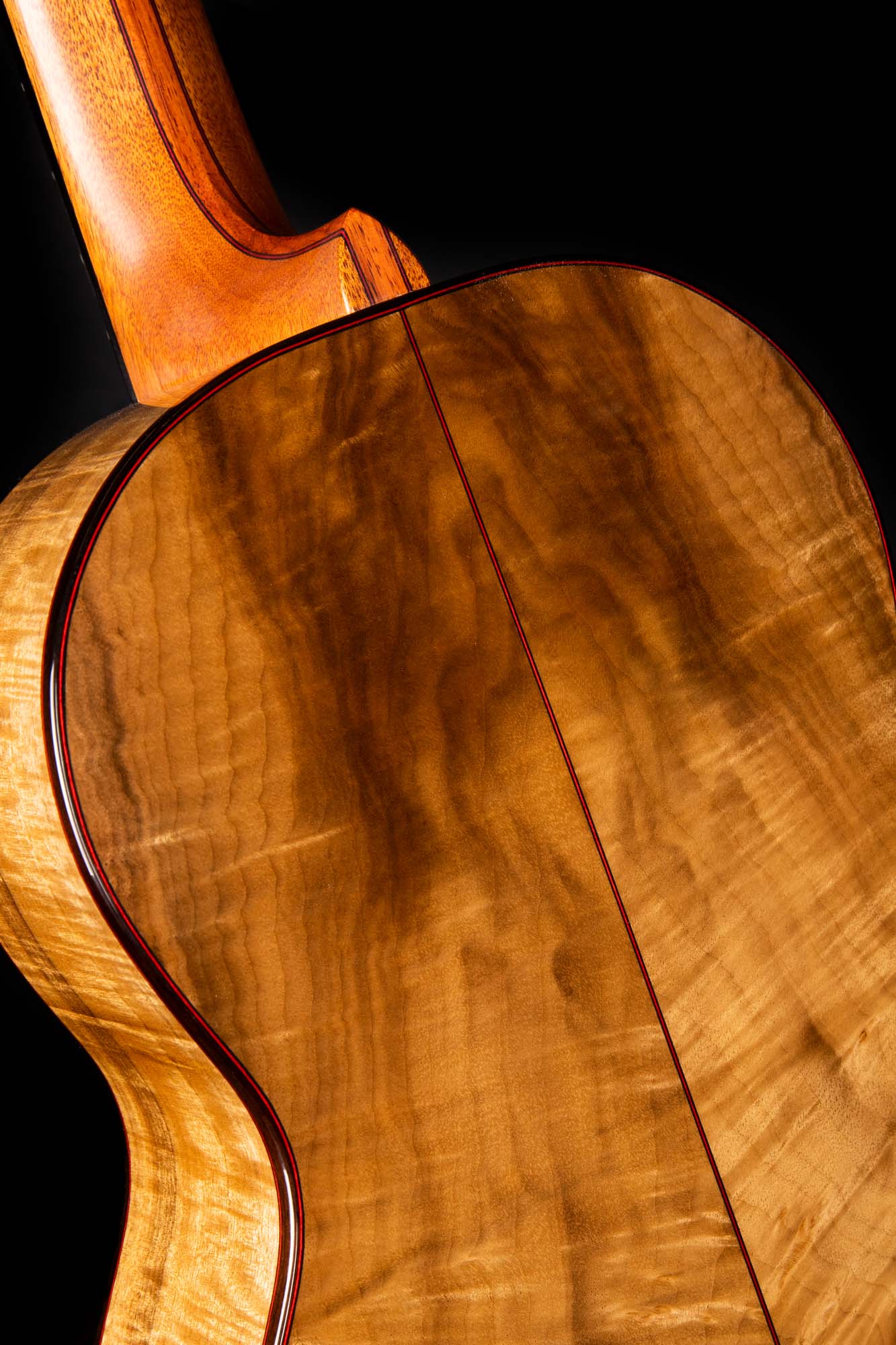
I received an enquiry from a customer in the USA who had seen Will play that same guitar. I didn’t have any more Acacia wood. (must do something about that), so we settled on figured Myrtle which Moira and I bought in Oregon a few years ago. The customer is very pleased and describes the sound as “pretty”, which is not how I would describe the tone that Will achieves, just goes to show how different players can achieve different tones, as the guitars are very similar in every respect.
August: Roy Harper's guitar
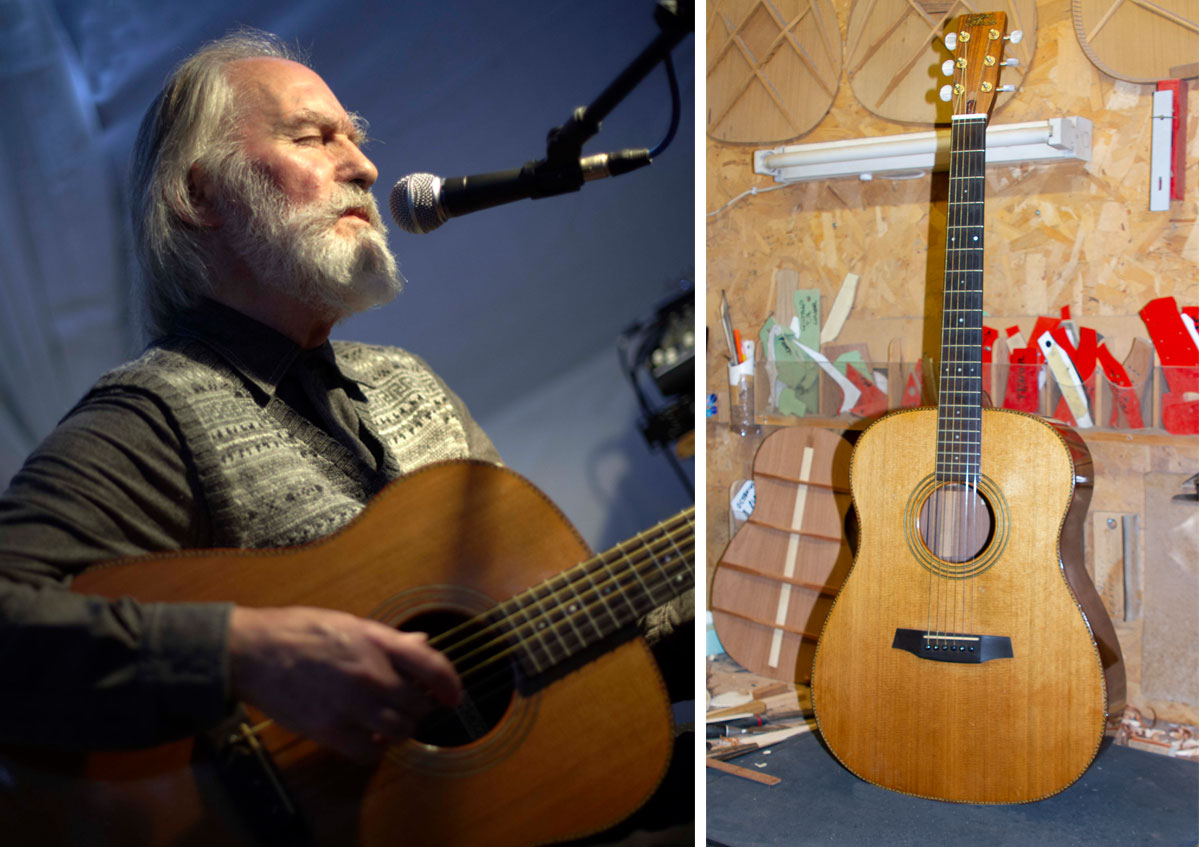
A Falstaff with a Cedar top made in 1997 and more or less the twin of the one I made for Barbara Dickson. This style became the “Ken Nicol” signature model a few years later.
Roy used it for “Dream Society” in 1998 and probably others.
Roy was quite an important part of my musical upbringing, the first two albums I ever bought were “The Shadows Greatest Hits” (of course), and Roy’s “Come out fighting Genghis Smith” in 1967, and I learnt to play quite a lot of both.
The guitar is now owned by Harry Pearce who designs Roy’s album covers. (And many others). He tells me that Steve Hackett used it on his album “Beyond the Shrouded Horizon”
Steve writes: For ‘Til These Eyes’ Harry Pearce lent me his six-string steel which once belonged to the brilliant Roy Harper. A fabulous guitar accompanied by a beautiful orchestral arrangement by Roger King featuring the heavily tracked string section of Dick Driver on double bass, Richard Stewart on cello, Christine Townsend on violin and viola and Rob Townsend on soprano sax (impersonating an oboe).
Harry Pearce
“I first heard Roy play, with Andy Roberts, at Knebworth 78, and then by contrast at a poetry evening in Hammersmith Church later that year. In the early 80’s I was at Canterbury College of Art studying design and I met Roy in the street there and we got into a long conversation. That evening I went to a small acoustic gig at the University where he played for so long and so late, they turned the electricity off. Roy simply carried on and the audience sat around him on the stage. After the gig we carried on our conversation and he played Old Cricketer for me, just the two of us. We have been firm friends ever since and for the most part I have been designing his record covers. I often stay in Ireland with him and he is with me in London. A creative friendship stretching back nearly 40 years.
About 15yrs ago he lined up a few acoustic guitars in his studio and as a gift he asked me to choose one. I tried them all and fell instantly in love with the Falstaff. It’s been a wonderful companion ever since. The Falstaff was used extensively on Roy’s Dream Society and in part I believe on the Garden of Uranium recordings.
Another music friend is Steve Hackett, who was often in my home and would play Roy’s Falstaff. He borrowed it to record a beautiful song ‘Til These Eyes’ from his 2011 record The Shrouded Horizon. It just so happens I’ve also designed a good number of Steve’s record covers too”.
About me:
I’m a graphic designer, artist, and photographer. I’m part of the Pentagram design co-operative, working on a variety of cultural projects. See the link below. I’ve also created covers for Pink Floyd, and a logo for the band itself. Others include, Chester Thompson, Ian Mc Donald, Nick Harper, and over 25yrs working with Peter Gabriel on his Human Rights charity Witness.
August: RIP Peter Green
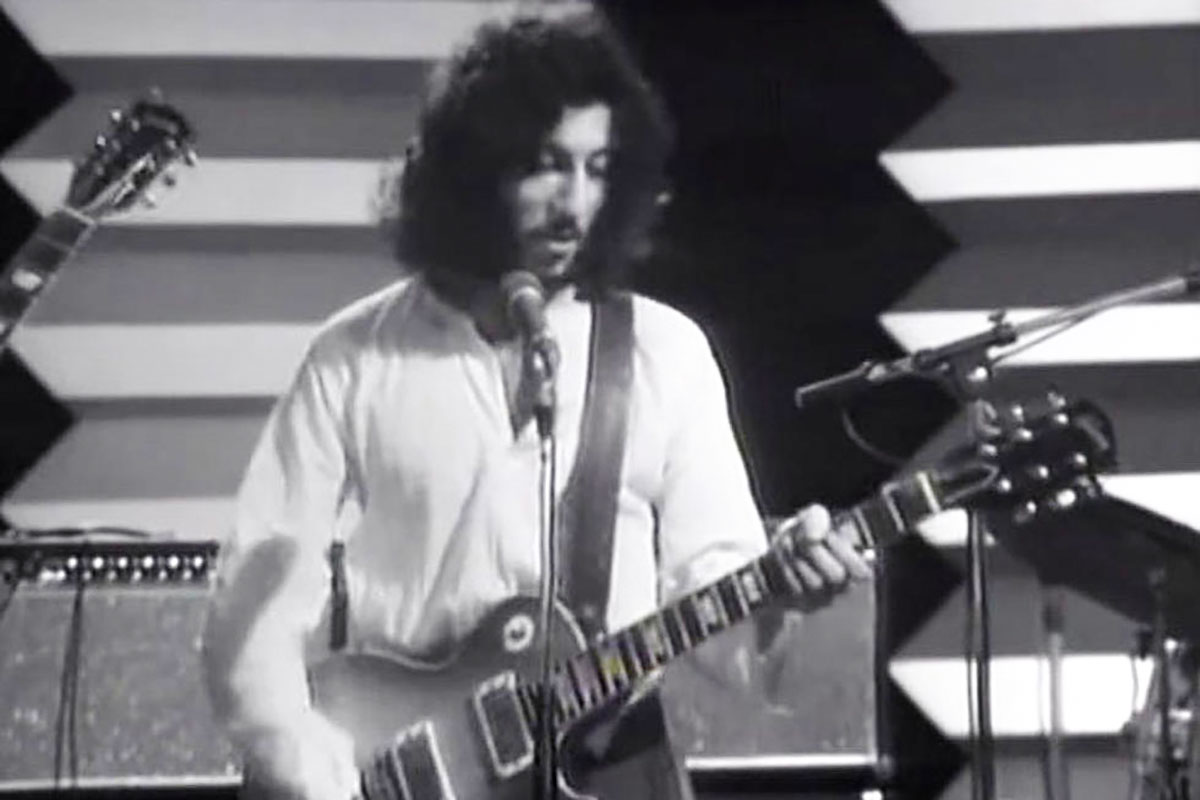
I have no connection with Peter, other than his social worker who helped me dig a trench for a gas pipe in my garden. and I was given tickets to Peter’s come back opening night show in Frankfurt around 1996. To my everlasting regret, I didn’t go.
August: What did you do during Lockdown Daddy?
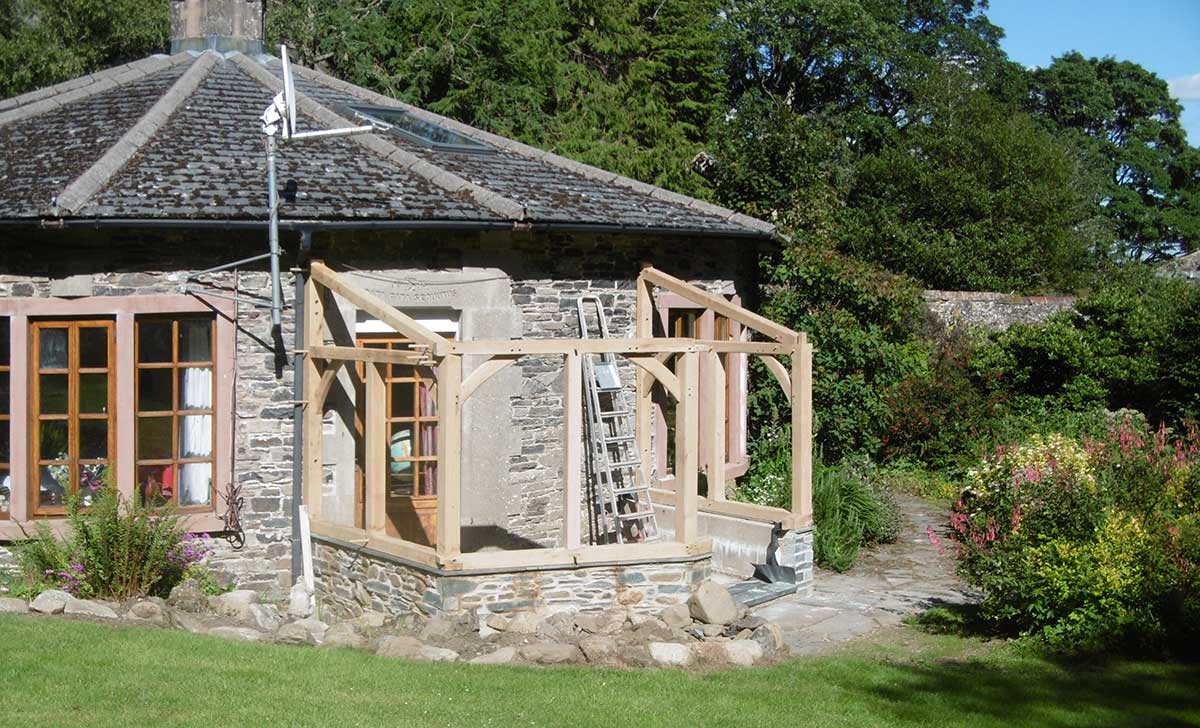
Well, mostly I did myself considerable damage building this.
It’s a conservatory, made from Green oak. That is oak straight from the tree, not dried at all, and an absolute joy to work with, as long as the job doesn’t take you twelve months so that the oak is no longer “green”. Which of course, is exactly what has happened here, but it’s still a lovely change from tiny little precision wood work, this is big chisels and big hammers, each piece is about the limit of what you might want to lift and it probably wasn’t the wisest thing I’ve ever done.
No doubt there will be more pics when it’s finished.
August: There is no "H" in Keyboard
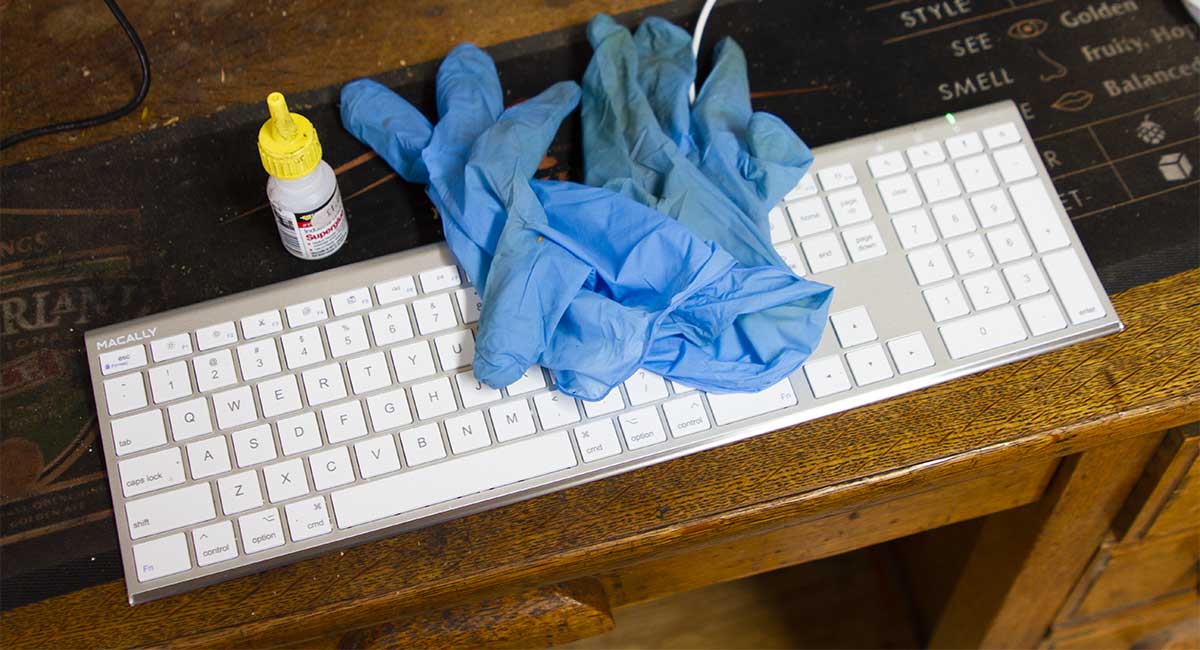
I wear gloves a lot at work, and I’m always running back into the office when I think of something I should have done. It’s not a good idea to have superglue on your gloves when you are using a keyboard. I know that now!
So I do apologise to the gentleman who received a mail from me that began “ello enry” and ended “tanks, Roger”
My dad used to have a little elocution rhyme.
O arry ain’t it orrid when you’re ot and in a urry and you ave to old your at on with your and.
Go on, put some h’s in and give it a try.
November: Bevelled, scooped, swerved 12 string for Henry Olsen
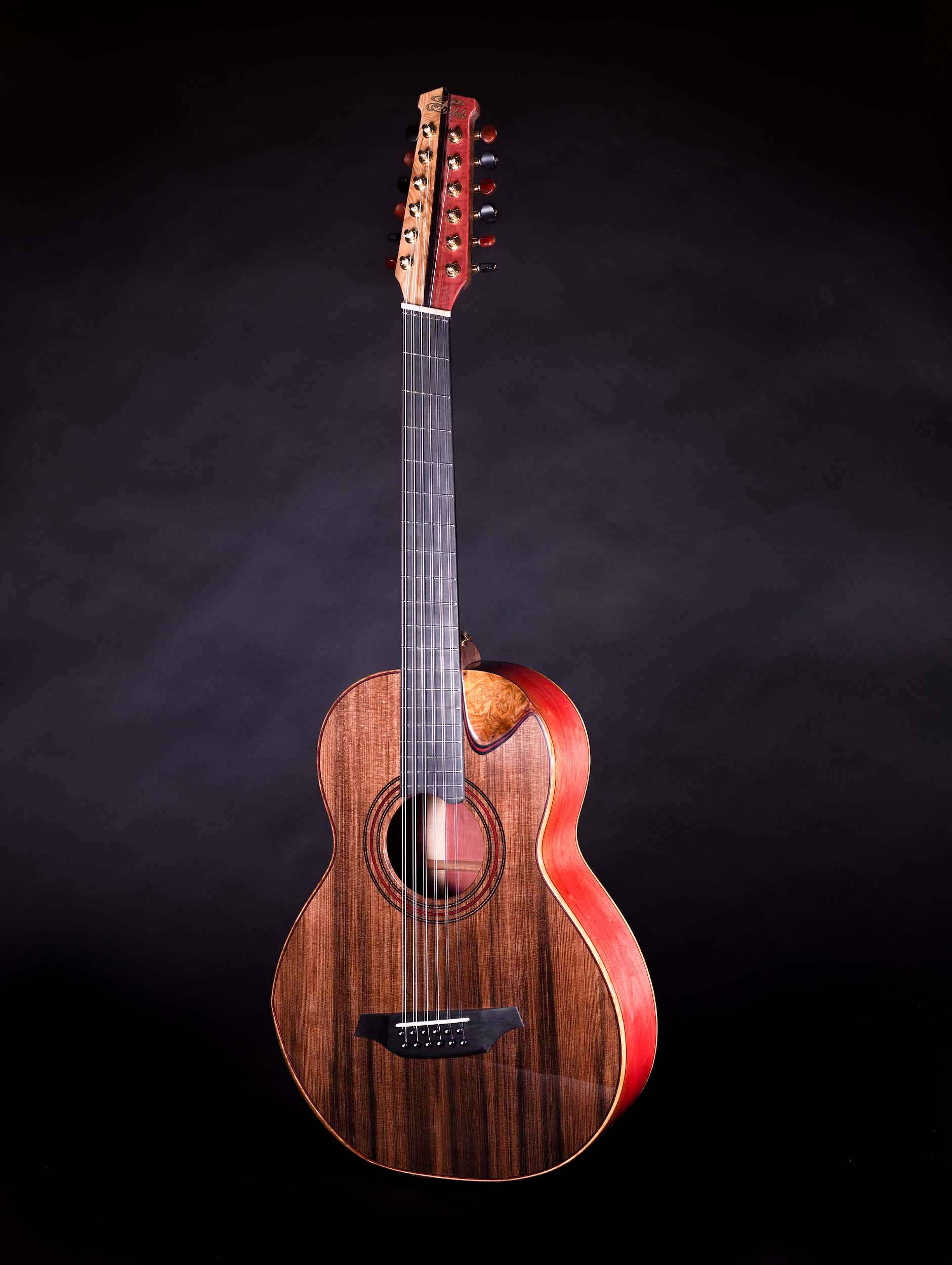
An extraordinary design, deliberately so to fulfil Henry’s “wide” sense of ascetics. It’s an Ariel body, made from Pink Ivory with a Sinker Redwood top. Bindings, bevel, and “scoop” made from Olive wood, which was all a bit of an adventure!
Fan frets and 12 strings on a Claro Walnut neck, laminated with Ebony and red lines. The headstock is built on two levels to accommodate the slanted nut, plus some little features just because I wanted to have a little fun.
I carved out a deep “thumb rest” on the heel which turns out to be amazingly comfortable and allows a slightly different strap pin position. I think I’ll call it the Bucknall Swerve. Won’t be the first time those words have been used, but not for the same reason.
Henry says it is “absolutely astonishing”
November: New Guitar for John Doyle
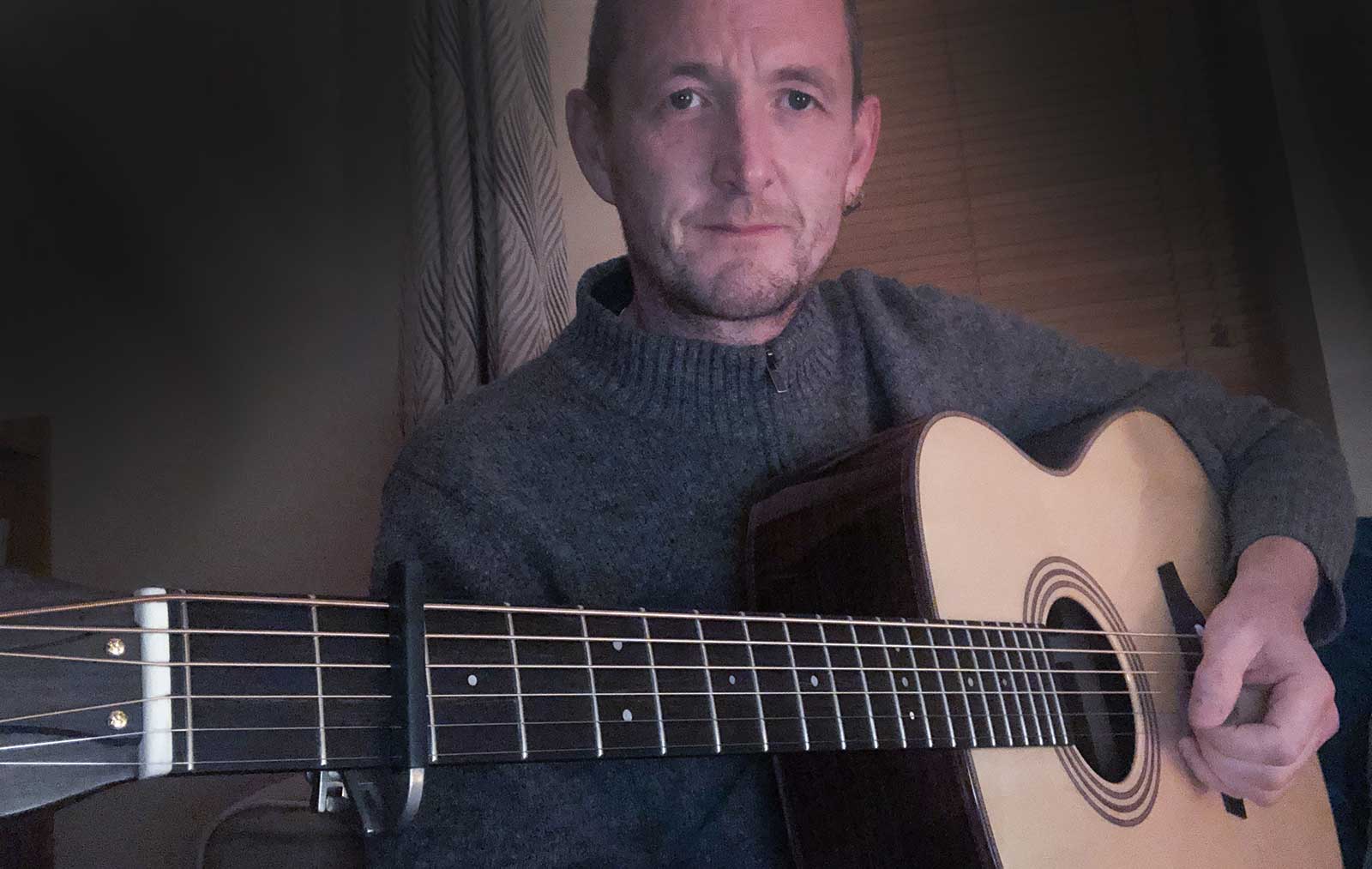
This year has seen quite a few dramas involving guitars becoming separated from their owners. Chris Difford’s new Fylde is still in America, while he is in England. Another customer couldn’t take delivery of his new guitar for six months because of lockdown in New York, and John Doyle’s new guitar was ready in March, but we couldn’t arrange delivery. We agreed that it was best if I sold that one, and make another in time, hopefully, for the end of lockdown. Well, that sort of worked, but there was only a three-day window for John to take delivery while he was in Ireland, and guess what? It got lost in transit. I spent five hours on the phone over four days, going around in circles trying to track it down and persuade someone to actually do something. I did eventually speak to someone with a brain and John received it about five minutes before shutoff time. He says it sounds beautiful, I hope it’s not too long before he can perform and record with it.
This is a video of John playing his previous Falstaff in 2011. It’s the one he calls “The Tank”, he uses very heavy strings, up to .070 on the bass, so this guitar was built with a reinforced neck and extra bracing on the soundboard. Watching him more recently and working a little on his guitars, I’ve realised that he doesn’t mind if they move around a bit, or even a lot, so this time, his new guitar still has extra reinforcement, but rather more sensitivity built in as well. I look forward to seeing him playing it.
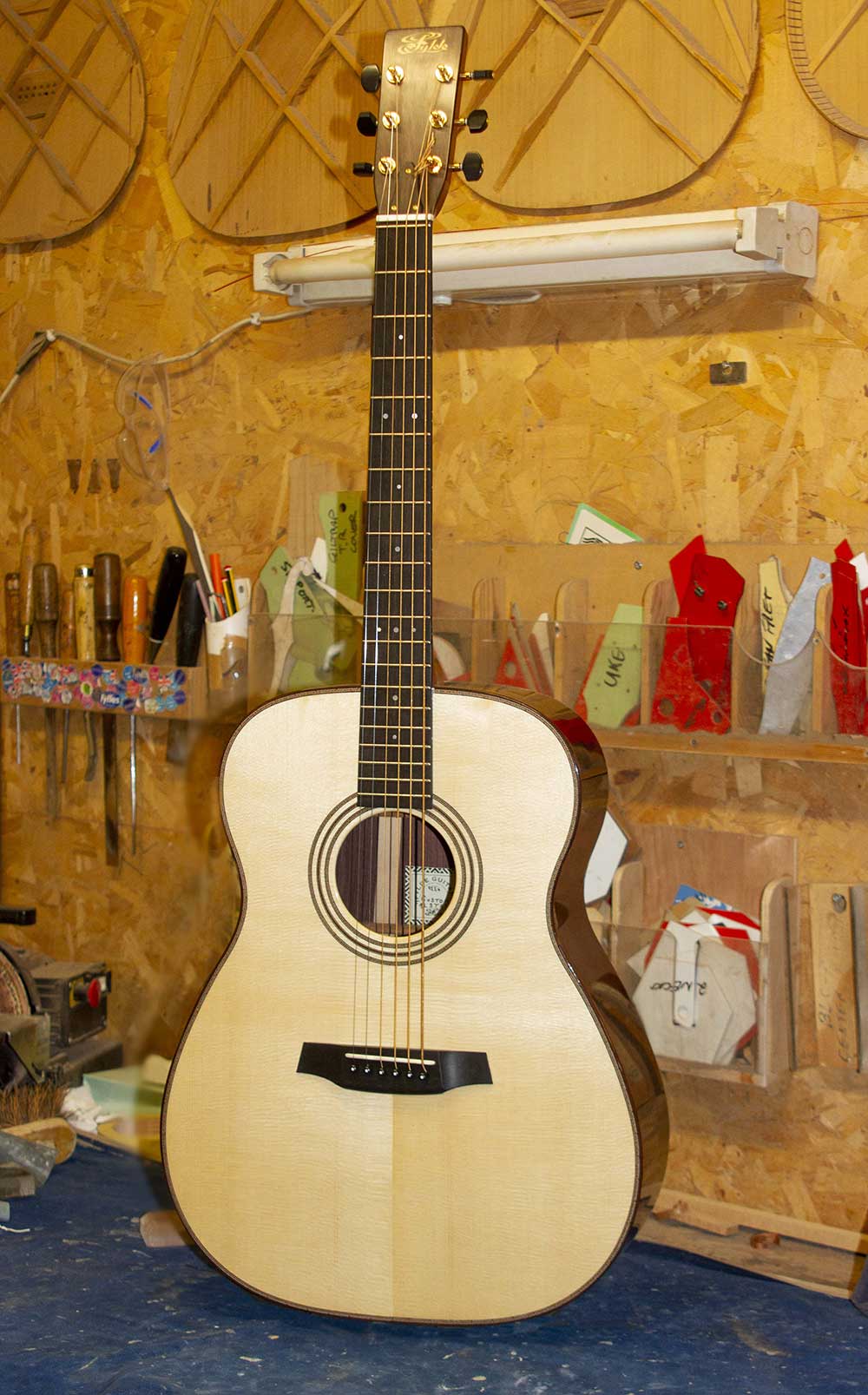
November: A Tone like Slice and 10,000 jiffy bags
I’ve been trying to get my youngest daughter interested in Nevil Shute’s books, particularly “A Town like Alice” because she lives in Australia. I think maybe I’m watching too much Bake Off, which along with my keyboard incompetence, caused it to come out as “A tone like slice”.
And there’s more: I’ve been looking round for the best packaging to send the new Jigsaws through the post, so I placed a trial order for 100 jiffy bags, leaving Moira to fill in all the financial information (of course, since becoming an MBE, I don’t actually pay for things myself ). Then I heard a yell, and Moira pulled me back into the office, barely able to stop laughing. I had ordered 100 lots of 100. Anybody want 10,000 surplus jiffy bags? Fortunately, Moira had caught it in time which partly spoils the story but saved me over £2,000.
There is a sequel. Having “ordered” 10,000 and not completed the order, when we went back to order just 100, of course, the system hadn’t updated, and said they were out of stock, some fool had bought them all.
I really should not be allowed out, or in.
PS. HELP. How do I find the password to my password management?
December: Pink Ivory Ukulele
This was intended to be finished about 6 months ago, but I’ve had to switch priorities a few times this year. I wonder why? Has something happened?
It’s for Clare McNicol, but I think Will will be getting first dibs, and both will be using it to play Lullabies. The back and sides are Pink Ivory with a little Tulipwood. The neck is Walnut, bindings and fingerboard are Ebony and the soundboard is Yellow Cedar. Very pretty. Sounds lovely too.
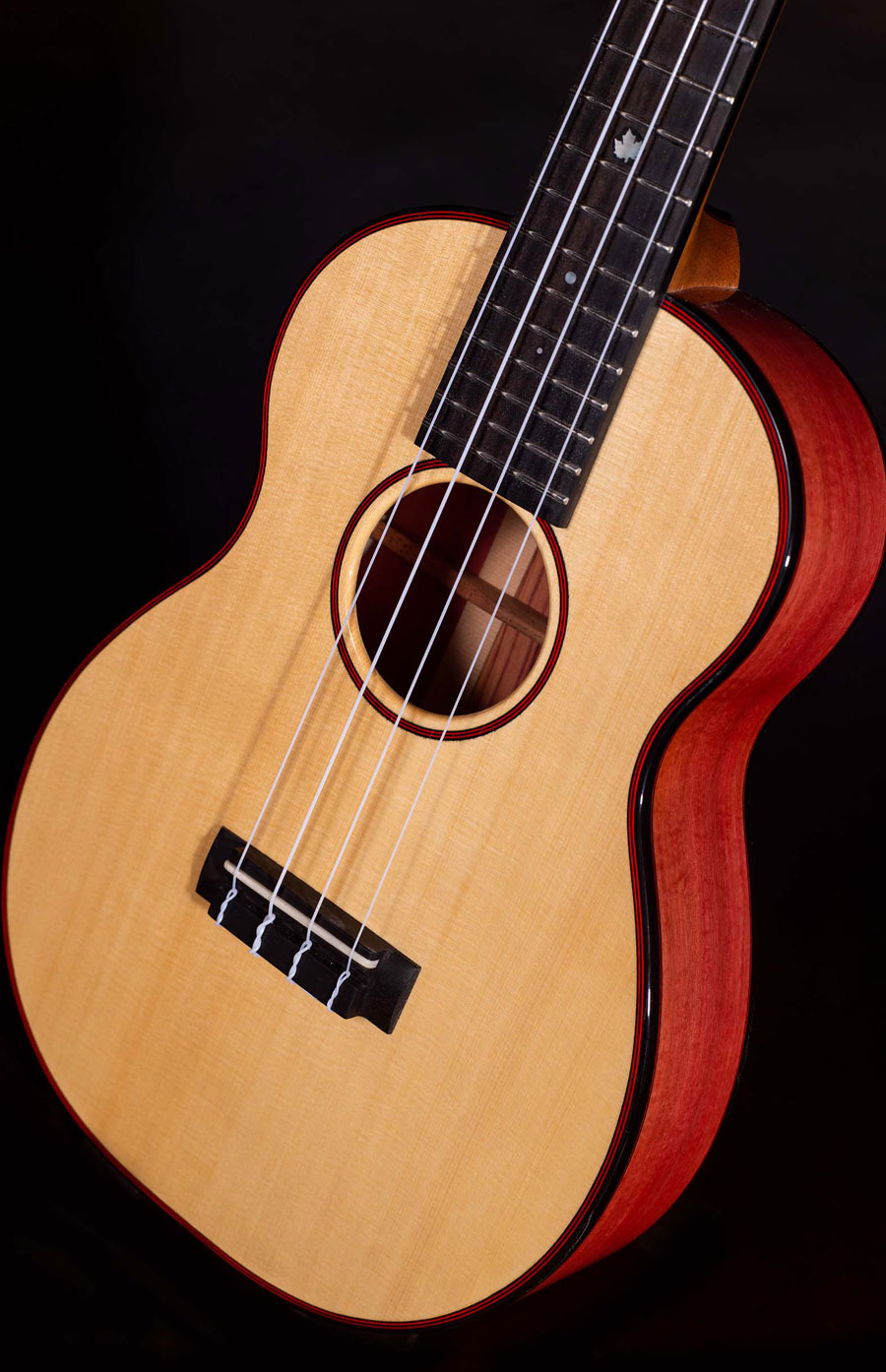
December: Uke Guitar
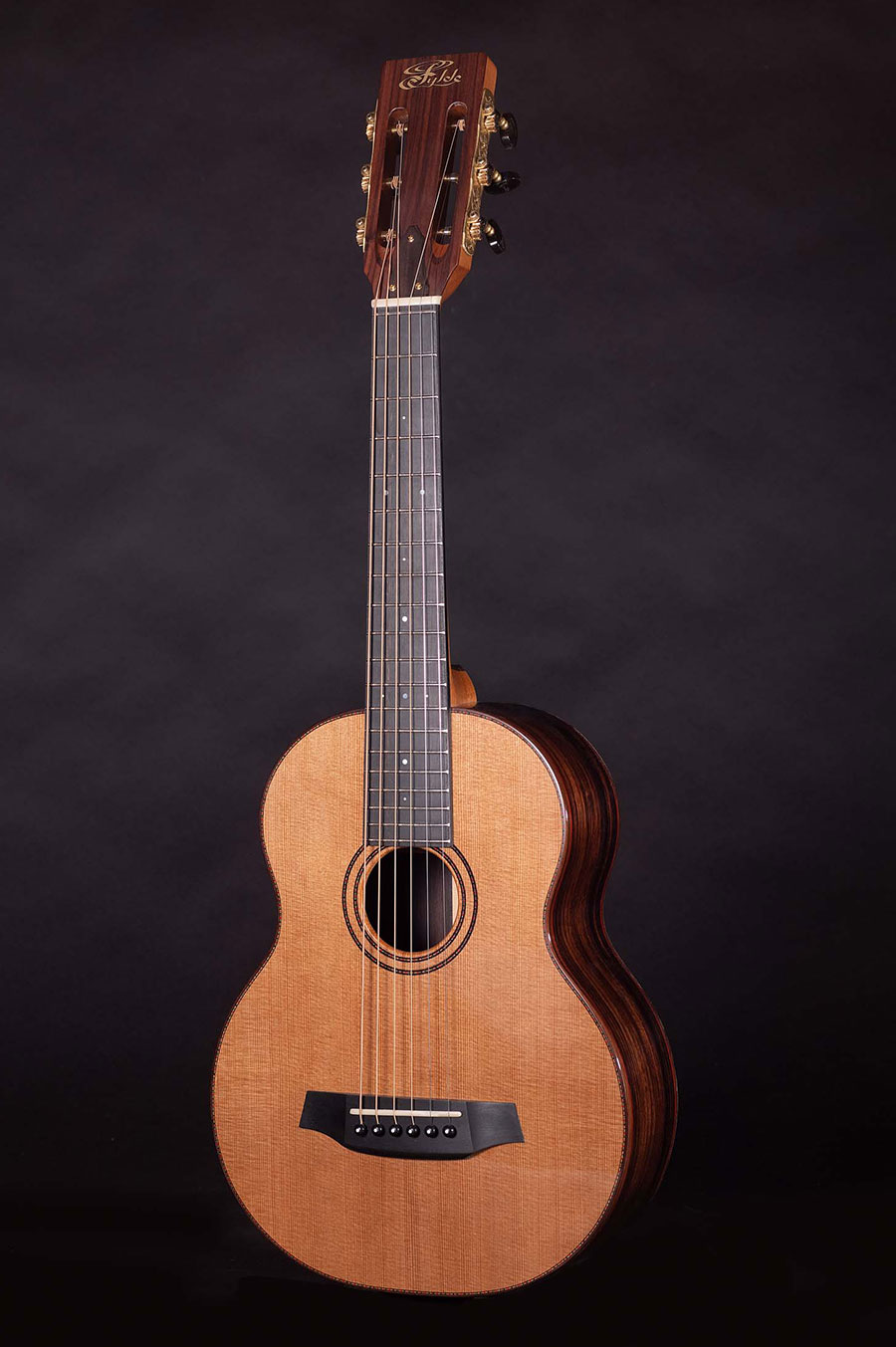
The original order for this stipulated Nylon strings but changed to steel strings just before we started to make it. It would have worked either way. It’s interesting how well such a small instrument sounds and plays. It’s the same “tension” as a standard guitar, because string length and tuning are the same as having a capo on the 5th fret. The neck is much the same at the nut, and almost identical at the bridge, so adapting to it is very easy.
December: Soundwood and Eco Guitars
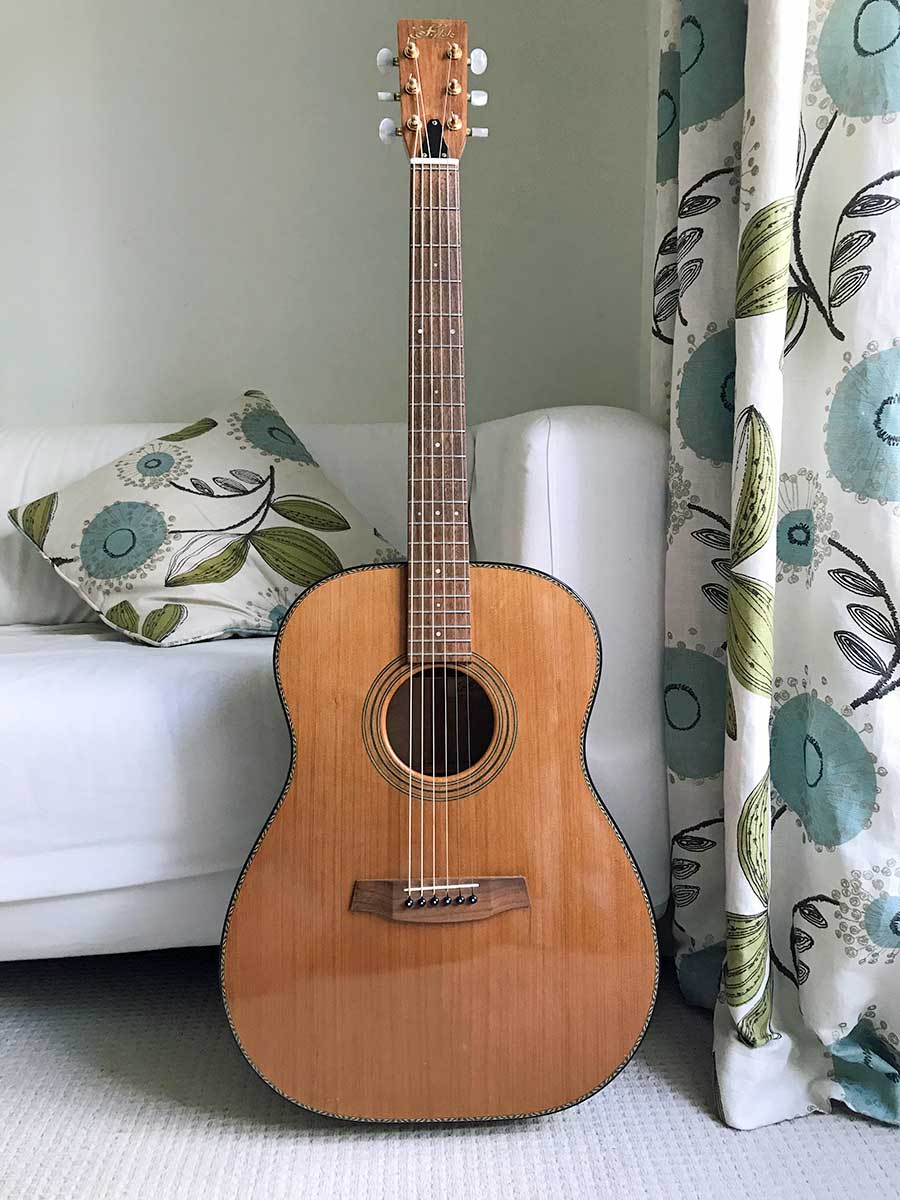
Going back to perhaps the 1980s, I was a founder member of “Flora and Fauna International” and we co-operated on several projects. One of them was to produce a guitar from sustainable materials. This guitar was specially built for the winner of a competition organised by “Guitar Magazine” in 1995, we used Sycamore and Cedar, with an Ash Neck and Walnut fingerboard and it featured in the FFPS periodical “Soundwood”. The winner of the guitar, Mike Petty, has since passed the guitar on to his friend Hannah Bullock
December: Workshop full of banjos
We had a small scare last week. Some nearby CCTV footage showed a few suspicious characters “casing” the workshop at 3 in the morning. When I found out, I decided to take some instruments home, including a rather special banjo. It’s bad enough being burgled, but I couldn’t face arriving at work to find it full of banjos. Boom Boom!