Please note: due to changes in regulations and constant design developments, we sometimes need to change details such as binding and inlay materials.
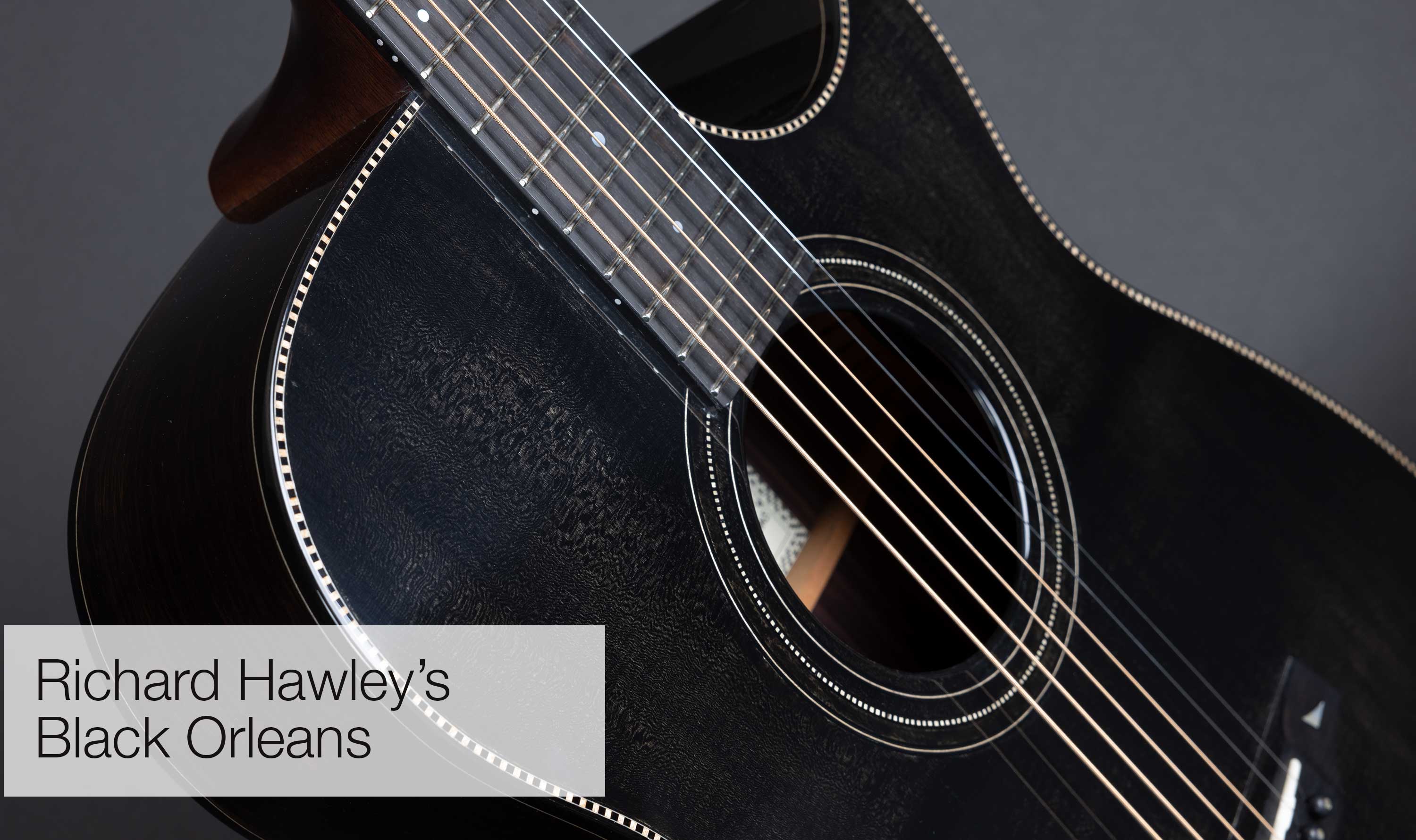
I always like to have an impressive guitar picture to start off the newsletter, a bit like starting a thriller with a description of a gory murder - it grabs the reader and leads them on to the next item.
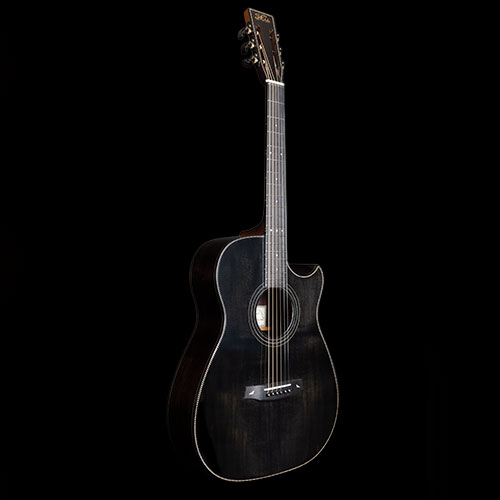
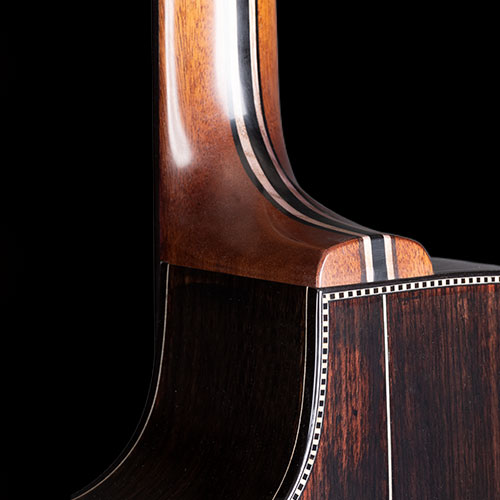
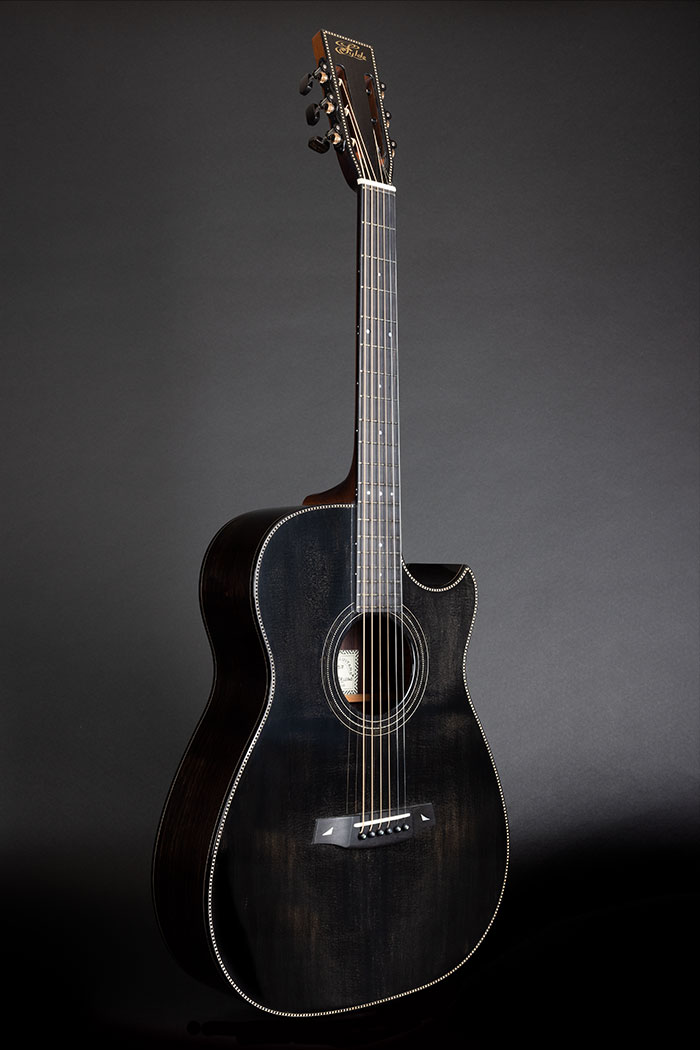
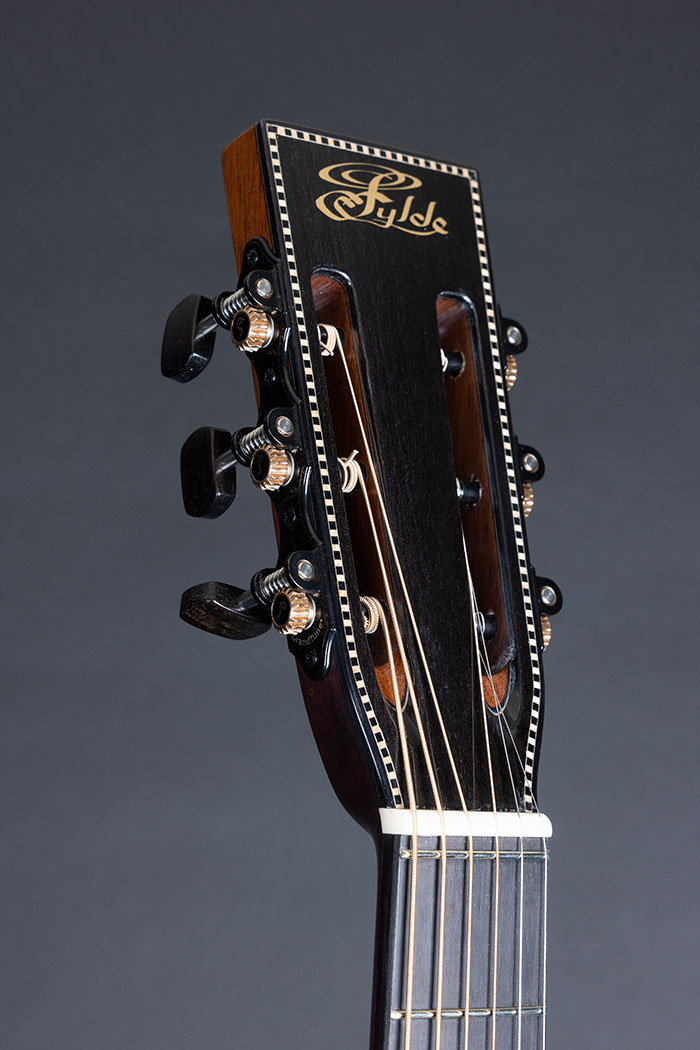
So here we are, it's not a murder but it is a radical departure from what we normally make. Richard and I had been discussing the idea for about two years. He wanted the "checker" purfling like a Rickenbacker and the guitar needed to be black, referring to some other iconic American guitars.
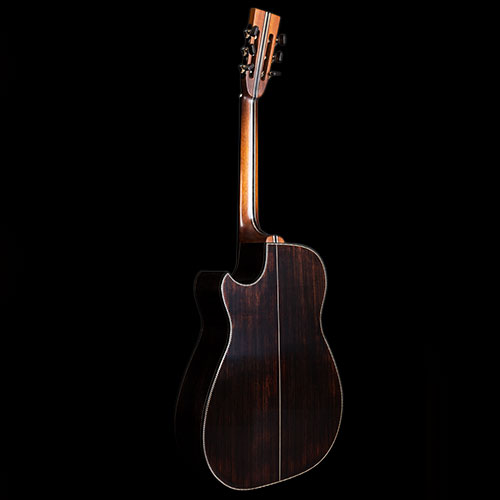
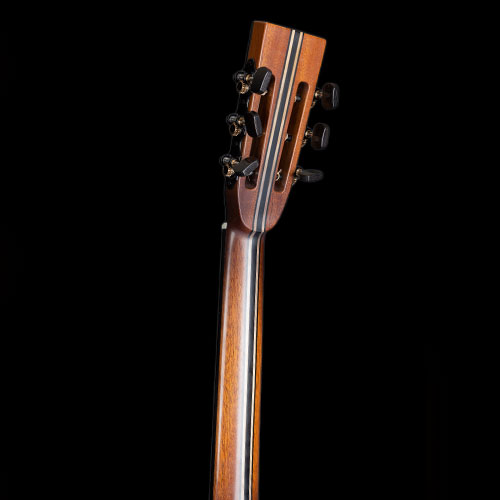
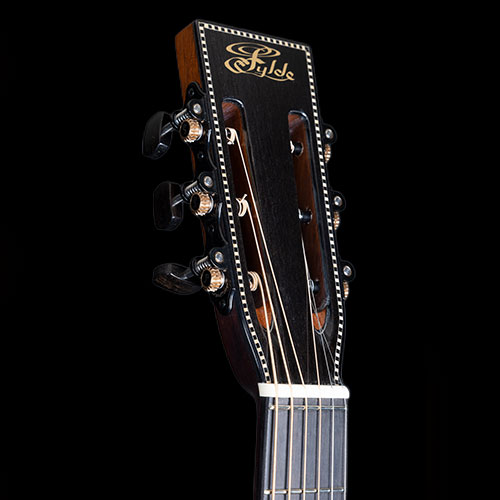
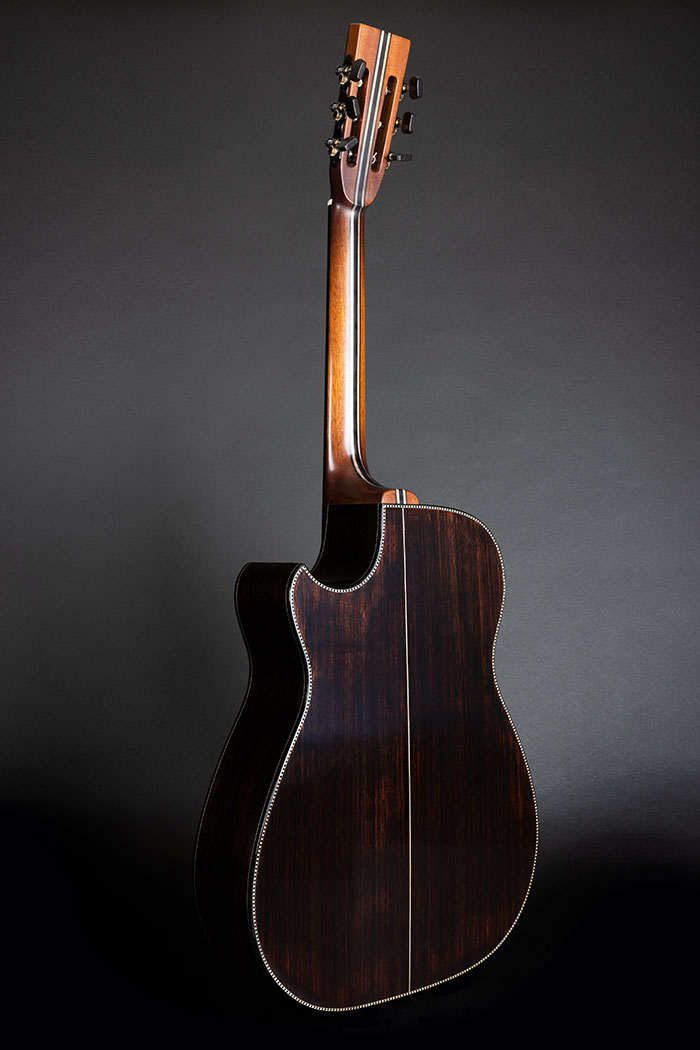
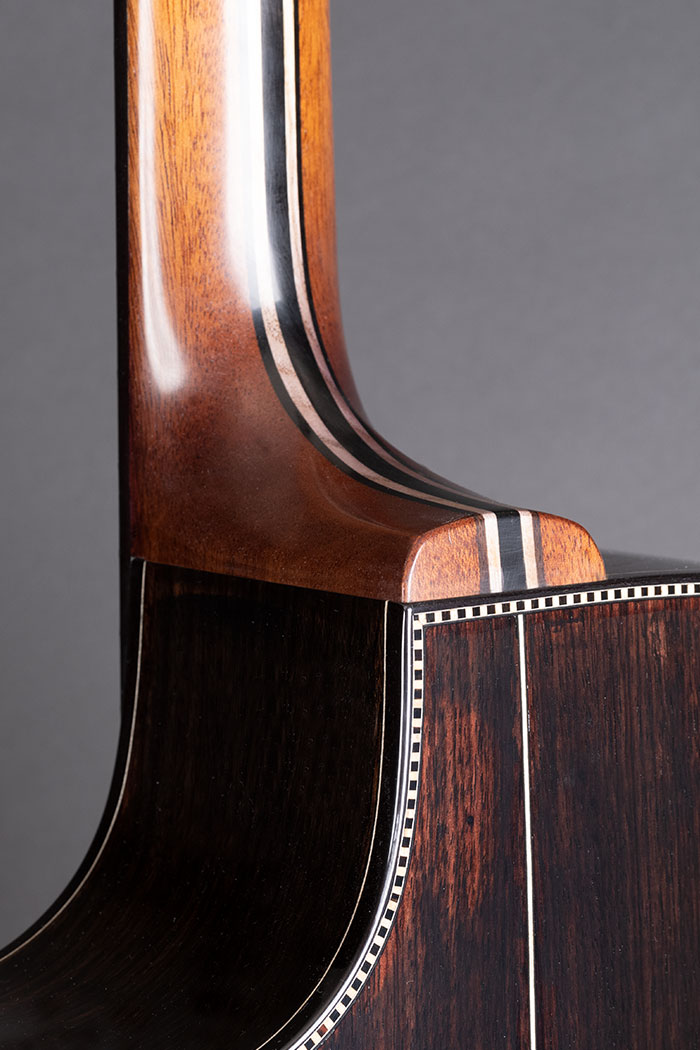
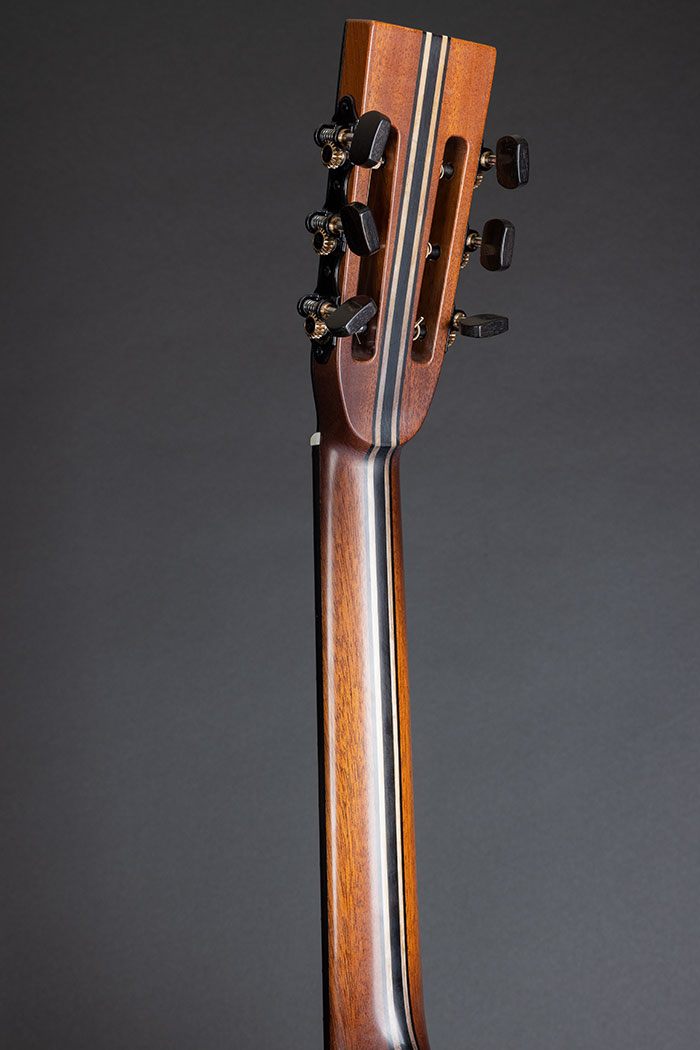
It's a long time since I "painted" a guitar, and it's not something I enjoy, inevitably it requires extra thickness of finish compared to what I am comfortable with, so the idea languished. Then after a while, Martin Simpson told me that Richard had fallen in love with his "Orleans" guitar and we started to put various options together. I made some experiments in staining Spruce and Rosewood rather than painting the wood and getting extra “body” into a transparent finish. The back and sides are Indian Rosewood and the soundboard is European Spruce. The neck is a laminate of Mahogany, Maple and Ebony, with just a little “mysterious” shading. The tuners are black Schallers, the strap pin is black, the neck is reinforced with carbon fibre, plus an adjustable truss rod, all working incredibly well. To complete the dark project, we fitted a Di Marzio Black Angel pickup which will match the impedance of Richard's Electric guitars on stage so he can use only one lead and not stress the sound engineer too much.
At one point, the guitar had my version of " Sharks Tooth" fingerboard inlays which all of us in the workshop thought were lovely, but the consensus from Hawley land was a little less enthusiastic. So, we changed the fingerboard. I still have the inlays if anybody is interested?
The checker purlings are Ebony and Maple, cut and thicknessed, stacked into blocks, glued and recut about ten times until I had enough to make the long lengths needed, then sandwiched between thin black and white veneers before being cut again into long thin flexible lines. The purfling round the headstock is a slightly different size but made in exactly the same way.
In order to stop the black stain "bleeding" onto the purfling, I sealed the chequered lines with superglue before carefully staining everything. After a thin coat of clear lacquer, I scraped the colour off the purflings, then built up the required finish with slightly tinted lacquer to enhance the depth of colour without covering the grain. I think it works really well, we can still see the grain of the Spruce and the red colour of the Rosewood, even though the overall impression is solid black.
We are all very pleased with this, one of those times when something I wouldn't normally contemplate just happened to appeal to me. It's not a murder, there was only a tiny bit of blood, but it doesn't show through the black stain so nobody will ever know.
We had a little fun with the name and the label inside – “Black Orleans” was the obvious one, but Richard fancied Hor'Leans, and we liked “Hawleans”. We still haven't decided.
Click on an image to enlarge ...

© 2025 Fylde Guitars. All Rights Reserved